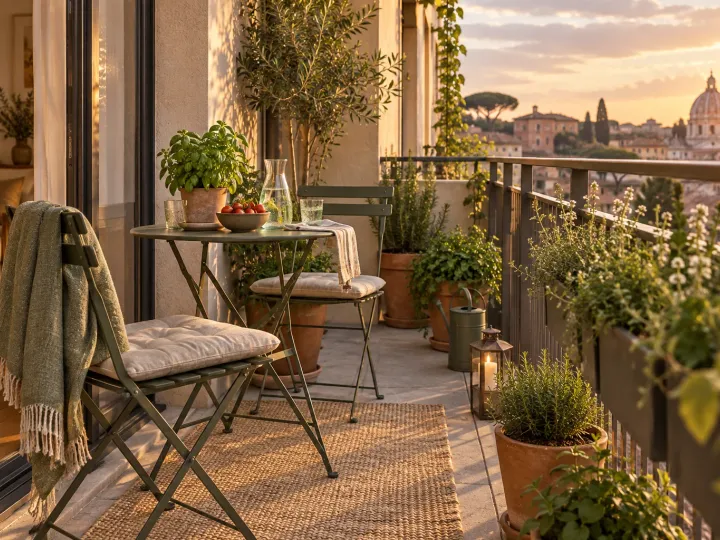
7 Small Balcony Privacy Ideas for a More Sheltered Corner
Make a small balcony feel more sheltered with thoughtful chair placement, suitable screens, and grouped plants while respecting building rules.
You might love your balcony but feel a little exposed when you sit outside. Try moving the chair before buying a screen. Sometimes a solid side wall already gives you the shelter you want. Work out which view bothers you most, then tackle that angle. Keep building rules, wind, and the route to the door in mind as you plan.
1. Start Your Small Balcony Privacy Ideas with a Sheltered Seat
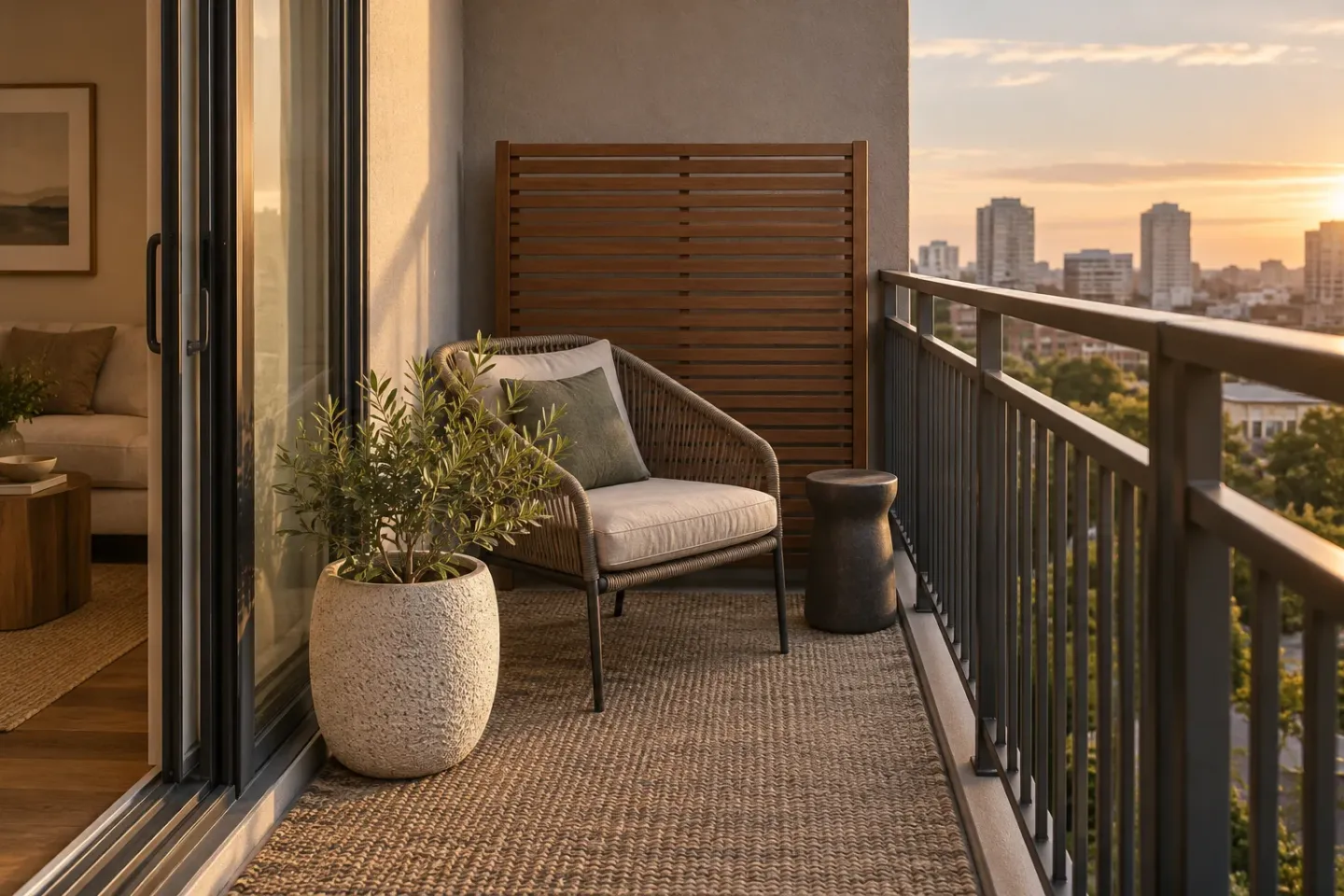
An existing solid side wall may already provide a useful sense of enclosure. Try placing the chair beside it before adding anything new. Sit there at the time you normally use the balcony and notice which views still feel uncomfortable.
A small change in position can also preserve daylight and the view you enjoy. You don’t need to block every direction.
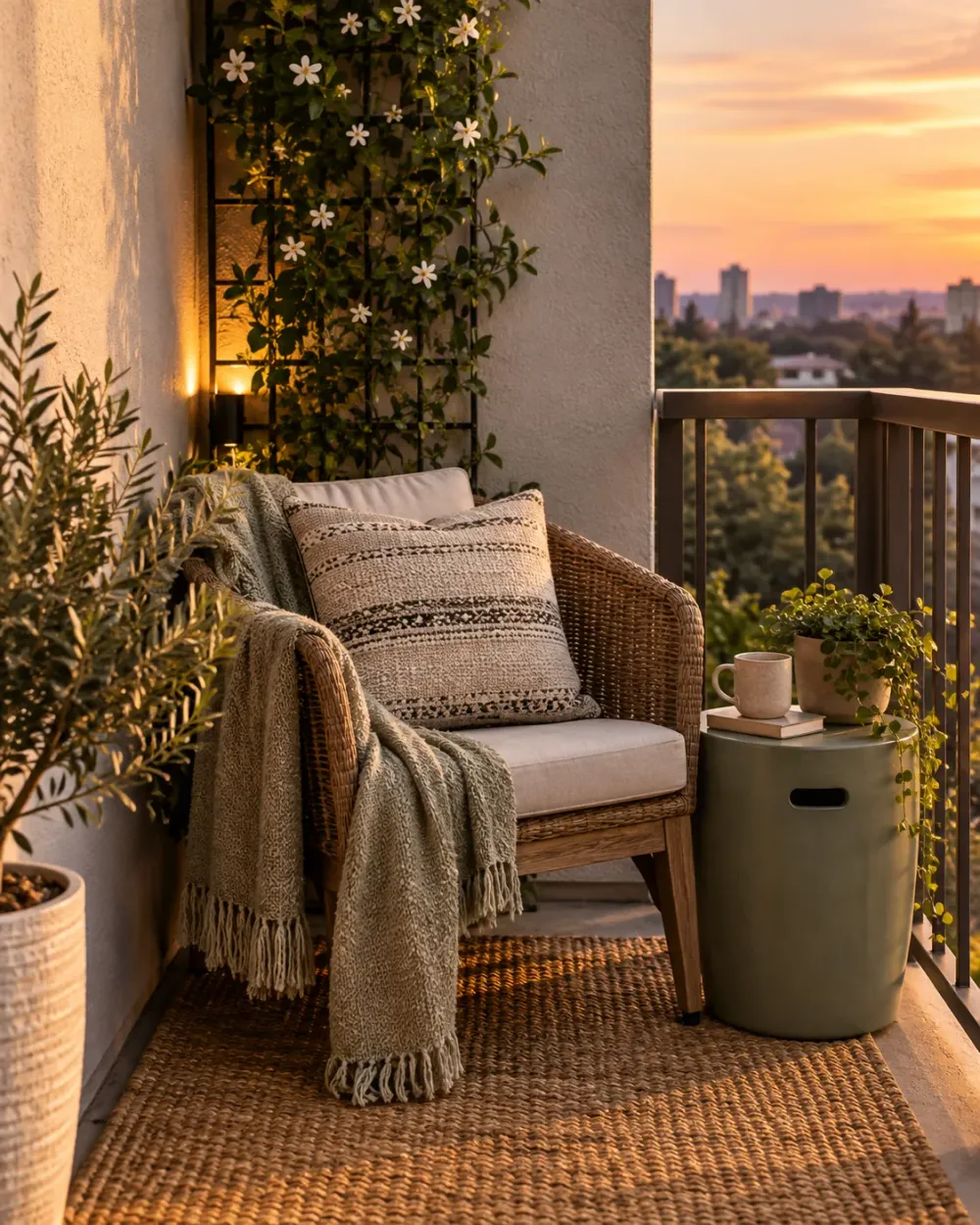
Compare two positions along the same wall rather than assuming the deepest corner is best. In one particular balcony, shifting a chair half a seat width might bring your shoulders behind the wall while leaving your feet in the open. Notice whether the wall shields you at seated eye level, not just when you’re standing. That distinction helps you decide whether the existing corner actually solves the exposure that bothers you.
2. Turn the seating inward
A chair facing a table or a plant grouping can feel more comfortable than one pointed directly toward neighboring windows. Test the arrangement with your legs extended and the door fully open.
Keep the route clear. A more private corner isn’t useful if getting to it requires climbing around furniture.
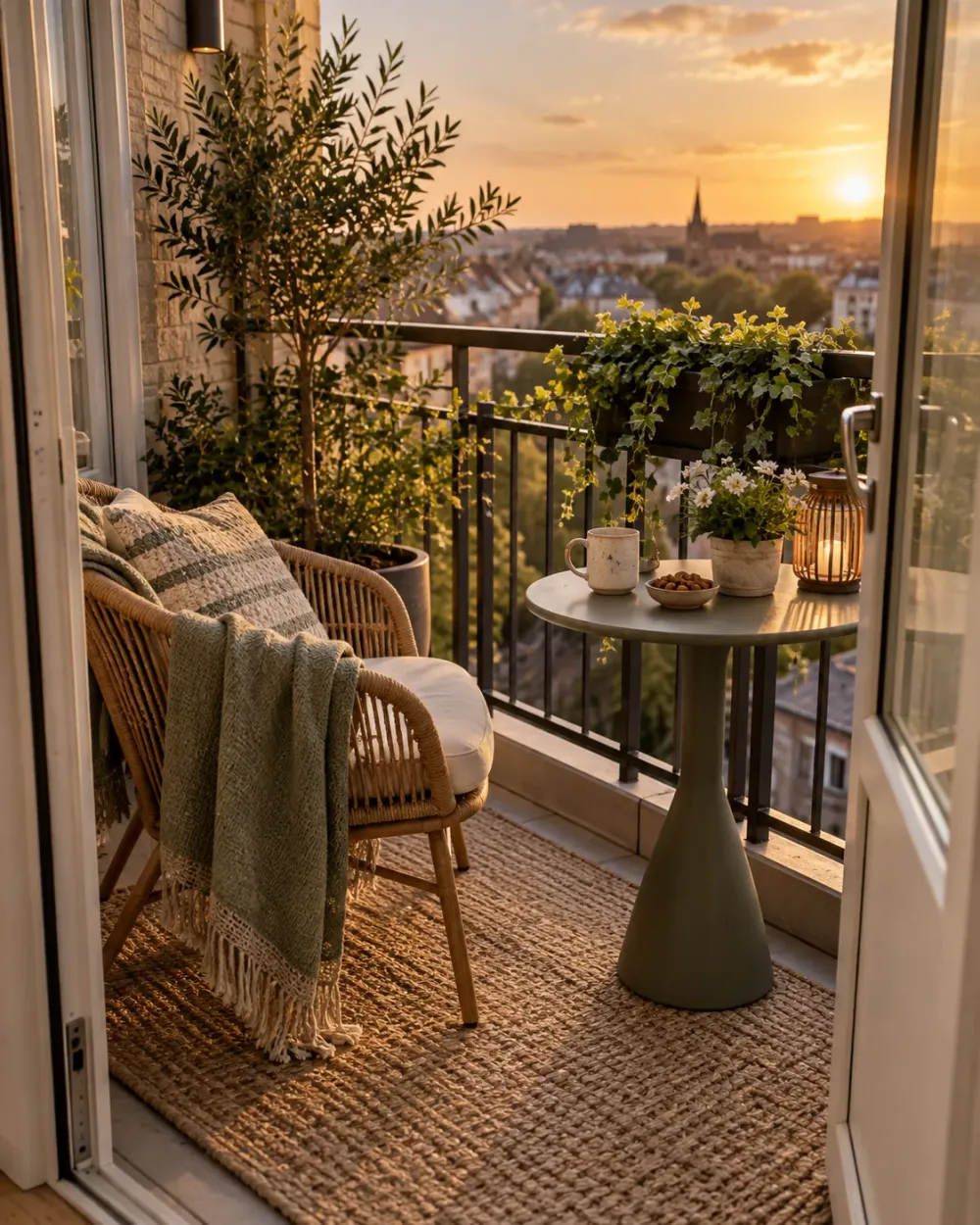
Think about what becomes the focal point when you turn the chair. Facing the balcony door might feel awkward if you’re looking straight into a busy kitchen, while a diagonal position can put a small table in front of you. Use your usual activity as the test: holding a mug, reading, or talking to someone inside. Choose the angle that supports that activity without requiring you to keep twisting your neck.
3. Consider a suitable freestanding screen
A screen may help where permitted, but it needs to suit the outdoor conditions and remain stable. Follow its installation and wind guidance. Don’t assume that a light decorative room divider is suitable for a balcony.
A modest screen beside a solid wall can create a sheltered spot for your chair. Measure the furniture and usable space before choosing its height or width.
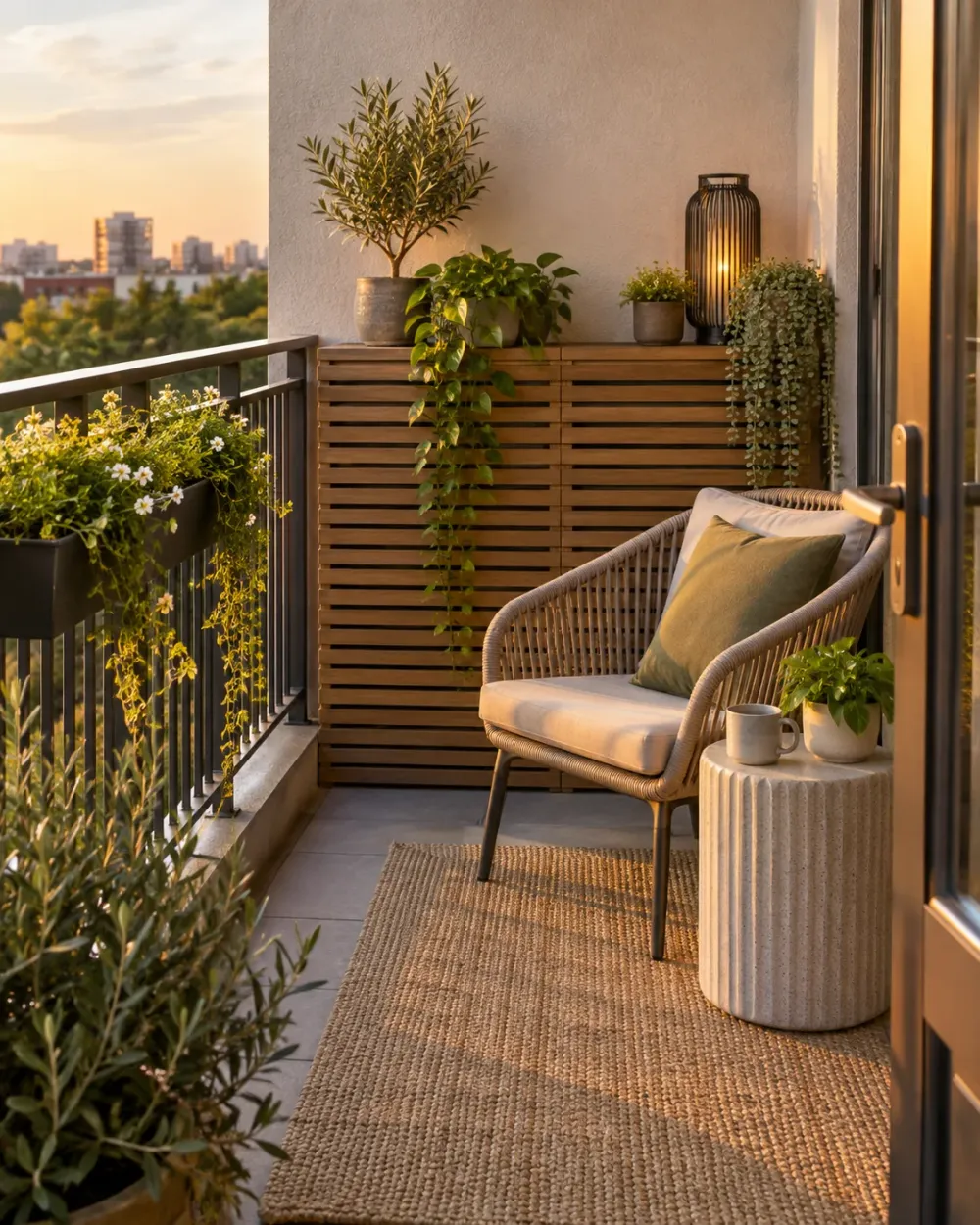
Measure the sightline you want to interrupt before choosing a screen. Ask someone in your household to hold a tape measure upright at the proposed position while you sit normally, without leaning near the railing. Record the height that would obscure the unwanted view and the width of that view from your chair. Compare those dimensions with suitable products, including their full base footprint, rather than shopping by panel size alone.
4. Group plants at floor level
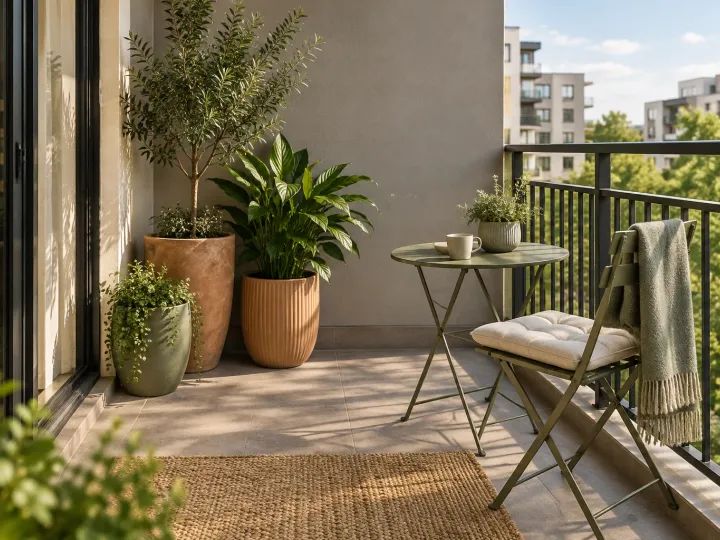
Leafy plants can soften a corner and create a sense of separation. Choose for the actual light and exposure, keep containers stable, and account for their weight when watered. Plants are a visual layer, not necessarily an effective privacy barrier.
Avoid unsafe placement on or above railings. Follow building restrictions and ensure drainage doesn’t affect the balcony below.
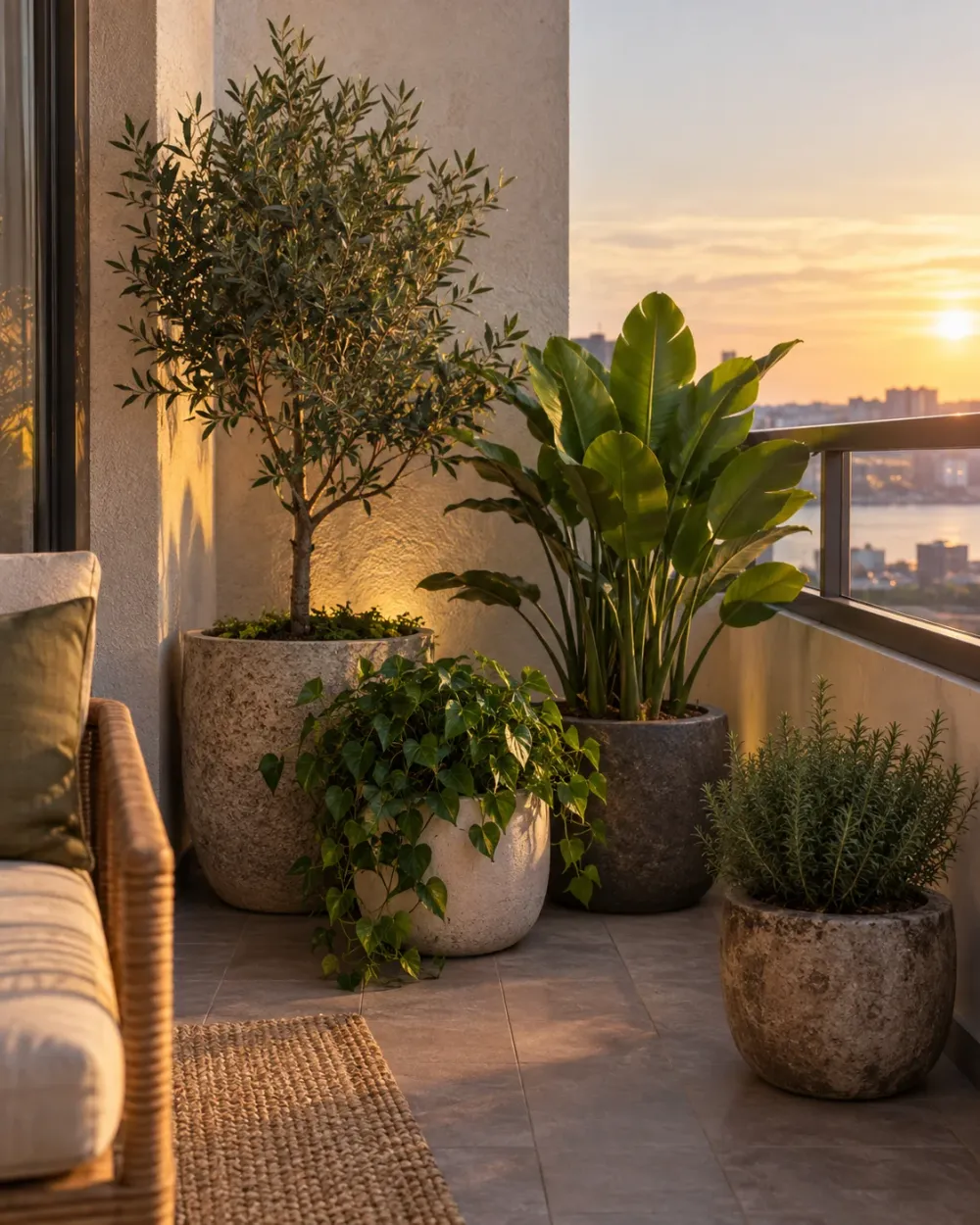
Choose plants by their foliage pattern as well as their eventual size. A plant with bare lower stems may offer little separation beside a seated person, even if it’s tall. Compare its leafy area with the view you want to soften. Group pots with similar watering needs so routine care stays manageable, and leave enough room to reach each container without repeatedly moving the whole arrangement. Seasonal leaf loss also changes how enclosed the corner feels.
5. Preserve the light you want
A large opaque screen may provide privacy but leave the seating area darker than you like. Test the position with a temporary visual reference where safe before making a purchase.
Consider whether shelter is needed only from one angle. A smaller intervention may offer a better balance than surrounding the whole balcony.
Check the effect on the room behind the balcony, not only the outdoor seat. If the balcony serves your main living room window, an opaque panel could interrupt light you rely on indoors. Take comparison photos from the same indoor spot at your usual balcony time, with consistent camera settings where possible. They’re a useful visual reminder, not a precise light reading. Decide which patch of daylight you’re willing to exchange for greater enclosure.
6. Keep the palette simple
Repeat one material or color across the chair, screen, and pots. Wood tones with terracotta and green can feel connected; a dark screen may work with a restrained black metal chair.
Keep accessories limited. Privacy furniture already adds visual weight, so additional decorative objects can quickly make the balcony feel crowded.
Start with the largest item you already own and let it set the palette. If your chair has a blue fabric seat, for example, neutral pots may be easier to coordinate than adding another strong color through the screen. Compare material samples or product images beside the chair in outdoor daylight. Matching undertones often matters more than matching every finish exactly, especially when weathered wood and newer pieces share a small space.
7. Plan for weather and storage
Check what needs to be moved or stored when conditions change. Outdoor textiles and screens have different maintenance requirements. Choose an arrangement you can manage comfortably rather than one that only looks good on a still day.
Map the storage destination before buying anything that needs seasonal removal. Measure the cupboard opening, shelf depth, or indoor corner where it would go, then compare those dimensions with the item’s folded size. Check whether moving it requires two people or awkward lifting through the door. For cushions, plan somewhere they can dry before being packed away. A compact folded shape is only helpful if you can carry it and reach its storage spot.
Plan a Chair-First Balcony Privacy Refresh
For your first refresh, use your current chair and any suitable outdoor pots you already own. Sketch the balcony, marking the door swing, solid walls, and the neighboring view that bothers you. Try the chair in two positions, then choose the more comfortable one for a normal coffee or reading break. Note exactly where you still feel exposed. Before shopping, check building permissions. Prioritize a suitable screen only if that remaining sightline needs blocking; buy plants instead if you mainly want a softer edge. Leave decorative accessories for later. After a few ordinary uses, check whether you’re sitting comfortably, reaching the door easily, and enjoying enough light. Change one thing at a time.
Questions before you start
Can I make a rented balcony more private without drilling?
Often, yes. Start with furniture placement and existing walls, then check whether your building permits freestanding outdoor screens or floor plants. No drilling doesn’t automatically mean an item is allowed or suitable for wind, so confirm both the rules and product guidance.
How can I tell whether I need a tall privacy screen?
Identify whether the unwanted view reaches you from the side, across the railing, or from above. A side screen may help a seated sightline but won’t necessarily address overlooking from higher windows. Measure from your actual chair position before choosing a height.
Will plants give me privacy throughout the year?
That depends on the plant and your climate. Deciduous foliage can disappear seasonally, and sparse stems may leave gaps at seated height. Look at mature shape and seasonal appearance, not just the nursery display. Treat planting as partial screening rather than guaranteed concealment.
What if a privacy screen takes up too much balcony space?
Check its base footprint, not just its panel width. If it crowds the usable floor, return to the chair position and target a narrower sightline. Partial privacy around one seat can be more practical than fitting a barrier along the entire balcony.
More ideas for your space
Our narrow balcony ideas cover furniture placement. For a softer plant corner, explore small balcony plant styling.