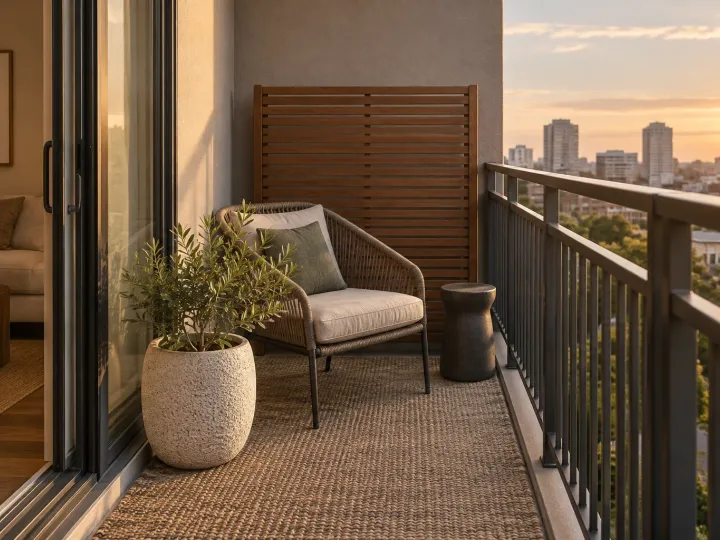
7 Narrow Balcony Ideas That Leave Room to Move
Create a comfortable narrow balcony with compact seating, practical plant placement, and weather-suitable details without filling every inch.
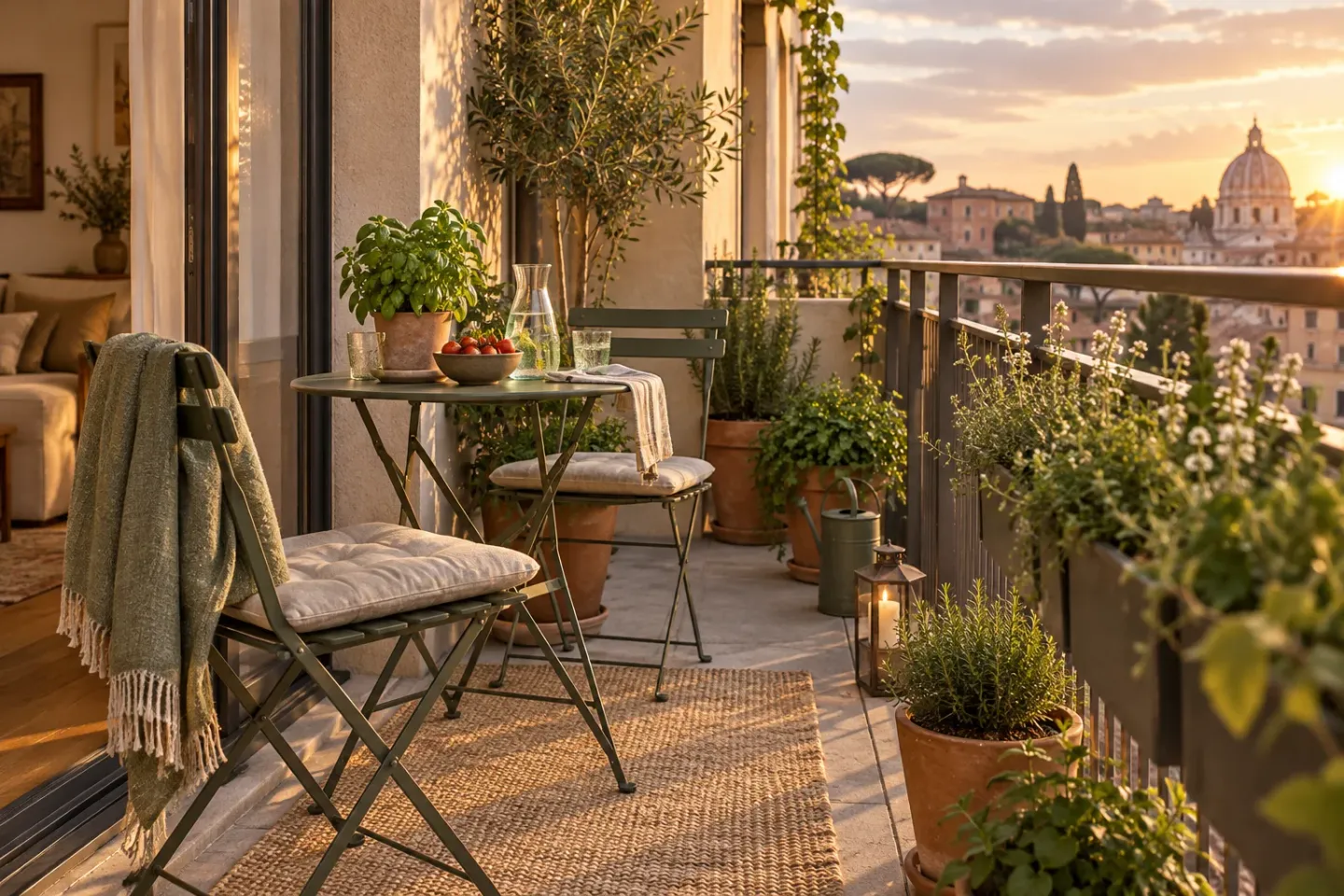
What would you like to do on your balcony: drink your morning coffee, read outside, or grow a few herbs? Pick the activity you’ll use most. On a narrow balcony, trying to fit everything usually leaves you shuffling chairs around. Start with one comfortable seat and a clear route to the door, then add the details that make you want to spend time there.
1. Plan narrow balcony seating before choosing decor
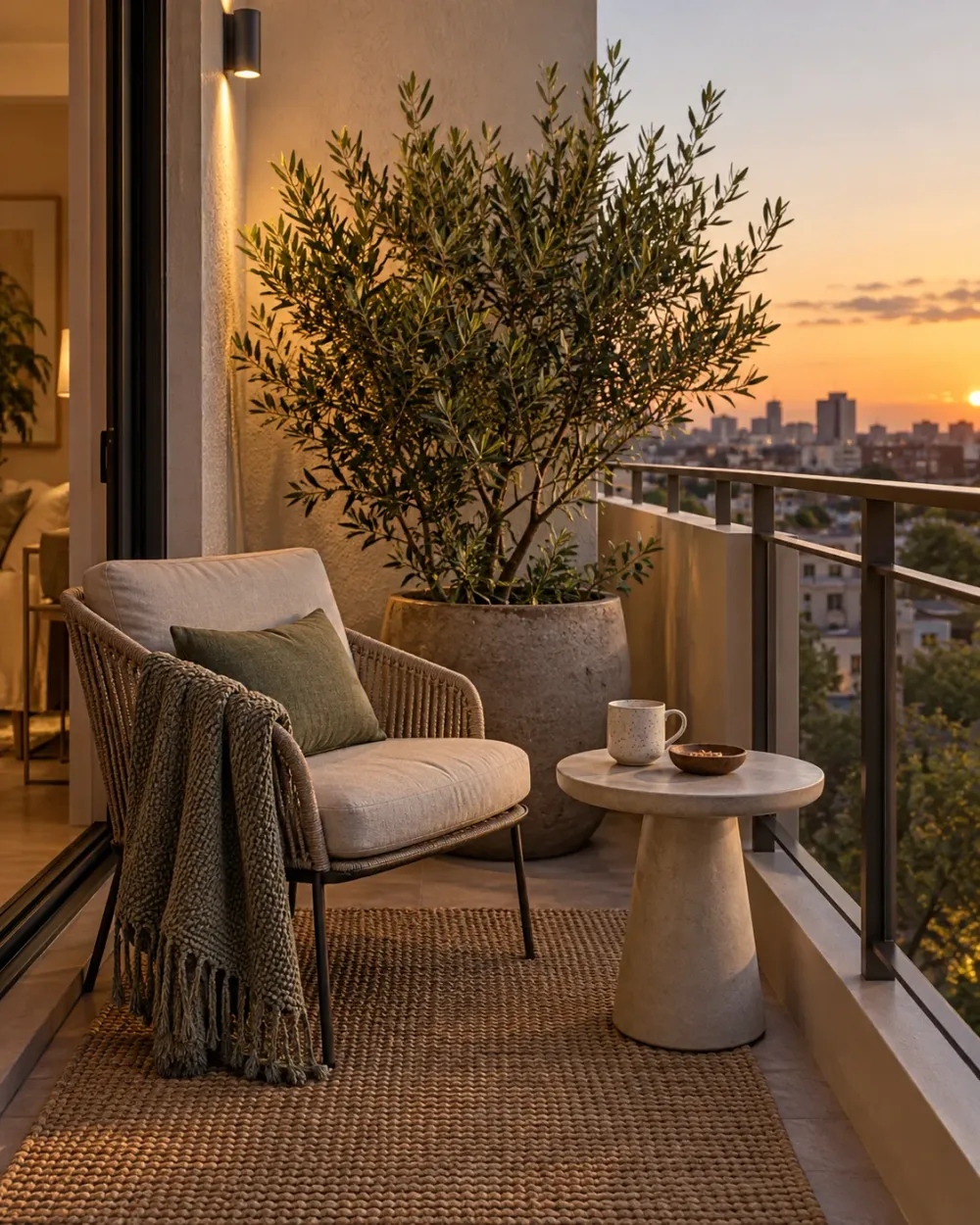
Measure with the balcony door fully open. Mark the footprint of a chair and sit in that location if possible. Include room for knees and moving the chair, not just the folded dimensions in a product listing. One comfortable seat can be more useful than two chairs that can’t be occupied together.
Think about your sitting posture, not just the chair’s footprint. A reader may want a supportive back, while someone having a quick espresso might prefer an upright seat. Use painter’s tape to compare two chair shapes on the floor, then check where your feet land when you lean back. If an armrest makes getting up awkward, a slimmer armless chair could be the better choice even when both models technically fit.
2. Use folding furniture when it solves a real problem
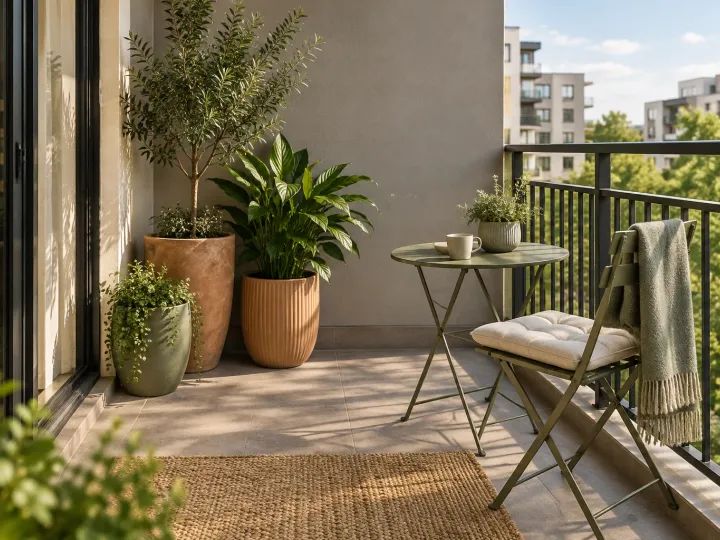
Folding chairs help if you need to reclaim floor space for laundry or plant care. They don’t solve storage if there is nowhere safe to put them. Choose furniture designed for outdoor use, follow weight limits, and keep it secure in windy conditions.
Check the folding routine before choosing a piece. Does it close with one hand, or will you need to clear the whole balcony to manage it? Look at its folded thickness as well as its height. For example, a chair might fit beside an indoor cupboard but block that cupboard’s handle. If folding and unfolding feels like a chore, a lightweight fixed chair may suit your daily habits better.
3. Choose a small table with a stable base
A compact round table can work in a tight seating arrangement. Confirm that its base doesn’t interfere with feet and that the surface can hold what you regularly use. Railing-mounted tables require specific permission and suitable hardware; a freestanding table avoids some installation concerns but still needs adequate clearance.
Match the tabletop to a typical moment rather than an imagined gathering. Arrange your mug, book, and breakfast plate on an indoor surface, then measure the area they occupy. That gives you a useful starting point for comparing tables. A taller side table may keep a drink within easy reach, while a low table could mean bending forward every time. Choose the height that works with your actual chair.
4. Keep plants grouped and accessible
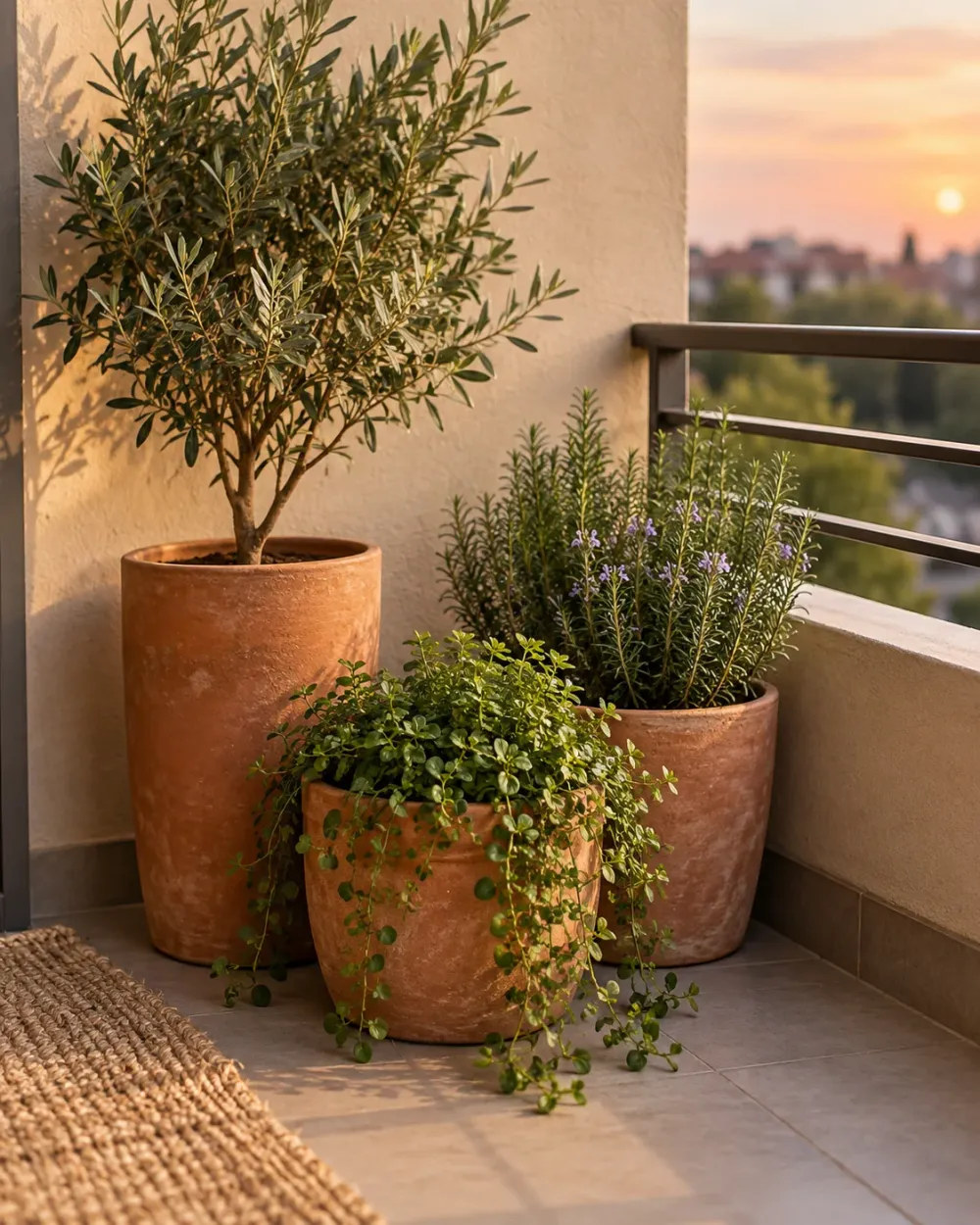
Two or three pots of different heights often feel calmer than pots lining the entire floor. Choose plants for the actual sunlight and wind exposure. Keep pots stable, account for their weight when watered, and prevent drainage from affecting neighbors. Don’t place pots on a railing where they can fall.
Group plants by care needs as well as appearance. Herbs that need frequent watering are easier to manage together than mixed among pots that prefer to dry out. Leave enough access to lift each pot and empty its saucer without moving the chair. Before buying another plant, consider its mature spread: a leafy specimen can occupy much more usable space than its pot suggests, especially beside a seat.
5. Repeat a simple color palette
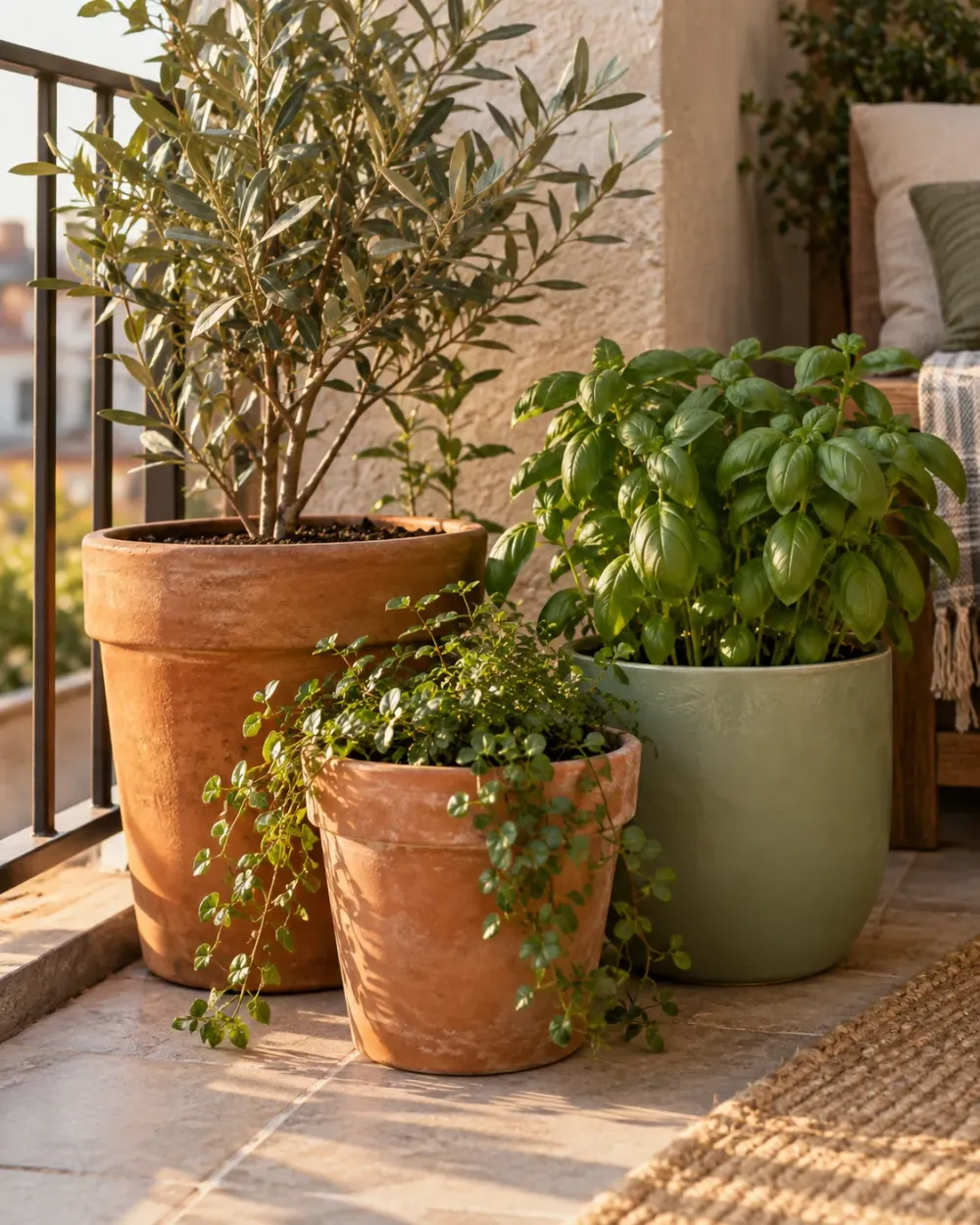
Natural wood tones, terracotta, and green can make a small outdoor space feel connected. Use one cushion color rather than a different pattern on every seat. Outdoor fabrics should suit exposure to rain and sun, and removable cushions need somewhere dry to be stored.
Let something you already own set the palette. A rust-colored cushion could connect terracotta pots with a warm wood chair, while a blue cushion might suit gray furniture better. Compare colors outside before buying matching pieces, since direct sunlight can change how they look. Keep larger surfaces quiet and use your chosen accent in one or two small details. You don’t need every item to match for the balcony to feel coherent.
6. Add a textile only if it’s practical
An outdoor rug can soften the look, but it must drain, dry, and lie flat without obstructing a door. Some balconies are better without one, especially in wet climates or where the surface needs regular inspection. Follow your building’s rules for floor coverings.
Consider what happens beneath a textile, not only how it looks from above. If you regularly sweep fallen leaves or spilled potting mix, a rug adds another item to lift and clean. Try marking its proposed outline with tape and walk through your usual cleaning routine. A smaller textile under the seating area may be easier to handle than full coverage, provided its edges stay flat and outside your walking route.
7. Make evening use simple
If lighting is allowed, choose fixtures designed for the outdoor conditions and follow electrical guidance. Avoid loose cords across the floor and unsecured decorations that can blow away. A rechargeable outdoor-rated lamp may be easier to manage than a long string of lights. Never compromise exits or fire-safety restrictions for ambiance.
Place a portable lamp where it serves the evening activity you actually enjoy. For reading, check whether the light reaches the page without shining into your eyes; for conversation, a lower glow may be enough. Try the position after dark before settling on it. Check the stated runtime at your preferred brightness, too. A lamp that lasts through dinner on its lowest setting may not last as long at reading brightness.
Try a coffee corner before buying anything
For a first refresh, bring out an existing chair and use a sturdy outdoor-suitable stool or table you already own for your cup. Skip decorative additions for now. Take a photo from the doorway, then spend ten minutes there doing your chosen activity. Can you sit down, reach your drink, and return indoors without rearranging anything? Repeat with another household member if you’ll share the space. Make the first purchase solve the biggest problem you noticed: a more comfortable outdoor chair, a better-sized table, or one manageable planter. Delay coordinating accessories until those basics work. Keep a short note of anything you move repeatedly; that’s the clearest sign the layout needs adjusting.
Questions before you start
Can a narrow balcony work for two people?
Sometimes, but test it with both people seated rather than judging from empty furniture. Check whether either person has to stand up for the other to leave. If that happens, one permanent seat plus an occasional folding chair may be more practical.
How do I choose balcony furniture when product photos don’t show the scale?
Use the listed assembled dimensions to mark the footprint at home, then compare it with furniture you can sit on. Check seat height, back angle, and arm width separately. Ask the seller for missing measurements instead of assuming a compact-looking chair will feel comfortable.
What if my narrow balcony also needs to hold laundry?
Treat laundry drying as a separate layout mode. Mark the drying rack’s open footprint and decide where seating will go while it’s in use. Choose folding furniture only if you have a convenient storage spot, and avoid buying extras that make switching layouts difficult.
Do I need an outdoor rug to make the balcony feel finished?
No. A clean, uncovered floor can look intentional, especially when furniture and pots share a simple palette. If a rug would complicate drying or cleaning, leave it out. Judge the space from your seat as well as the doorway before adding another layer.
More ideas for your space
If the seating feels overlooked, explore small balcony privacy ideas. To add greenery while keeping the floor open, see small balcony plant styling.