8 Christmas Decorating Ideas for Small Apartments
Bring Christmas into a small apartment with a tabletop tree, paper stars, warm lighting, and simple seasonal details that preserve everyday space.
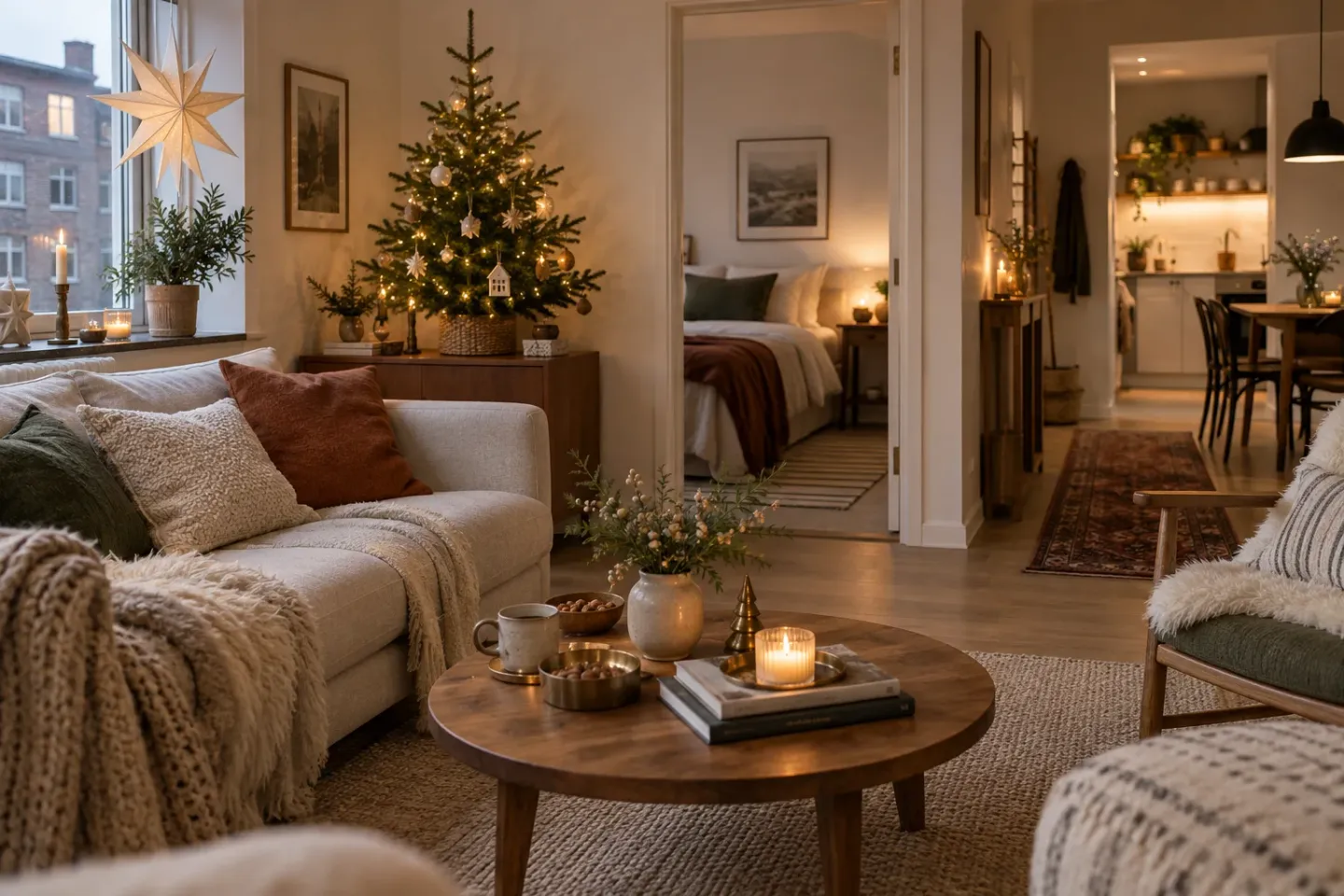
You can make a small apartment feel festive without squeezing a full-size tree beside the sofa. A tabletop tree, a few paper stars, and soft lighting can bring plenty of Christmas warmth. Keep the furniture where it works for everyday life. Then choose a handful of decorations you’ll enjoy putting up and have somewhere to store afterward.
1. Start Your Small-Apartment Christmas Decorating With a Tabletop Tree
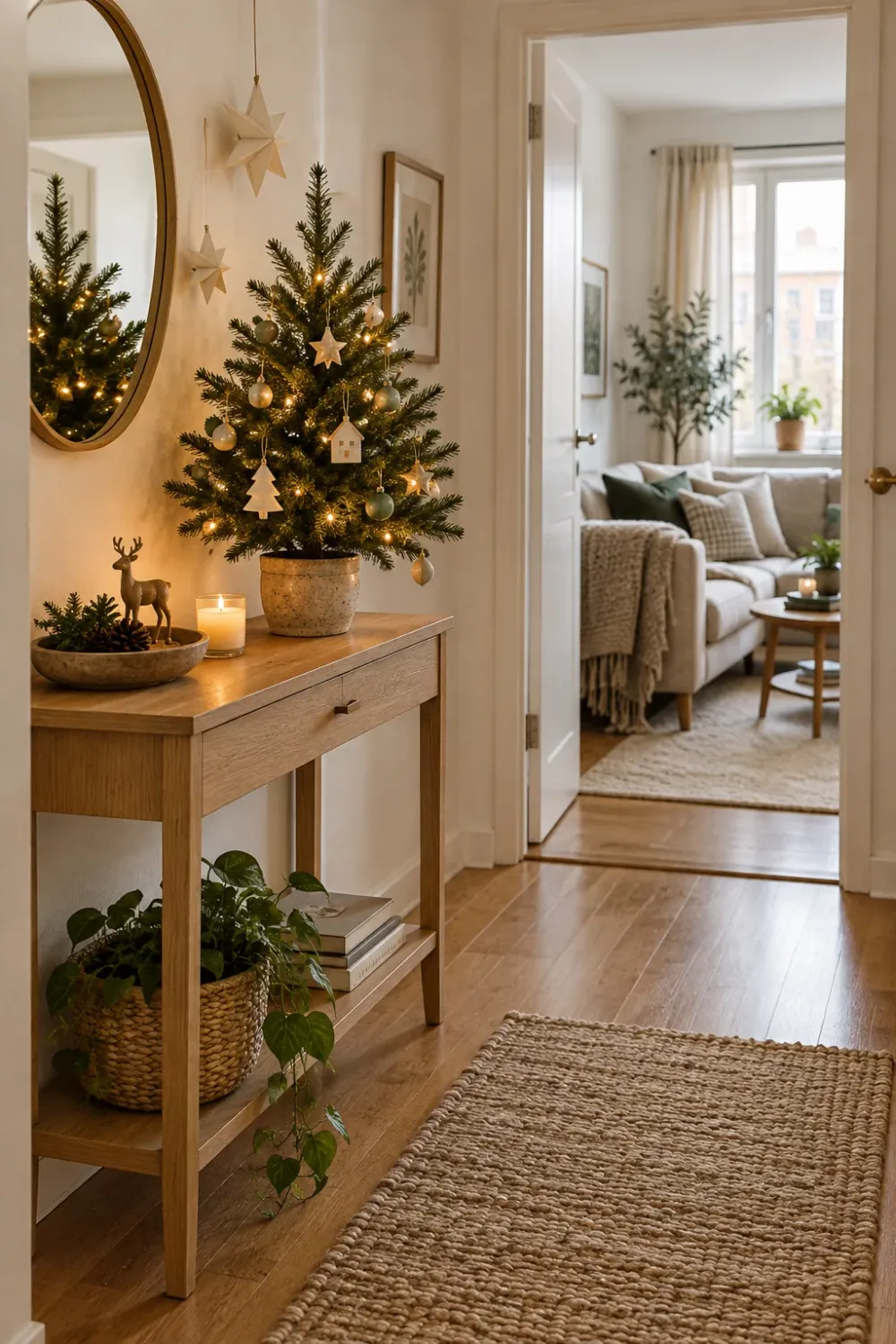
A small tree on a stable console or side table can provide a festive focal point. Measure the total height including the pot and topper. Keep it away from heaters and doorways, and account for pets or children who might pull ornaments or cords. Follow light manufacturers’ instructions and check strings for damage before use.
Check the tree’s spread as well as its height, especially if its branches will sit at elbow level beside a chair. Cut a paper circle roughly matching the widest branches and place it on your chosen table. For a narrow console, a slim tree may leave more usable space than a shorter, bushier one. Keep ornaments in proportion so their weight doesn’t bend the small branches or overwhelm the shape.
2. Decorate one existing surface
Choose a console, shelf, or coffee table instead of creating a new display in every corner. A small vase of branches, a few ornaments in a bowl, and a single seasonal object can be enough. Leave space for the surface’s regular job, whether that means drinks, keys, or a television remote.
Build the arrangement on a tray you already own so it can move as one piece when you need the whole surface. On a coffee table, try setting out your usual mugs and remote before choosing the tray’s position. If the display only fits when everyday belongings disappear, reduce it to one vessel. A shallow bowl works particularly well where taller branches would interrupt conversation or block the television.
3. Use lightweight paper stars
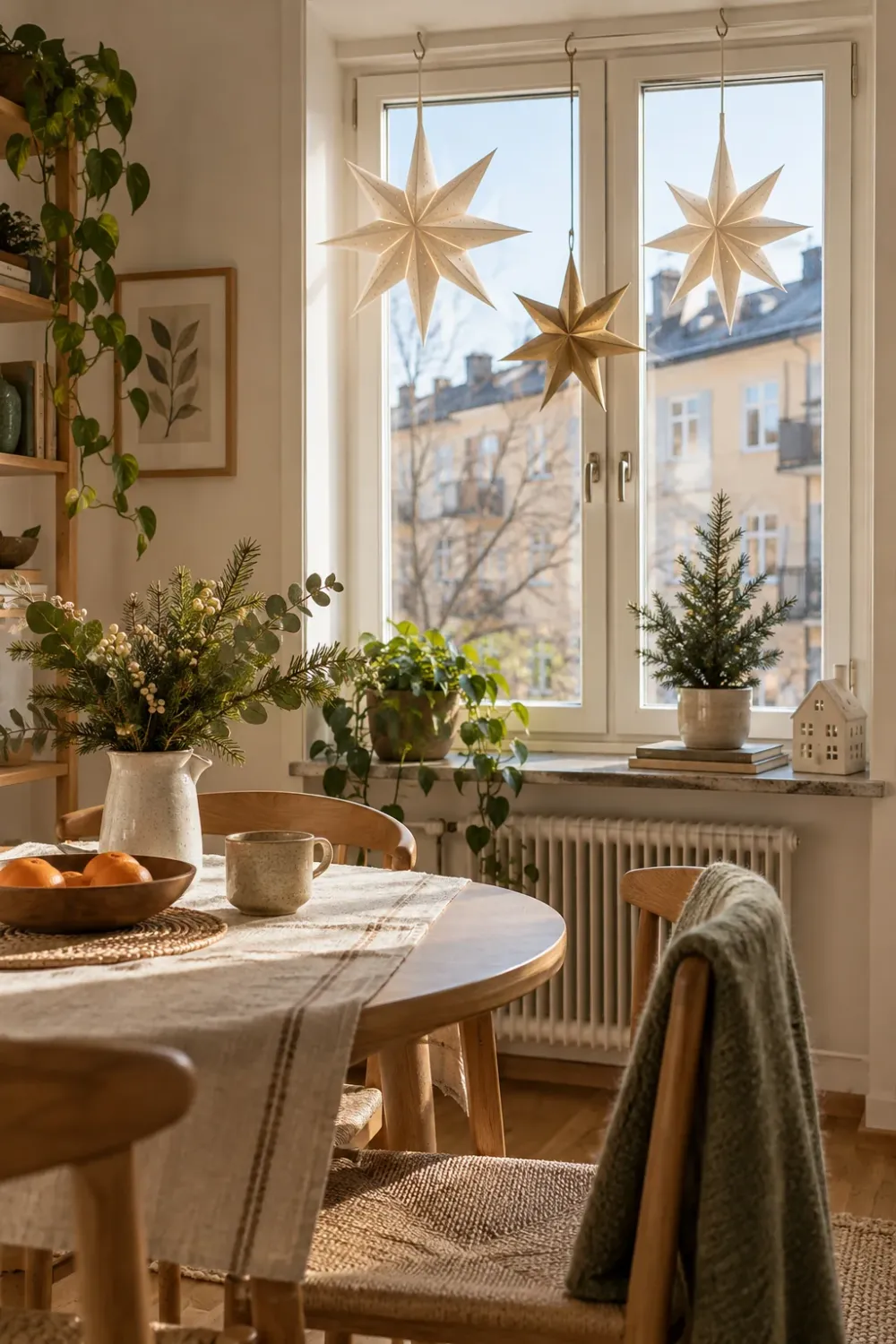
Paper stars can add shape without taking up floor space. Place them where they will not interfere with doors or vents. Check that hanging products are compatible with the wall finish and lease terms; “removable” doesn’t guarantee damage-free removal. Keep paper away from heat and open flames.
Choose star sizes by looking at the wall from your usual seat, not just while standing beside it. A single folded star can read more clearly on a narrow wall than several tiny ones. Cut rough paper shapes first and lay them out on the floor to compare spacing before hanging. If you’re decorating a window, check the arrangement with the blind fully open and closed before settling on placement.
4. Swap a cushion cover
A muted evergreen, burgundy, or textured cream cover can change the room without adding another object. Choose a cover that fits an insert you already own. Limit the change to one or two textiles so the room remains comfortable to sit in, and avoid turning the sofa into storage for decorative pillows.
Look at the cover’s care label and closure before choosing it. A washable fabric is useful on the cushion you lean against every evening, while a heavily embellished cover may suit a less frequently used chair. Compare the listed dimensions with the insert’s label rather than judging by eye. Keep the original cover folded with your seasonal belongings so you can reverse the swap without hunting through a linen cupboard.
5. Bring warmth through lighting
Use suitable LED decorations or battery-operated lights where allowed. Follow placement, battery, and operating instructions. Route cords safely and keep exits clear. Flame-free options are often easier to manage in a small room than candles beside curtains or paper decorations.
Think about what you’ll see from the sofa after dark. Exposed points of light can feel distracting when they’re reflected in a television screen, while a softly diffused LED lantern may give a gentler effect. Try your existing decorative light in the intended spot before adding another. Choose brightness for atmosphere rather than reading, and keep your normal task lamp available so the festive setup doesn’t make everyday activities harder.
6. Keep the palette connected to your room
Choose holiday colors that work with existing furniture. Olive green and cream suit many warm-neutral rooms; a blue sofa might work well with silver and muted white. Repeating a small palette across the tree, textiles, and wrapping paper creates consistency without a large collection of decorations.
Use undertones to narrow your choices when two holiday colors seem equally suitable. Hold an ornament or wrapping-paper sample against your sofa fabric in daylight, then look again under your evening lamps. A creamy white may sit comfortably with beige upholstery, while a crisp white can look noticeably cooler. If you already own mixed decorations, group them by color first and choose the group that needs the fewest extra purchases.
7. Make gift wrapping part of one display
A few wrapped gifts can add seasonal color near a tree or console. Use the same ribbon or paper family for a connected look. Keep gifts out of walking paths and avoid using spaces that are needed for heating, ventilation, or emergency access. Move the display when it starts to interfere with daily life.
Wrap gifts according to when they’ll leave the apartment, then arrange the earliest departures where they’re easiest to reach. A parcel at the bottom of a stack shouldn’t require dismantling the whole display before a visit. Put recipient names on tags you can read without untying ribbons. If some presents are awkwardly shaped, let one gift bag join the arrangement rather than buying boxes solely to make every package look uniform.
8. Plan how everything will be stored
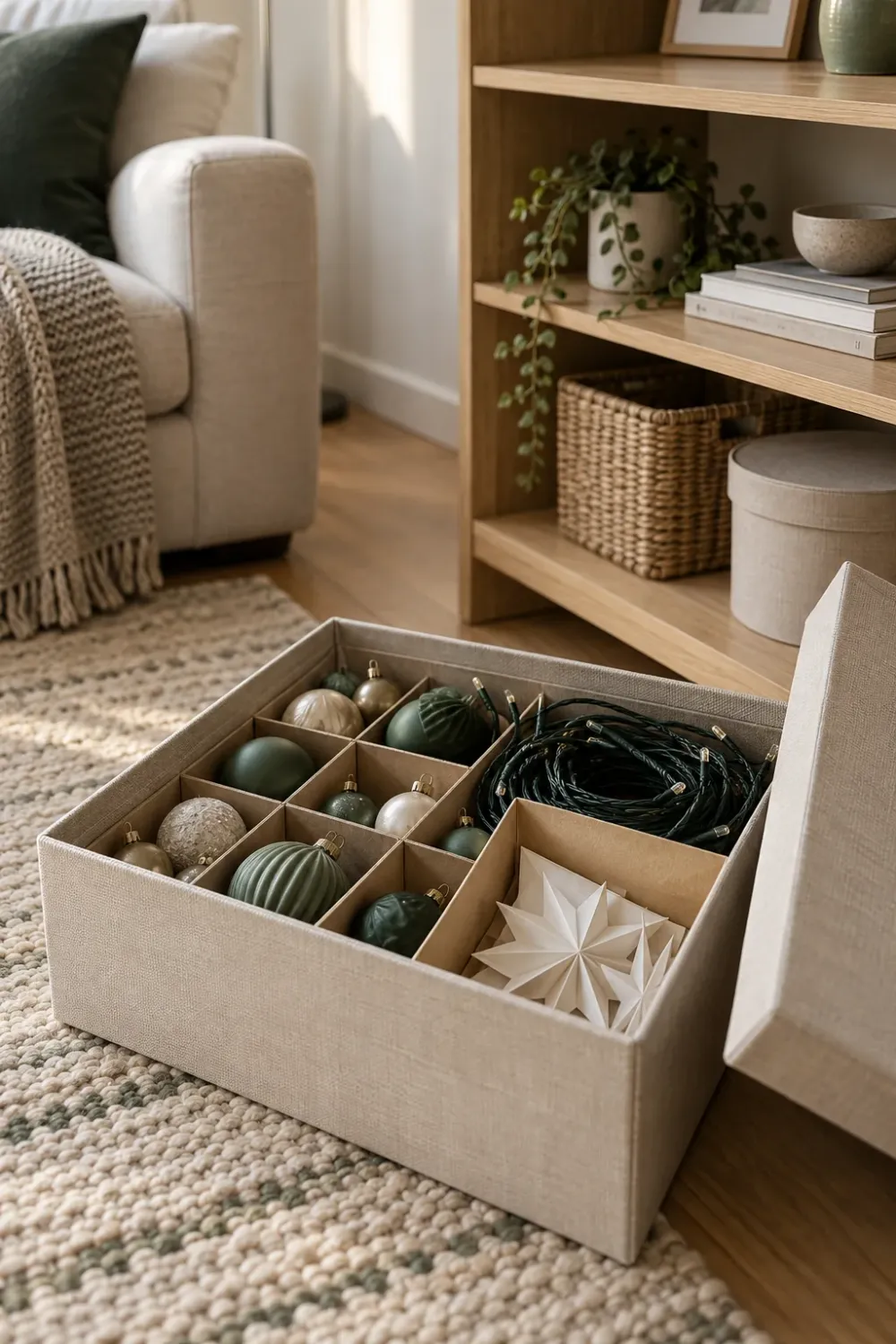
Before buying, decide where decorations will live after the season. A single labeled container can help set a sensible limit. Fragile pieces need padding, while light strings benefit from being wound separately. A small collection that you enjoy using each year is easier to maintain than decorations that are difficult to put away.
Measure the actual storage opening, not only the shelf or space beyond it. A container that fits under the bed still needs room to slide out without moving heavy furniture. Before purchasing bulky decorations, compare their packed dimensions with that available space. Keep ornament dividers from existing packaging, and photograph the container’s contents before closing it. The photo makes next year’s shopping decisions easier without unpacking everything to check what you own.
Start With a One-Surface Christmas Refresh
For your first refresh, choose the surface you see most often from the sofa. Clear it, then put back the everyday items that genuinely belong there. Gather a bowl, a favorite seasonal object, and any ornaments you already own. Try a small arrangement with those pieces before opening a shopping list. Use the room normally for two evenings, including setting down a drink and reaching for whatever lives on that surface. If you repeatedly move the decorations, make the arrangement smaller. Buy only after that check, prioritizing one missing focal piece over several little extras. Measure its intended spot and confirm where it will be stored before committing.
Questions before you start
Can a small apartment feel Christmassy without a tree?
Yes. Give one familiar spot a clear seasonal identity, such as a shelf with paper stars above it or a bowl of favorite ornaments. Keeping the display visible from where you relax matters more than including a tree you don’t have room for.
How can I decorate if my lease doesn’t allow wall attachments?
Keep the decorations on furniture you already have. A tabletop tree, a seasonal cushion cover, and wrapped gifts can provide plenty of Christmas detail without wall attachments. Skip hanging stars if there’s no permitted way to support them rather than improvising a fixing.
What should I prioritize in a studio where the living room is also the bedroom?
Choose a display that stays put when you switch from daytime use to sleep. A shelf may work better than a bedside table you need every night. If you add decorative lighting, make sure its controls are easy to reach from your usual position.
How do I include sentimental ornaments that don’t match my room?
Give your favorites a small display of their own instead of forcing every ornament into a strict palette. A plain bowl can bring mixed colors together. Rotate the selection each year if showing everything would crowd the surface you use.
More ideas for your space
Start with the layout in our small living room guide, then use entryway ideas to keep coats and everyday items organized when guests arrive.