7 Small Balcony Plant Styling Ideas Without the Clutter
Style a compact balcony with grouped plants, a simple pot palette, and clear floor space so greenery feels intentional rather than crowded.
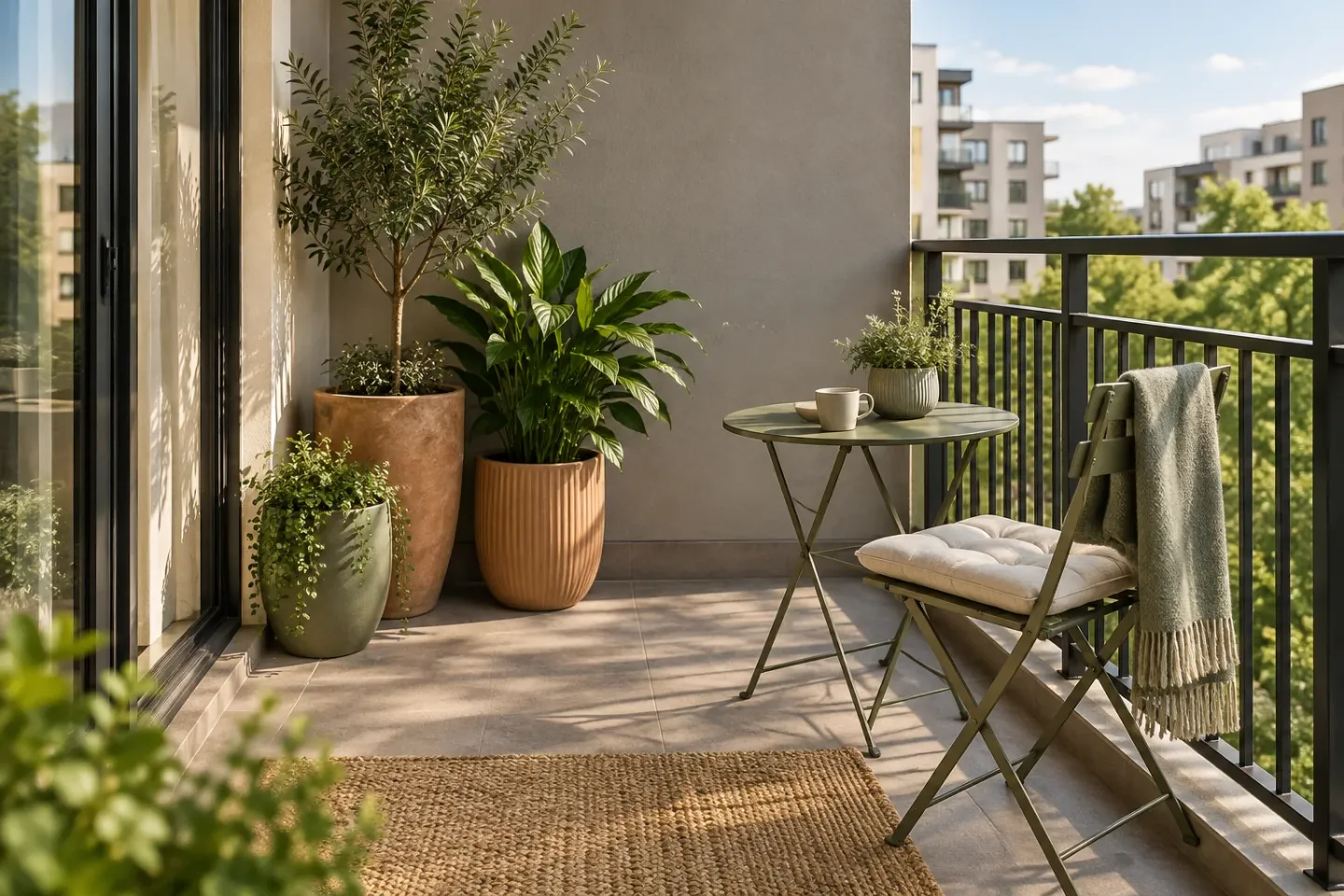
It’s easy to bring home one more plant and suddenly find that your balcony has no room for a chair. A small grouping can give you plenty of greenery without filling the floor. Choose a spot where the plants will get the light they need and where you can reach them with a watering can. Then work on the pots and spacing.
1. Choose One Corner for Small Balcony Plant Styling
Group plants where you can reach them without moving every chair. A corner beside a solid wall can look settled while leaving a clear path across the floor. Check the light there at different times of day before selecting plants.
Keep the doorway, drains, and any required access points usable. An attractive arrangement still needs to work when the balcony is wet or the pots need care.
Compare two possible corners using the actual footprint of your existing pots, including saucers. Mark each cluster with removable tape, then check whether you can reach the back container without stepping between plants. A corner that looks tidy but requires lifting three pots to water the fourth isn’t the better choice. If both spots suit the plants, favor the one that makes everyday care simpler rather than the most symmetrical layout.
2. Vary pot heights in a small grouping
Different pot heights can create visual interest without a large collection. Try one taller leafy plant with two smaller companions. Use stable containers, and avoid improvised stands that wobble or create a trip hazard.
Look from the seat as well as the doorway. The best arrangement is one you can enjoy while using the balcony, not just when photographing it.
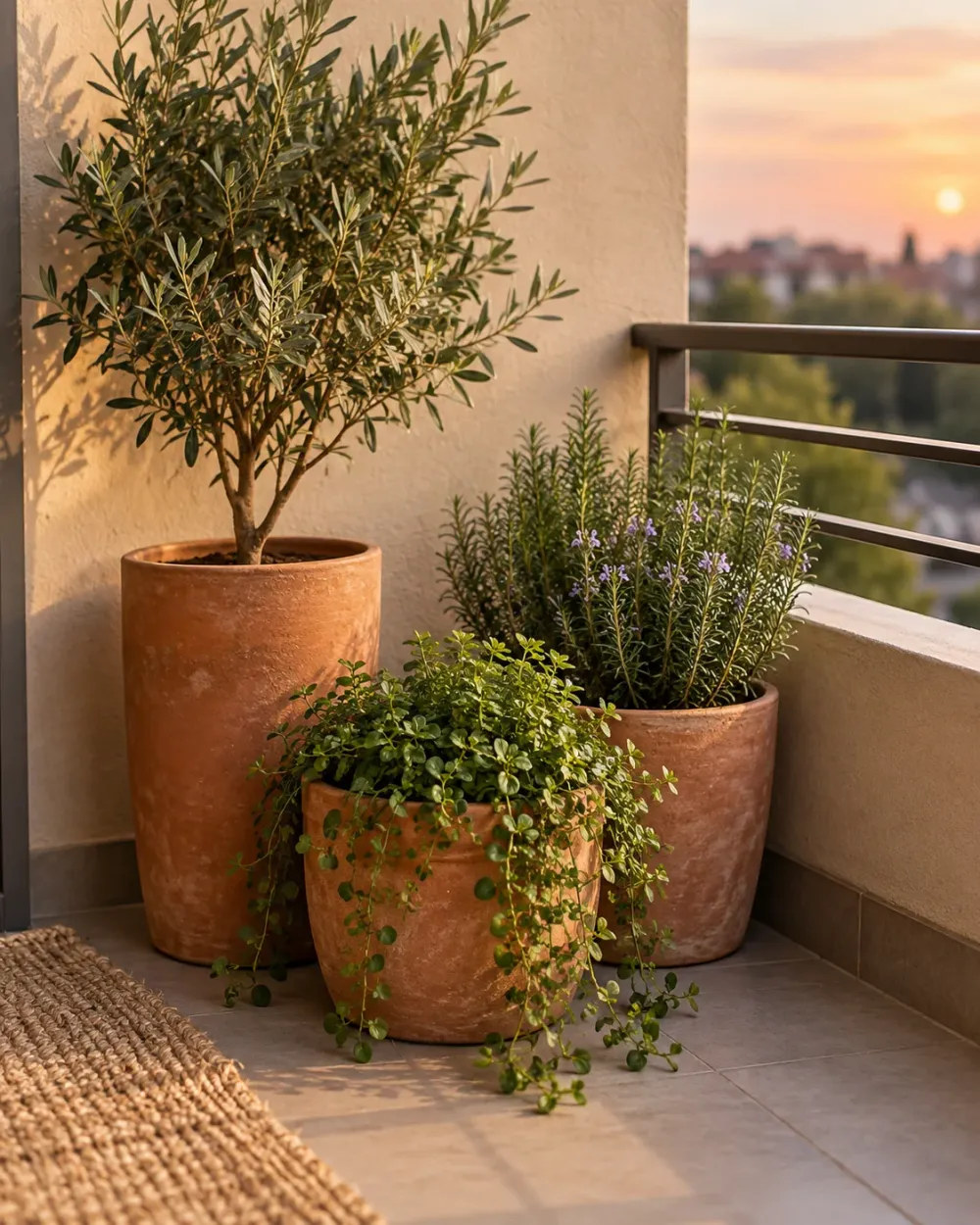
Build the height variation through plant shape as well as container size. An upright plant in a modest pot can sit behind a low, spreading plant without needing a pedestal. Arrange the tallest silhouette slightly off center, then turn the smaller pots until their leaves remain distinct. If the grouping reads as one dense block, reduce the overlap rather than adding another height. That keeps each plant visible within the same footprint.
3. Repeat two container finishes
Terracotta paired with a muted painted pot can feel warm and connected. Another option is one neutral ceramic finish with a darker accent. Keeping the palette limited makes varied plant shapes easier to notice.
Check the practical details before choosing a pot by its color. Check drainage, outdoor durability, and the weight of the filled pot before choosing by color alone.
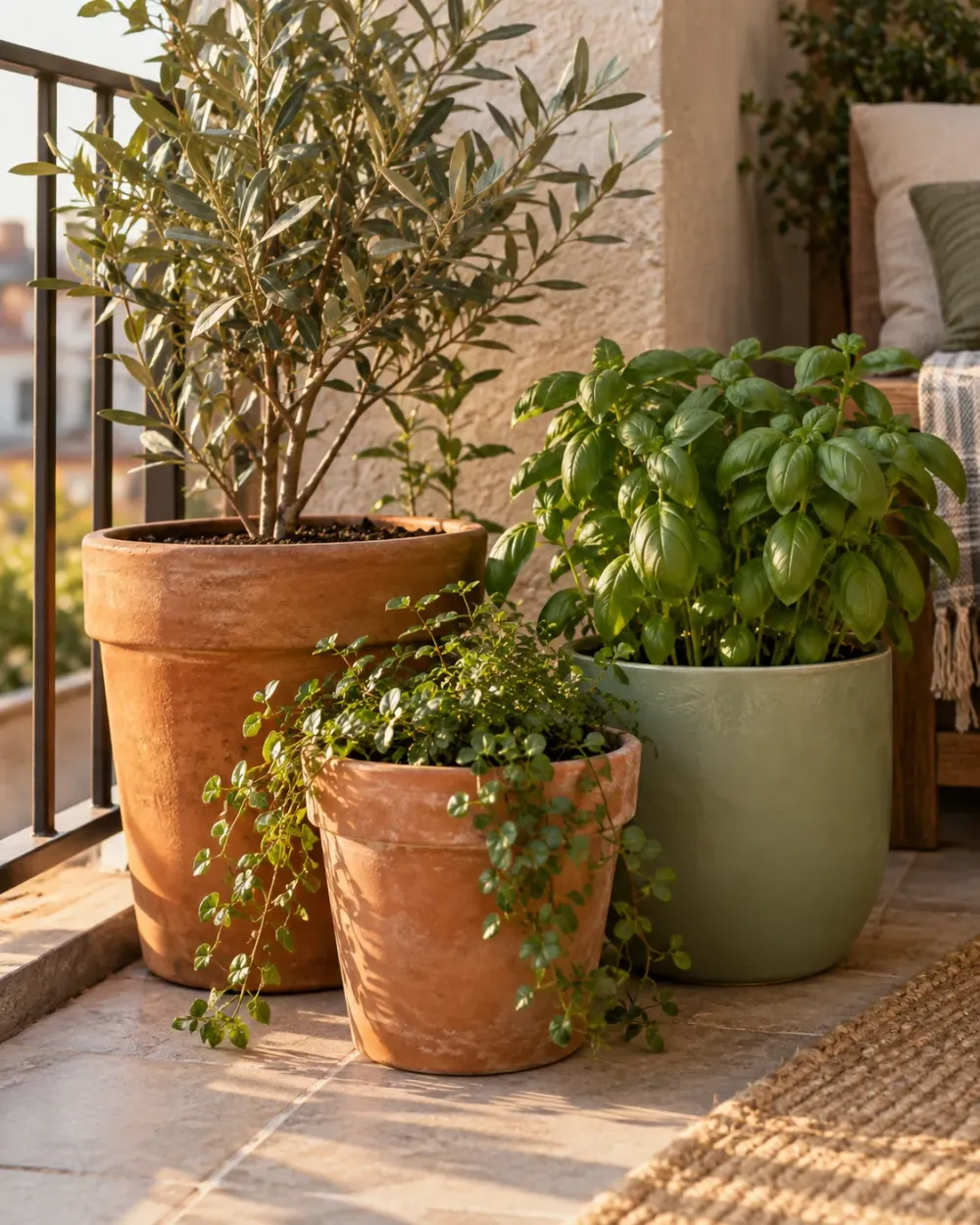
Sort the pots you own into finish families before replacing anything. Slightly different terracotta shades can still read as one family, while a glossy white pot will stand apart from matte cream. Decide whether that contrast deserves one of your two finishes. If not, move that container to another suitable location. You don’t need identical shapes: repeating the surface treatment often provides enough connection, even when pot sizes and rims differ.
4. Let one plant be the focal point
A single substantial floor plant can do more visually than many small scattered pots. Keep its mature size in mind and leave room around it for maintenance. Choose a species appropriate to the real light and exposure.
If you already own several plants, try moving them into one related grouping before buying more. The change may solve the visual clutter without reducing the greenery.
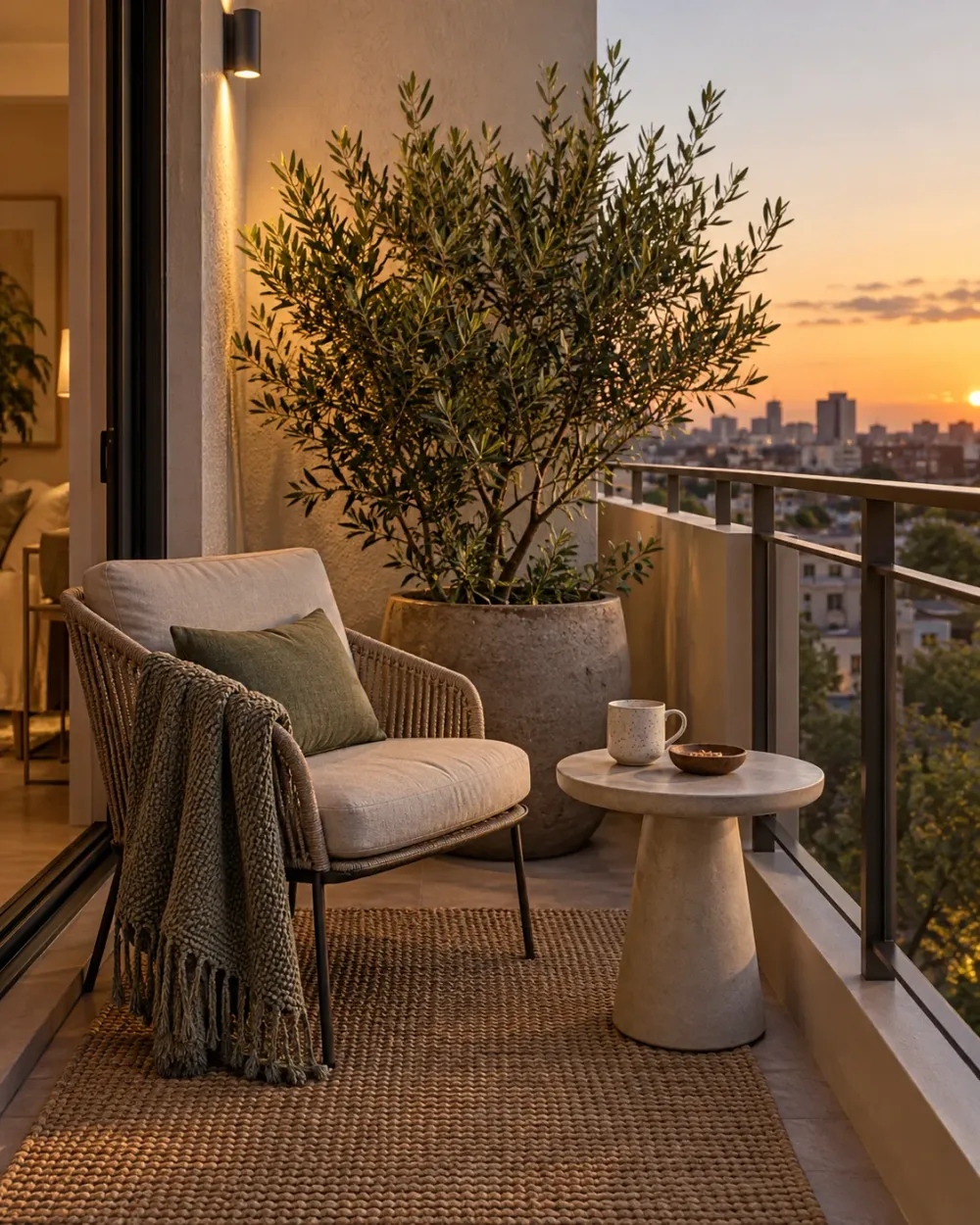
Choose the focal plant by its silhouette, not simply its pot diameter. A narrow, upright specimen can provide a strong anchor where a broad canopy would overwhelm the seating area. Check the expected spread for that particular plant and picture the leaf outline at eye level. If you want a softer, fuller shape, accept fewer supporting pots around it. The tradeoff is between canopy space and collection size, not impact and abundance.
5. Pair greenery with simple furniture
A compact chair and a plain table can give the plant grouping a calm backdrop. Avoid multiple patterned textiles competing with different leaf shapes. One repeated color in a cushion or pot can connect the seating area.
Leave the table useful for a drink or book. It doesn’t need to become another shelf you have to clear before using it.
Try the furniture in its working position before settling the plant layout. A folding chair may store neatly but take up much more space when someone sits with their legs extended. Use your current chair for this check, even if you plan to replace it. If a table crowds the seat, consider a smaller freestanding table that still holds your usual essentials. Choose furniture around how you relax, not just its folded dimensions.
6. Keep the path across the floor visibly open
Step back and look for the path between the door, chair, and plants. Pots often creep into this route as a collection grows. Move occasional plants elsewhere rather than accepting a narrow obstacle course.
Keep pots safely below railing height and follow building rules. Consider their watered weight and where excess water will go.
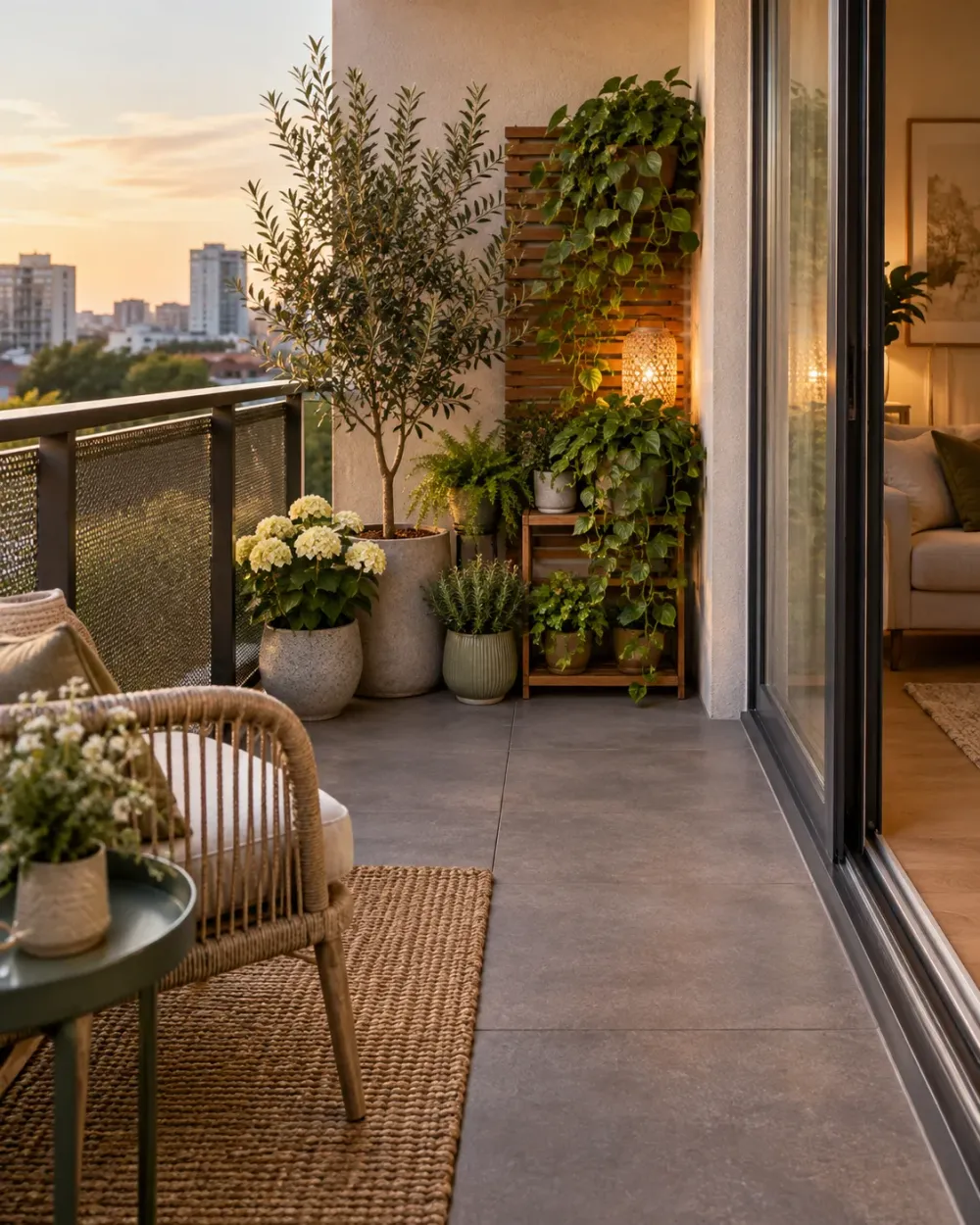
Measure the route at its tightest point with the door and chair in their normal positions. On a particular balcony, a pot might look contained within its saucer while its leaves extend well into the walking space, so include the foliage in your check. Carry your usual watering can along the route and notice where you turn sideways or brush leaves. Use those observations to move pots back, rather than relying on appearance alone.
7. Edit the arrangement as plants change
Plants grow, shed leaves, and need different care. Revisit the grouping instead of treating it as a permanent display. A crowded corner may need fewer containers or a new position, not more accessories.
Take a quick photo from the same doorway position every month during active growth. Compare the edges of the grouping, not just how lush it looks. When leaves begin hiding neighboring plants, decide which specimen needs more space and which can move to another suitable spot. Rotate pots only when that suits their care needs. This gives you a simple editing trigger before the arrangement becomes difficult to maintain.
Refresh Your Balcony Plant Layout Before Buying
For a first refresh, bring together three plants you already own that suit the same balcony conditions. Set them in one candidate corner using their current pots and saucers. Keep your existing chair and table in place, and remove decorative extras temporarily so you can judge the greenery clearly. Measure the cluster’s footprint and note the space needed to water each pot. Buy only what solves a specific gap: a suitable draining container first, then a needed saucer, with matching finishes a later priority. Use the balcony for a few ordinary sessions. If sitting, opening the door, and watering all feel straightforward, the layout is working. Adjust positions before adding another plant.
Questions before you start
How many plants should I put on a small balcony?
There’s no fixed count. Start with the plants that fit one manageable grouping while leaving your seating and route usable. Three small containers may work better than one broad plant, or the reverse. Judge the full leaf spread, not just the pots.
Can I make mismatched pots look coordinated without replacing them?
Yes. Identify two finish families within what you own, such as earthy clay and muted green. Let differences in shape remain. Put containers outside those families elsewhere if the plants can thrive there, rather than buying a complete matching set.
What if my balcony is too windy for a tall focal plant?
A focal point doesn’t have to be tall. Choose a lower, substantial plant suited to the exposure, in a stable outdoor container. Its leaf shape or fullness can anchor the grouping. Avoid trying to compensate for wind with a precarious stand.
How do I keep watering from making the balcony messy?
Give each container an appropriate saucer or drainage setup permitted by your building, and keep it accessible for checking. After watering, manage collected water according to the plant’s needs. Don’t let runoff reach neighboring balconies or leave standing puddles in your walking route.
More ideas for your space
See balcony privacy ideas for sheltering the seating corner. Our narrow balcony guide helps balance greenery with usable furniture.