7 Small Apartment Entryway Ideas for Everyday Order
Make a small apartment entryway work harder with a slim console, a clear place for keys, useful shoe storage, and a layout that keeps the door clear.
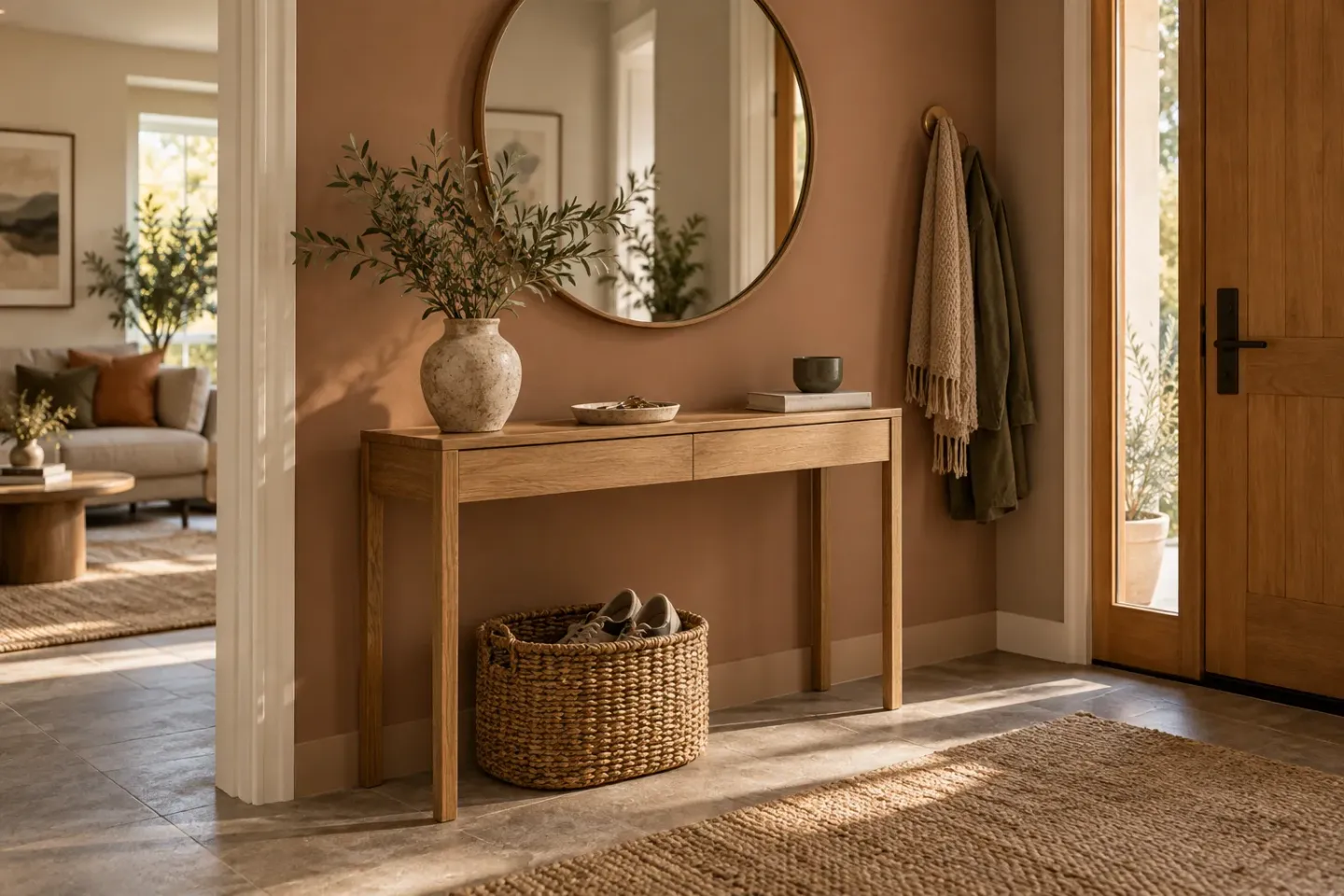
Keys on the dining table, shoes beside the sofa, a bag dropped by the door. If that sounds familiar, give those everyday things a place near the entrance. Your entryway might be just a strip of wall in the living room. That can still be enough for a useful setup, as long as the door opens freely and the storage is easy to reach.
1. Plan your small apartment entryway around the door’s movement
Open the door completely before choosing furniture. Check nearby cupboard doors and the route into the home as well. A console that looks slim in a photograph may still create a bottleneck. Measure the depth in your own space and preserve the clearances required for access and safety.
Map the space the door uses with removable painter’s tape, then mark the footprint of any furniture you’re considering. Include its handles, not just the cabinet body. Walk through carrying your usual grocery bags to see where you have to turn sideways or change hands. If the taped outline feels tight, choose a shallower piece or leave that part of the wall unfurnished. Empty space can be the most useful feature here.
2. Choose one surface for the daily essentials
A slim console can hold a key tray and a small lamp, but it should not become a place for every object without a home. If a console doesn’t fit, a nearby existing shelf or cabinet may do the job. Secure furniture according to its manufacturer’s instructions, particularly where children are present.
Think about whether you need an open surface or a drawer before choosing the piece. An open top makes essentials visible, while a drawer can hide sunglasses and small accessories that otherwise look scattered. Measure an existing cabinet’s usable top rather than its overall width, especially if it has raised edges. For a very narrow entrance, a cabinet already serving the living room may work better than adding a separate console.
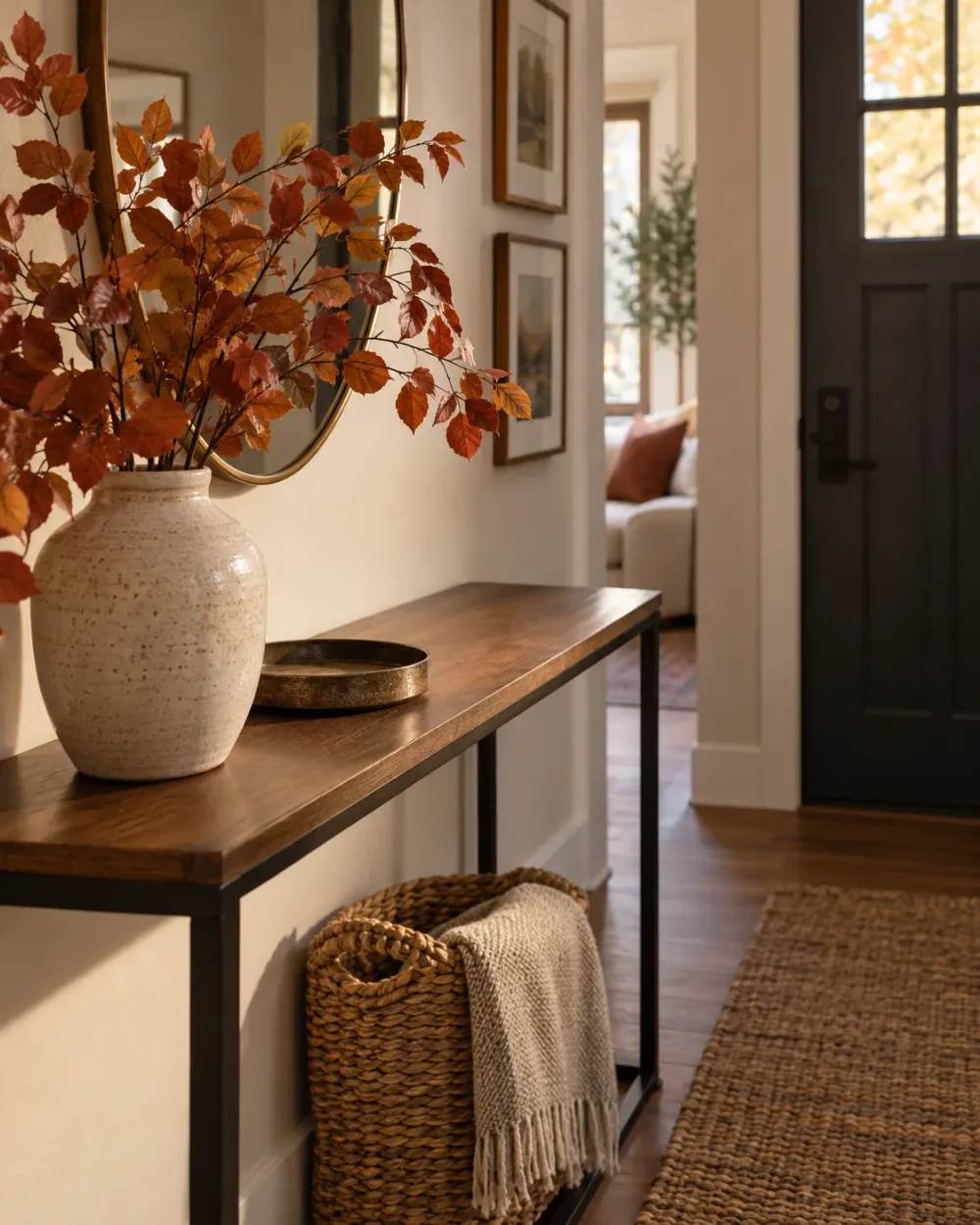
3. Use a tray as a destination
Choose a tray large enough for keys and the items you actually carry. Put it where your hand naturally reaches when you enter. Avoid a tray so decorative that it’s awkward to use. Review its contents weekly so receipts and spare cables don’t slowly take over.
Test the tray with your actual pocket contents before deciding it’s the right size. A shallow dish may suit one set of keys, but two people’s keys and card holders need more usable space. If you share the entrance, choose a divided tray or assign each person a side. A washable liner can soften the clatter of metal keys without making small objects difficult to spot against a busy pattern.
4. Store the shoes you wear most often
Keep everyday pairs near the door and put occasional footwear elsewhere. A low basket or shallow cabinet may help, depending on floor space and ventilation. Let wet footwear dry appropriately rather than closing it in a crowded container. Keep the storage easy to access without blocking the route.
Measure your longest everyday shoes, including any boots you expect to keep here, before judging a cabinet by its exterior dimensions. Internal shelves and angled compartments can reduce usable depth. For example, a pair of ankle boots may need a taller compartment than trainers in the same household. Choose open storage if seeing each pair helps you get out quickly, or enclosed storage if visual clutter bothers you more than an extra opening step.
5. Add a mirror with a purpose
A mirror is useful for a last check before leaving and can reflect available light. It doesn’t need to cover the whole wall. Use mounting hardware suited to the mirror’s weight and wall structure, following the product guidance. Avoid precariously leaning a heavy mirror in a busy doorway.
Choose the mirror’s position by checking what you can see from your usual getting ready spot. A compact mirror can show your face clearly without needing room for a full outfit view. Before mounting, have another adult hold a lightweight paper outline at the proposed height while you check the sightline. Also look at what the mirror would reflect: a pleasant patch of the adjoining room may be preferable to a crowded storage area.
6. Give bags and coats a defined limit
One place for a daily bag and the coats currently in use may be enough. Too many hooks can encourage a bulky pile. Check the load capacity and mounting requirements of any rack. Renters should confirm which installations are allowed rather than relying on an adhesive hook for heavy belongings.
Set the limit by counting what you actually bring home on a typical day. Two residents might need space for two bags and one current coat each, with less frequently used outerwear kept in a wardrobe. Check the footprint with those items in place, since a filled tote projects farther than an empty hook. Give each person a designated spot so one oversized bag doesn’t quietly take over the whole rack.
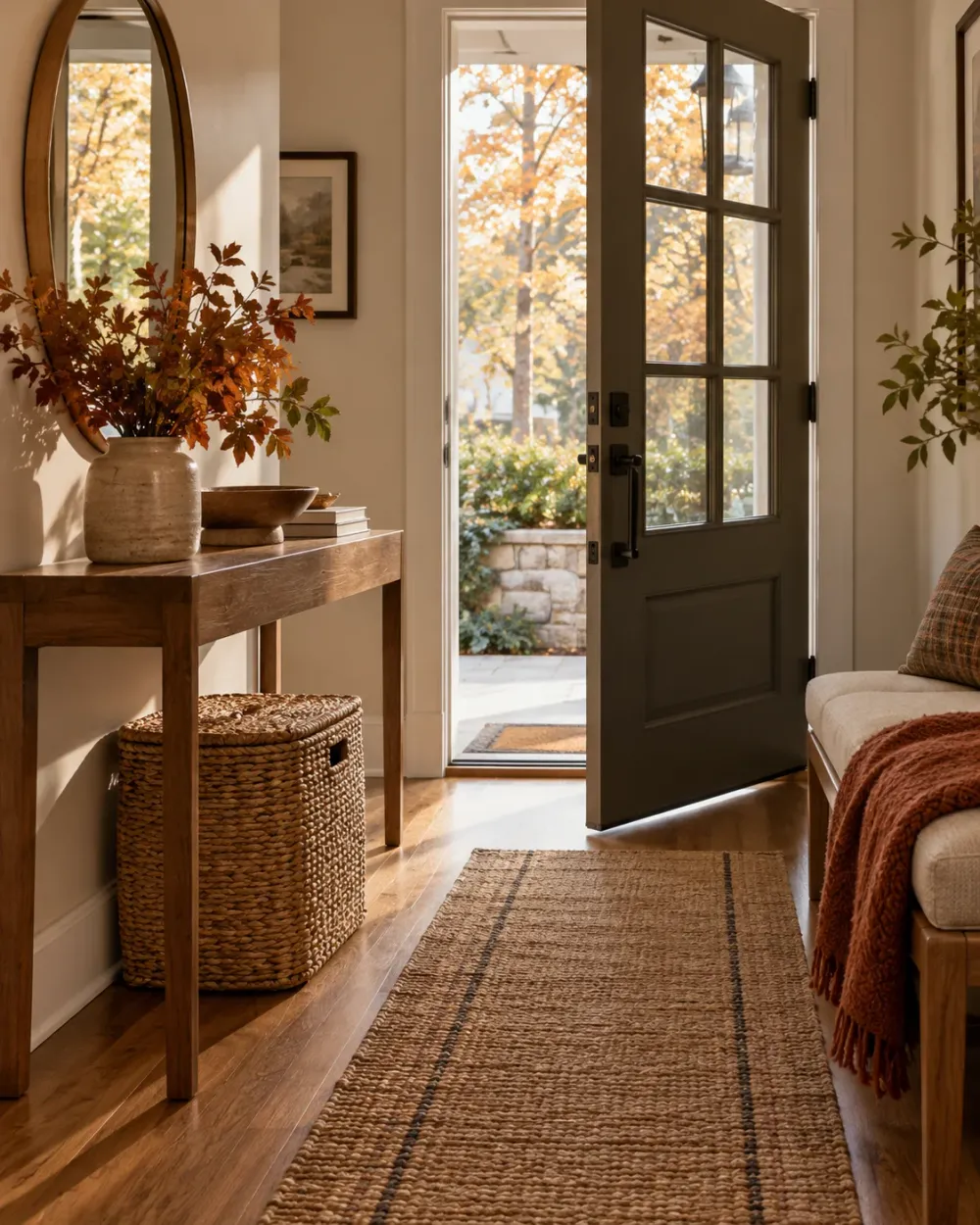
7. Make the corner feel connected
Repeat a wood tone or color from the adjoining room. A small ceramic piece or a framed print can add personality, but leave the functional surface usable. If a rug is appropriate, choose one that lies flat and allows the door to open without catching it.
Use one repeated detail rather than trying to match every finish. If the living room has warm timber and blue cushions, a blue print above an existing wood cabinet can connect the entrance without buying a coordinated set. View the corner from the sofa as well as the doorway. That longer sightline helps you judge whether the artwork feels balanced or whether a smaller, quieter piece would sit more comfortably.
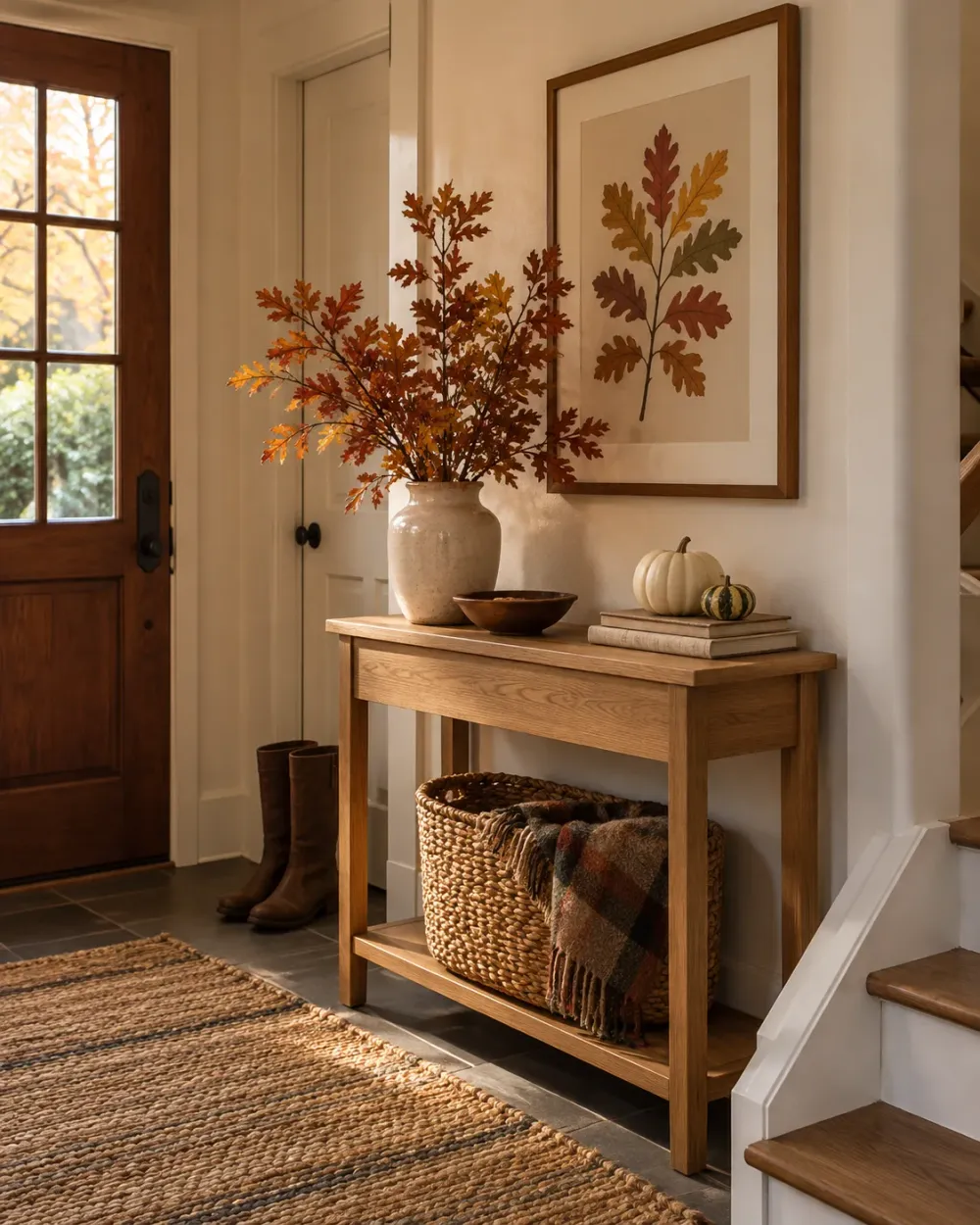
Try a no-purchase entryway refresh first
Start by clearing the entrance and gathering only the belongings you use on an ordinary weekday. Borrow a dish from the kitchen for pocket items, and try an existing basket for dry everyday shoes. Use a nearby shelf or cabinet before shopping for another surface. Photograph the arrangement from the doorway so you can compare changes. If something still needs a home, prioritize storage for that specific item over decorative extras. Measure the available space and the belongings it must hold before buying. For the next few arrivals, notice whether you can enter, put things away and leave again without moving anything aside. Keep what helps and adjust one awkward spot.
Questions before you start
What if my apartment door opens straight into the living room?
Treat the nearest suitable part of the room as your entryway rather than forcing storage beside the door. One end of an existing cabinet can hold arrival essentials. Keep the setup visually connected to the room so it doesn’t feel like a separate furniture cluster.
How can I organize an entryway when I can’t drill into the walls?
Start with furniture and containers you already have that don’t require wall installation. An existing shelf, a dish and a shoe basket may cover your needs. Avoid adding tall storage that requires anchoring unless your landlord permits the manufacturer’s required installation.
Where should wet shoes go in a tiny entryway?
Use a washable boot tray in a spot outside the door’s movement and walking route, then move shoes into their regular storage once dry. Choose a tray that fits your actual footwear, and empty collected water rather than letting nearby shoes sit in it.
How do two people share a very small entryway?
Divide the available storage by person instead of letting whoever arrives first fill it. Separate tray compartments and assigned bag spots make ownership clear. Agree on which shoes and coats stay near the entrance, with overflow returning to storage elsewhere in the apartment.
More ideas for your space
For an October variation, try small entryway fall decor or small-apartment Halloween decorating ideas. If clothing is spilling into the entryway, our small bedroom storage guide may help create a better place for it.