9 Cozy Small Living Room Ideas That Keep Space Open
Make a small living room feel cozy with furniture that fits, layered lighting, warm textures, and a layout that leaves room to move.
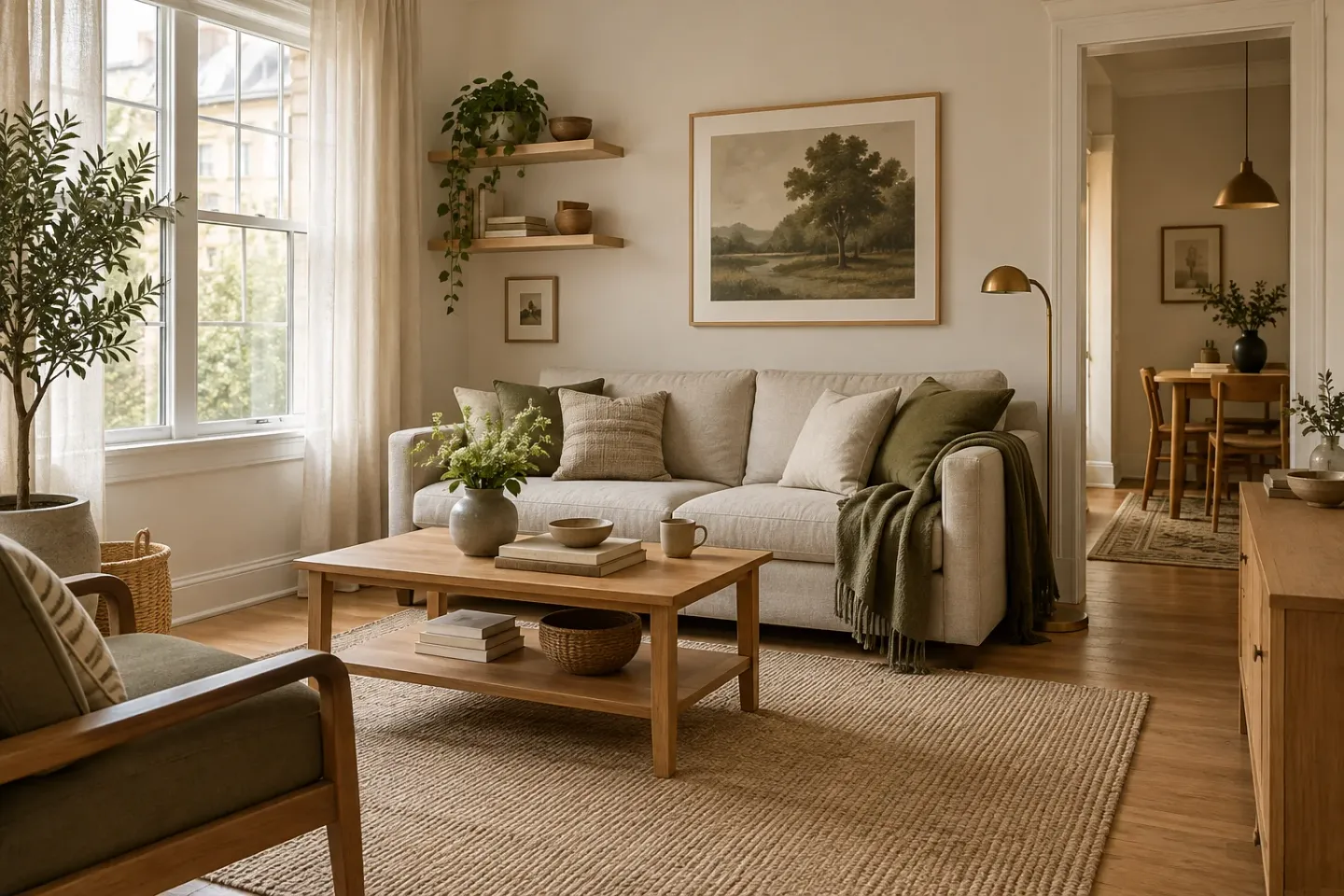
A small living room can feel cozy without another cushion on every seat. Often, the biggest improvement is moving a table out of the way or adding a lamp where you actually read. Start with the furniture you have and change one thing at a time. These nine ideas will help you make the room comfortable while leaving enough space to get around.
1. Map the walking route for a cozy small living room
Before moving a sofa, identify the paths between the doorway, window, and any adjoining room. Use painter’s tape to outline furniture footprints and walk those routes with a laundry basket. If you have to turn sideways or step around a table, reconsider that piece. Keep doors and drawers fully usable, and account for mobility needs in your household.
Map everyday movements as well as the route through the room. Someone carrying dinner to the sofa takes a different path from someone opening the window. Sketch those trips on paper and mark where they overlap. In a room with two entrances, placing the seating to one side may work better than centering everything. Choose the arrangement that handles your busiest routine, even if it looks slightly less symmetrical.
2. Choose a sofa by its footprint
A compact sofa with slim arms can provide useful seating without the bulk of a deep sectional. Check the complete width and depth, including the arms; seat count alone is a poor guide to fit. An existing larger sofa may still work if you remove an unnecessary side chair and reduce the size of the coffee table.
Avoid buying a sofa because it’s labeled “apartment size.” Measure the room and the delivery route, including stair turns and door openings. Comfort matters too: a shallow seat doesn’t suit everyone.
Compare usable seating width with overall width to see how much space the arms consume. Two sofas with similar outside dimensions can offer quite different room for sitting together. Also note back height: a tall back may feel supportive but dominate the view from the doorway. Before replacing anything, list who uses the sofa and how, including upright reading, stretching out, or sitting with feet on the floor.
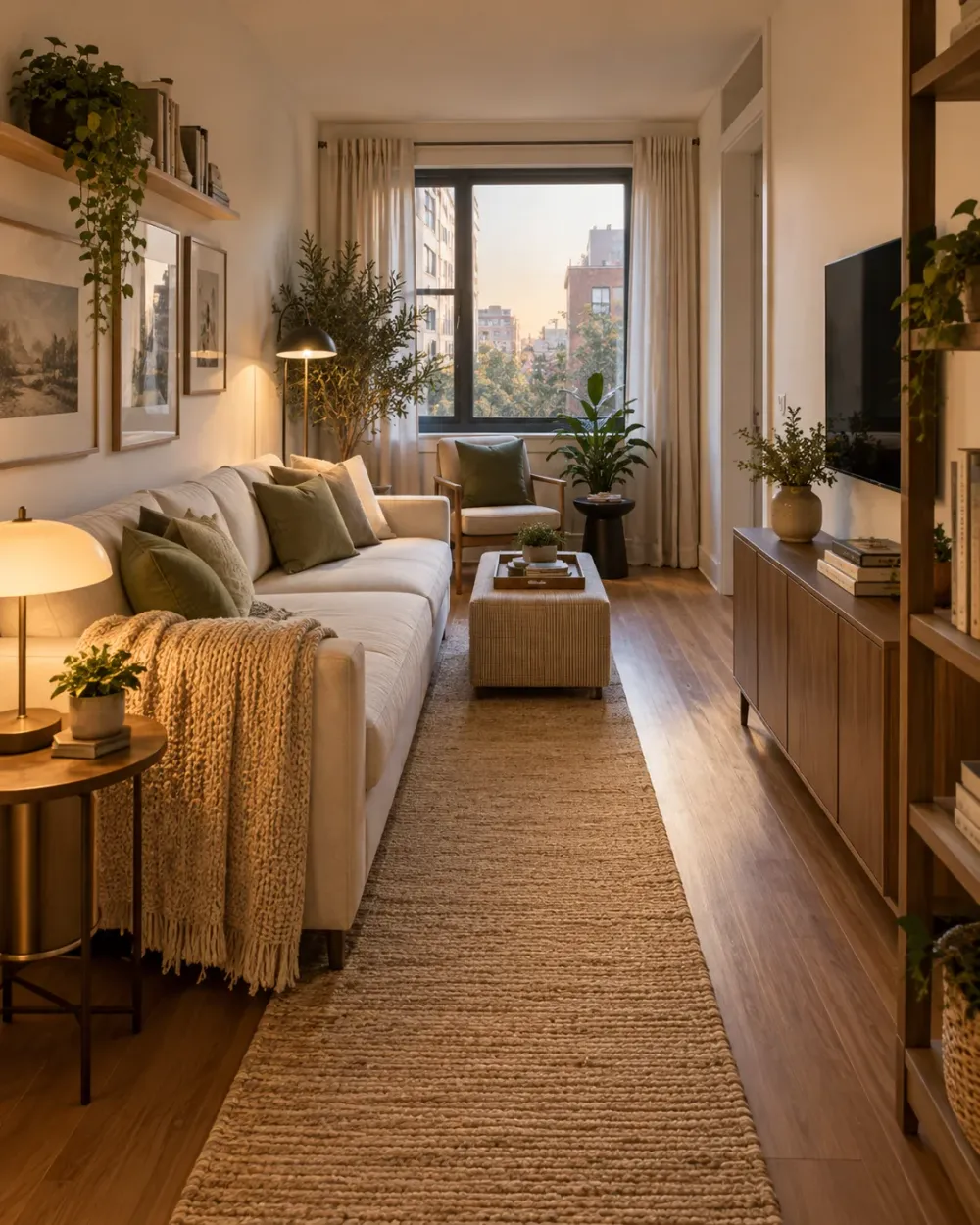
3. Let one warm neutral do the connecting
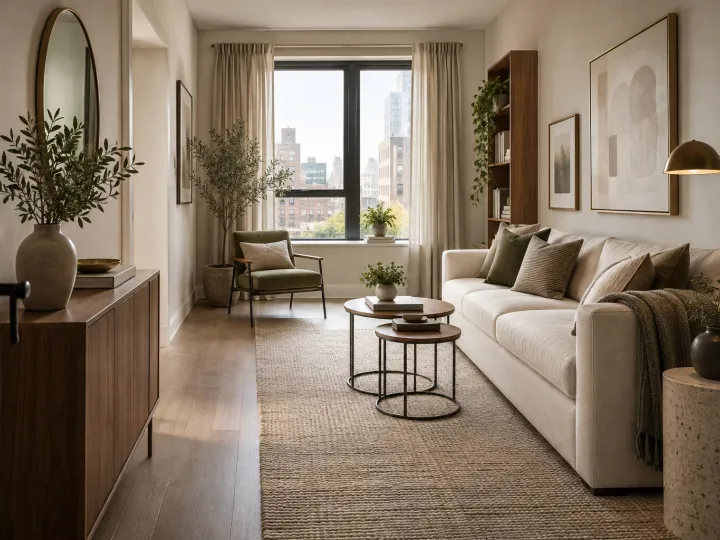
Repeat an oatmeal, cream, or muted beige across a few larger surfaces, such as the sofa, curtains, and rug. Introduce variation through texture rather than many unrelated colors. A sage cushion, a dark frame, or a terracotta vase can give the room definition without making every object compete.
If you already have a strong-colored sofa, let that be the starting point. Choose calmer textiles around it rather than trying to hide it beneath a stack of throws.
Warm neutrals can lean pink, yellow, or gray, and those differences become noticeable when fabrics sit together. Gather the textiles you already own beside the sofa and compare them in daylight and lamplight. Keep the combination that feels related in both conditions. If cream curtains make a beige sofa look unexpectedly pink, try an oatmeal fabric with a similar undertone rather than introducing another accent color to distract from it.
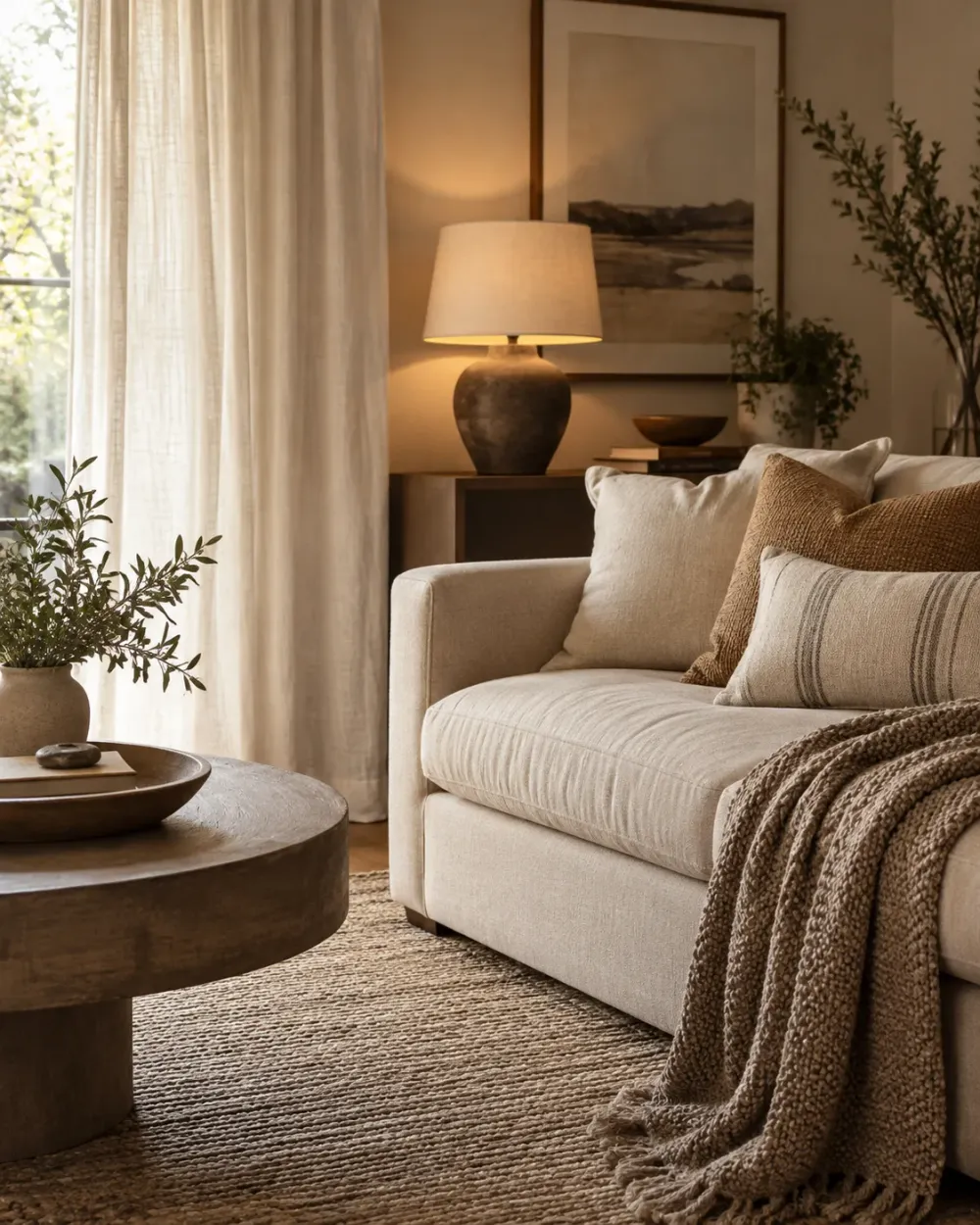
4. Use a coffee table that earns its place
A round table removes sharp corners from a tight walking path. Nesting tables offer flexibility, but only if there is somewhere to put the extra table when it’s pulled out. A storage ottoman may be more useful when the room also holds games or blankets; use a stable tray for drinks and check that the lid is easy to access.
Decide what the table needs to hold during an ordinary evening, not just when it’s styled. A couple sharing drinks and a puzzle needs more surface than someone using it only for a mug. Make a cardboard template and check reach from each seat without leaning awkwardly. For one particular sofa arrangement, a 60-centimeter round template might be a useful starting point, then adjusted to suit the actual tasks.
5. Add two sources of soft evening light
A table lamp beside the sofa and a floor lamp in another corner can feel more comfortable than relying on one bright ceiling fixture. Position lamps so that the light supports reading without shining directly into your eyes. Keep cords out of walking routes. If you rent, plug-in lighting offers flexibility without altering fixed wiring.
Look at bulb color and brightness as separate choices. A warm-colored bulb can still feel harsh if it’s too bright or exposed, while a shade can soften the light without making reading easier. Choose compatible bulbs with similar color temperatures so the room doesn’t alternate between yellow and bluish pools. If a lamp has a dimmer, check bulb compatibility before buying, and judge the setting from your usual seat.
6. Keep the window visually light
Sheer curtains can soften daylight while letting the window remain a focal point. Add a separate privacy or blackout layer where needed. Avoid allowing fabric to touch heaters or block vents. Mounting curtains higher may create a taller impression, but confirm that the surface and fixings are suitable before installation.
Check how much glass the curtains cover when they’re open. Thick fabric gathered beside a narrow window can steal useful daylight even when it looks tidy. Before choosing panels, hold a folded sample at the window’s edge to estimate the gathered bulk. If neighboring homes overlook the room, compare privacy options after dark with the lights on; a sheer that obscures the view by day may reveal silhouettes at night.
7. Give the rug a clear job
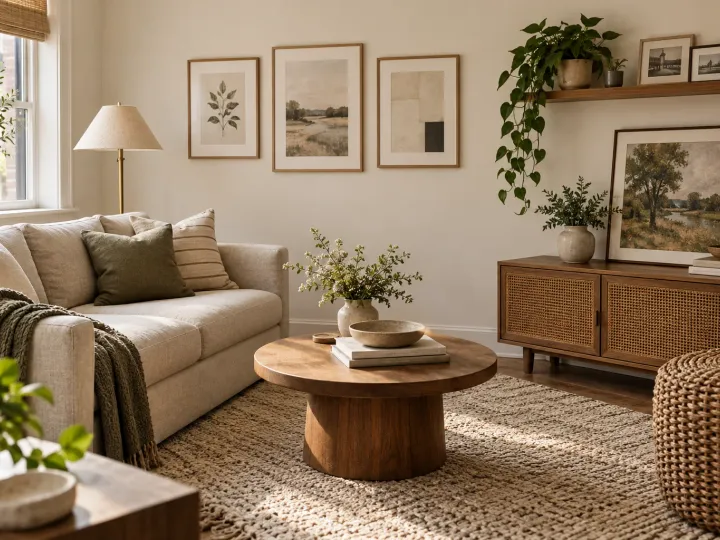
Use a rug to connect the seating area instead of scattering several tiny mats around the room. Tape out the proposed dimensions before purchasing. Front furniture legs resting on the rug can help the grouping feel connected, but the right size depends on the arrangement. Check that edges lie flat and that the backing suits your floor.
Match the rug’s texture to the way you use the seating area. A plush pile may feel lovely under bare feet, but a flatter weave can be easier to maintain where crumbs, pet hair, or rolling furniture are common. If you’re choosing between sizes, draw each outline on your room sketch and compare how much bare floor remains visible. A larger rug can unify seating without needing to cover the whole room.
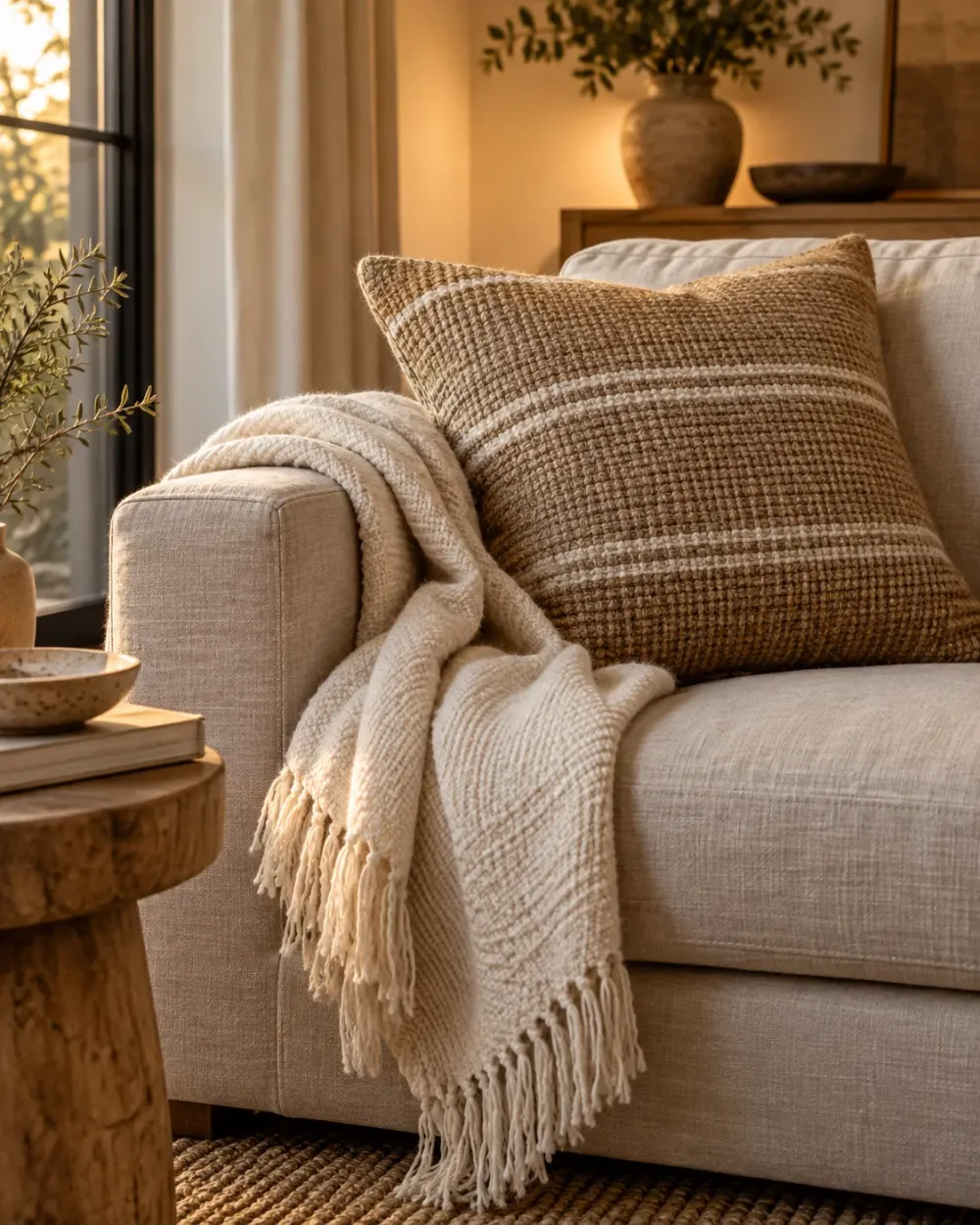
8. Leave a few surfaces quiet
One useful tray, a book stack, and a small vase can be enough for a coffee table. Empty space makes the objects you like easier to notice and leaves room to use the table. Try removing half the items for a week before buying more storage. If the remaining clutter is functional, give it a reachable home rather than a decorative basket across the room.
Give each visible surface a working allowance. On a side table, that might mean enough empty space for your current book and a cup, rather than a permanent display filling the top. Separate things you use daily from things you enjoy seeing, then edit the display first. If a tray needs lifting every time you sit down, it’s organizing the appearance of clutter without making the surface more useful.
9. Add one living detail
A plant can introduce color and soften a corner. Pick a species suited to the available light, and check toxicity if you have pets or young children. An empty room corner isn’t automatically a good plant location. A small stem in a vase or a botanical print can provide a similar visual note when a plant is impractical.
Consider the care routine before choosing the container. A nursery pot inside a decorative cover can make watering easier, provided you remove it to drain and don’t leave water collecting underneath. Protect the surface with a suitable saucer and check for moisture after watering. For a compact room, compare the plant’s likely mature spread with its current size; broad leaves may eventually crowd a seat even when the pot fits.
Plan a First Refresh Around Your Favorite Seat
Start with the seat you use most. For one evening, keep only the belongings you actually reach for nearby, and move unused decorative pieces to another room temporarily. Bring in an existing lamp and try a throw or cushion you already own before choosing anything new. Write down what still feels missing: comfortable light, a usable table surface, or a textile that pulls the colors together. Buy for the most persistent gap first, rather than replacing several pieces at once. Leave the arrangement in place for a few ordinary evenings. Check whether you can sit, read, set down a drink, and leave the room without moving things. Keep the changes that make those routines easier.
Questions before you start
Should the sofa sit against the wall in a small living room?
It can, especially when that preserves a useful route through the room. Floating it isn’t automatically better. Try both positions with your existing sofa and compare access, conversation, and the view from the doorway. Keep any required clearance for nearby heaters.
Can a cozy small living room work without a coffee table?
Yes, if another reachable surface handles drinks and everyday items. A side table may suit one or two regular seats better than a central table. Check every occupied seat, though: guests shouldn’t have to hold cups throughout the evening.
How can I make the room cozy without adding lots of cushions?
Focus on what you feel and use: a comfortable seat, a soft throw, and lighting that suits the evening. One cushion that supports your back can be enough. Repeating a warm neutral through existing fabrics adds cohesion without filling every seat.
How do I keep a small living room comfortable when it also stores children’s toys?
Choose a reachable home for the toys used most often, with storage children can operate safely. Keep the amount in the room manageable by rotating less-used toys elsewhere. Before buying furniture with storage, check that opening it won’t require clearing the whole seating area.
More ideas for your space
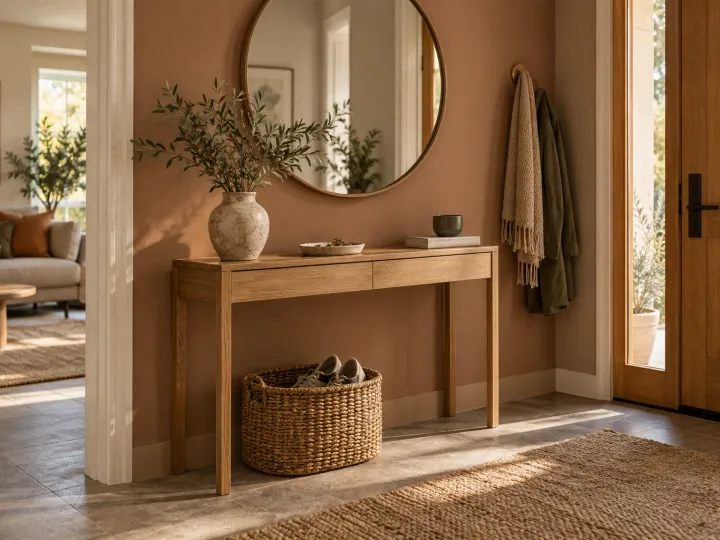
If the room is long and narrow, start with our narrow living room layouts. For a more connected palette, see warm neutral living room ideas. If the doorway is the difficult part, explore our small apartment entryway ideas.