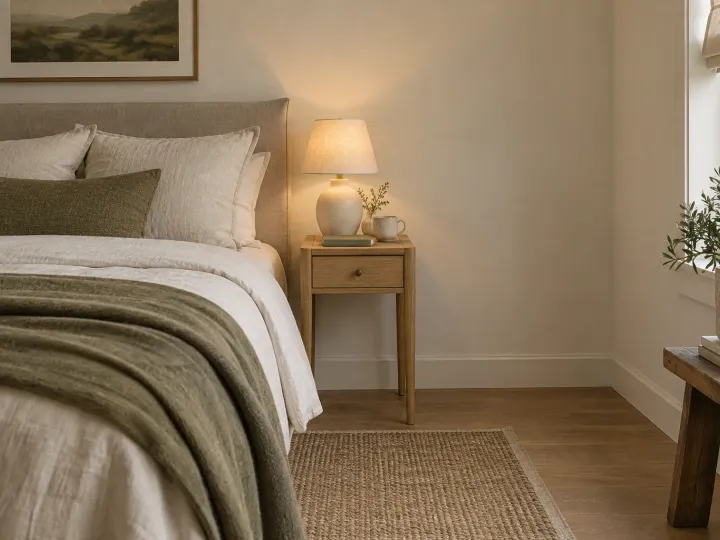
7 Cozy Bedroom Lighting Ideas for Small Rooms
Make a small bedroom feel restful with shaded bedside lamps, softer ambient light, useful reading light, and simple ways to reduce glare.
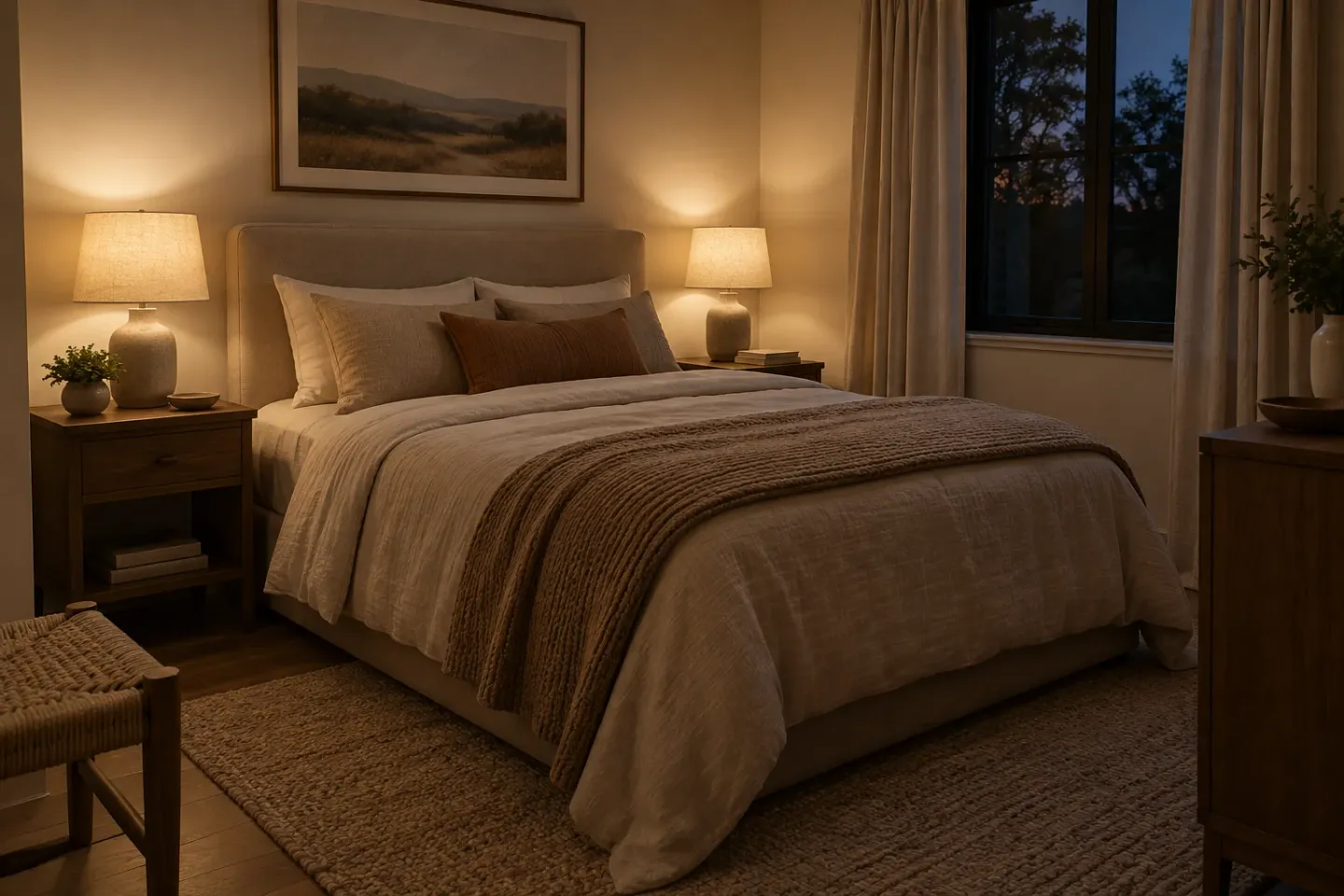
If your bedroom feels harsh at night, try turning off the ceiling light. A shaded bedside lamp and a softer light across the room can change the mood quite a bit. You still need enough light to read and get ready, so think about where you use it. Start by moving a lamp you already own before ordering a matching set.
1. Start Your Cozy Bedroom Lighting with a Shaded Bedside Lamp
A shade softens the view of the light source and can make the bedside more comfortable. Check the lamp from your normal sitting and lying positions. If you can see a bright exposed bulb directly, a different shade or placement may help more than another fixture.
Choose a lamp that fits the table without consuming the whole surface. Follow the fixture’s specifications when selecting a bulb.
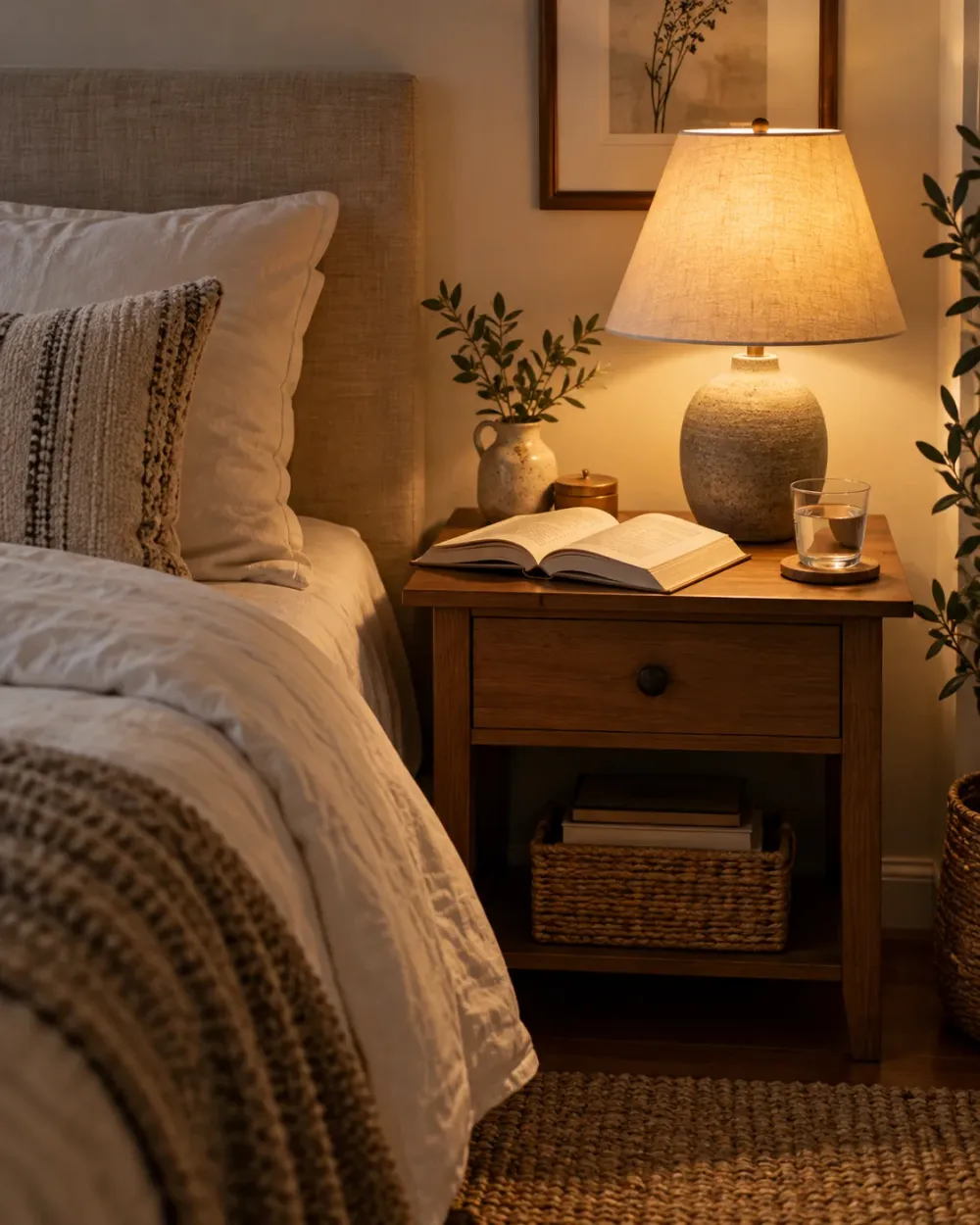
Shade shape matters as much as lamp size. A wide drum can crowd a narrow nightstand even when the base fits neatly. Measure the available tabletop and compare it with the shade’s widest point, leaving room for your usual glass and phone. A pale fabric shade generally lets more light into the room, while an opaque shade directs more downward. Choose according to whether this lamp needs to provide gentle surrounding light or mostly bedside illumination.
2. Aim useful light at the book
A reading light needs to illuminate the page rather than the entire room. Try the position while holding a book where you normally read. Adjustable lamps can help you change the angle, especially if glossy pages catch reflections.
The best position depends on your bed and seating habits. A photograph of a beautifully styled lamp can’t tell you whether it reaches your book comfortably.
Check the page with your body in its usual position, not perched forward for the test. Your shoulder or head can block a light that looks well placed beside an empty bed. For a shared bedroom, compare how much light reaches the other pillow as you adjust the beam. A narrower beam may disturb a partner less, but it should still cover both pages without making you reposition the book every few lines.
3. Use wall lighting where it fits
A suitable wall sconce can free space on a small bedside table. Confirm the mounting requirements, permissions where applicable, and the reach from your bed. A plug-in fixture still needs a safe cable route.
Have a qualified professional handle hardwired lighting. If installation is impractical, a compact table lamp is a perfectly useful alternative.
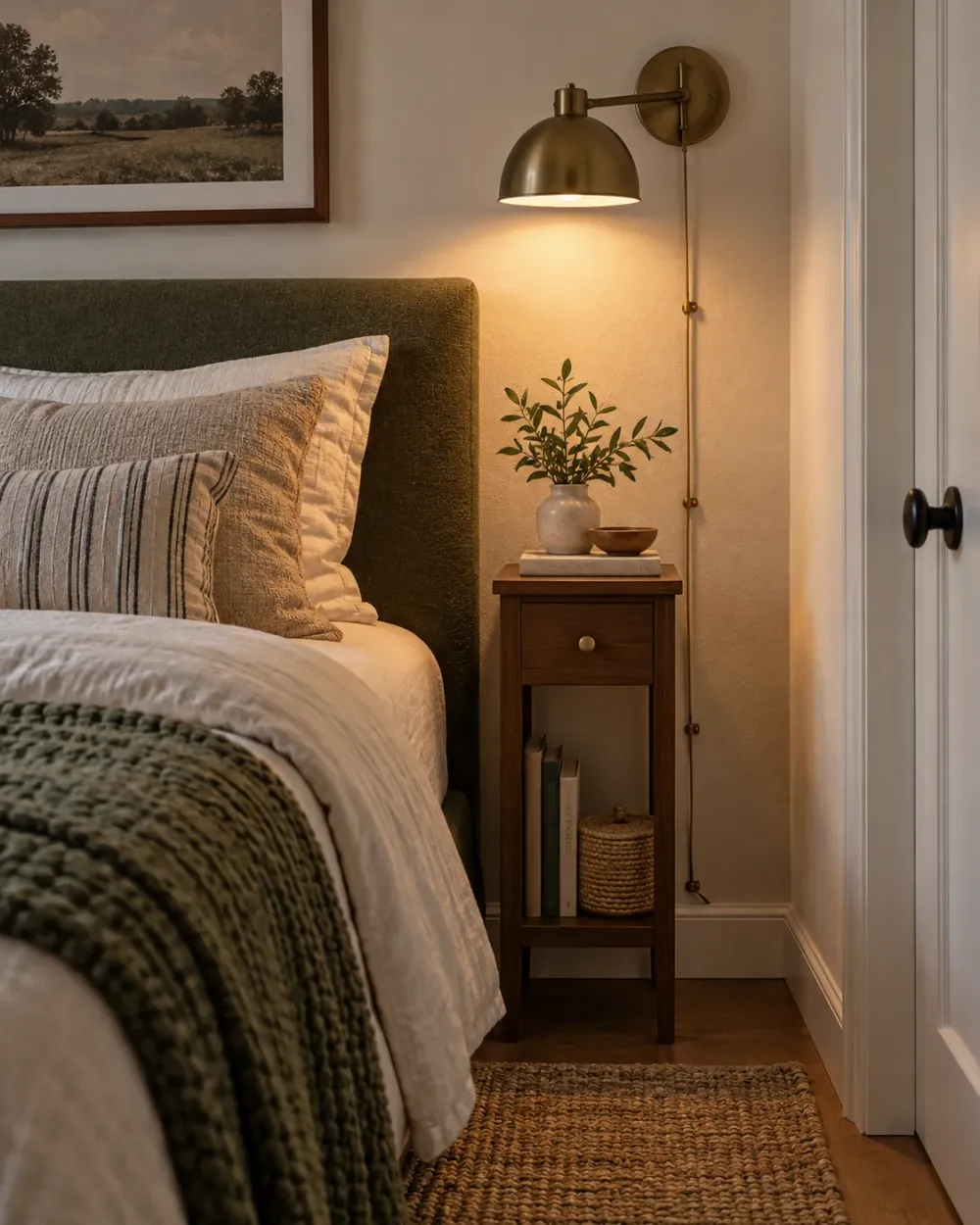
Before choosing a sconce, hold a paper outline of its full shape against the proposed wall position while someone sits in bed. Include the arm’s projection, not just the wall plate. This helps reveal whether the fixture would crowd a headboard, interfere with pillows, or sit where you’d bump it when leaning back. An articulated model offers flexibility, but its moving parts also need clearance that a fixed, compact fixture doesn’t.
4. Add a separate ambient light
A small shaded lamp on a dresser can help distribute light across the room. This can reduce the contrast between a bright bedside and a completely dark corner. Place it on a stable surface with the ventilation required by the product.
Try a lamp you already own in that location before purchasing a new one. The improvement may come from placement, not from a more expensive fixture.
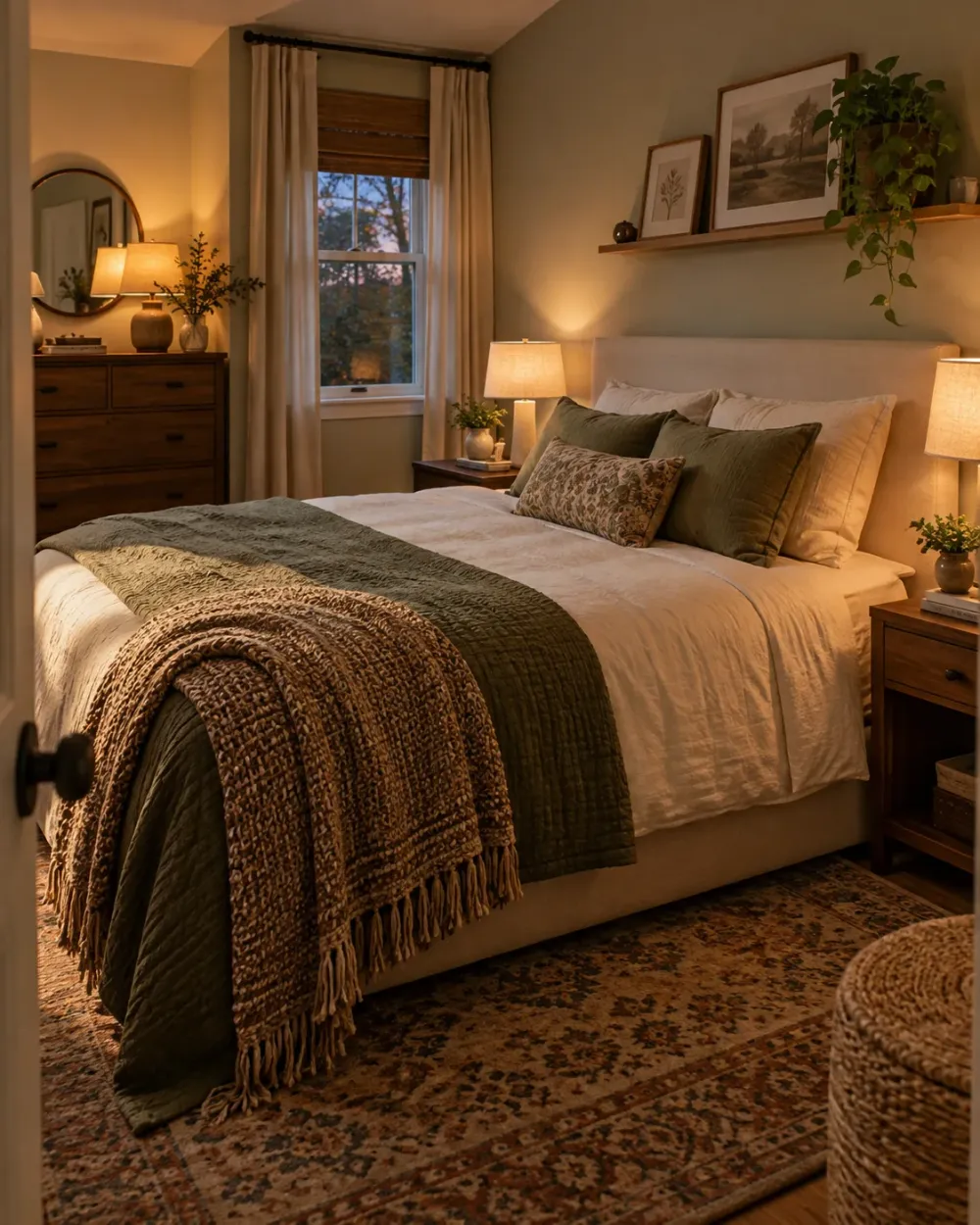
Give the ambient lamp a clear job: gently lighting the area around a wardrobe, for instance, rather than competing with the bedside lamp. View that corner from the doorway and the bed, since a lamp can look balanced from one spot but leave the room uneven from another. A broad translucent shade spreads light differently from a narrow opaque one. Choose the spread that suits the corner rather than matching the bedside lamp’s silhouette.
5. Keep the light color consistent
Compare bulbs in the room rather than relying only on packaging photographs. A strongly cool lamp beside a much warmer one can make a small room feel a little mismatched. Choose a comfortable appearance for the activities you do there.
You don’t have to use identical bulbs in every fixture, but a similar warmth can make the room look more connected.

Use the Kelvin rating on bulb packaging as a comparison point, then judge the result against your bedding and wall color. For example, you might compare compatible 2700 K and 3000 K bulbs in one lamp before committing to either throughout your room. Neither is a universal requirement. Shades can tint the light too, so two bulbs with the same rating may look different behind cream fabric and a crisp white diffuser.
6. Reduce reflections and exposed glare
Notice whether a mirror reflects a bright bulb toward the bed. Moving the lamp or changing its shade can help. A very glossy bedside surface may also reflect light where you don’t want it.
Use curtains for the privacy and light-control needs of your room. Their role is different from that of a lamp; one can’t solve every problem created by the other.
Treat reflections as a sightline problem. From your pillow, identify the exact patch of mirror or glossy furniture where the bright spot appears, then change one element at a time. A small adjustment to an existing freestanding mirror’s angle may remove the reflection without changing the lighting arrangement. If a shiny tabletop is the culprit, a matte tray beneath your everyday bedside items can interrupt that reflective area without covering the entire surface.
7. Make evening controls easy to reach
A light is more useful when you can switch it off without an awkward stretch. Consider reachable switches or manufacturer-approved dimming where supported. Keep cables out of walking paths and avoid makeshift electrical modifications.
Walk through your actual bedtime sequence: entering the room, putting down a book, settling under the covers, and switching off the last light. Note which control you need at each step. A switch that’s convenient while standing may disappear behind bedding once you’re lying down. If considering a compatible remote control, decide where it will live before buying it. A dedicated spot on the nightstand is more dependable than searching between pillows.
Plan Your First Bedroom Lighting Refresh
Start with a quick inventory of your current lamps, bulb labels, available outlets, and the surfaces you actually use at bedtime. Pick one troublesome moment, such as reading in bed or finding clothes after dark. For the first refresh, use an existing lamp to improve that task and clear unnecessary objects from its intended surface. Spend one ordinary evening with the arrangement, checking whether you can finish the task comfortably and still use the furniture around it. Write down the remaining problem before shopping. Prioritize a suitable shade or compatible bulb if the fixture already works; buy another fixture only when the task or location genuinely lacks useful light. Repeat the same evening routine to compare.
Questions before you start
Do both sides of a small bed need matching lamps?
No. Each side can suit its user’s habits and available surface space. A reader might need an adjustable lamp while the other person prefers a simple shaded one. Similar light warmth or a shared finish can connect them without forcing identical fixtures.
Can one lamp be enough for a very small bedroom?
It can be, if it supports your evening activities without leaving important areas difficult to use. Check reading, getting dressed, and moving around separately. If one task fails, address that specific gap rather than assuming the room needs a matching pair.
Should I choose a dimmable bulb for my bedside lamp?
Dimming can help when one lamp serves both reading and winding down, but the bulb and control must be compatible. Check the fixture and dimmer instructions before buying. A dimmable bulb alone won’t add dimming to a lamp with only an ordinary switch.
How can I choose a bedroom lamp when shopping online?
Check the base width, shade width, overall height, switch location, and bulb requirements rather than relying on styled photographs. Make a paper outline for your intended surface. Also check whether the listing includes the shade and whether the lamp can be returned.
More ideas for your space
For the furniture underneath those lamps, see small bedroom nightstand ideas. Our bedroom storage guide can help make the rest of the room feel calmer.