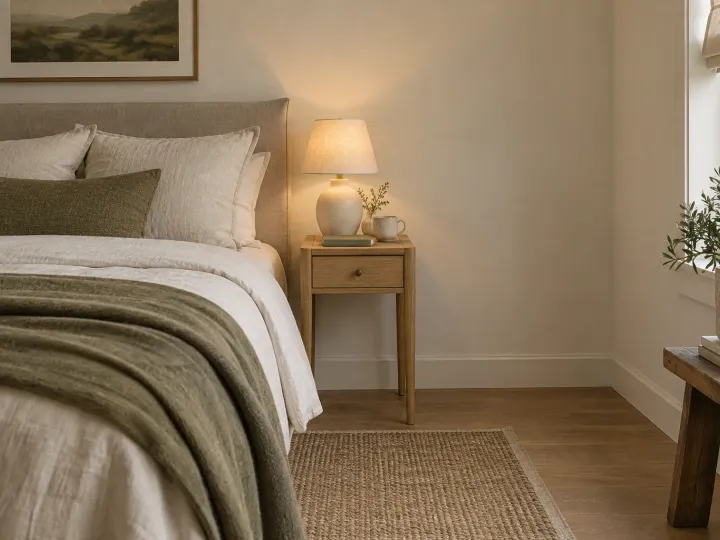
7 Small Bedroom Storage Ideas for a Calmer Room
Find practical small bedroom storage ideas, from under-bed boxes to a simpler bedside setup, while keeping the room comfortable and easy to use.
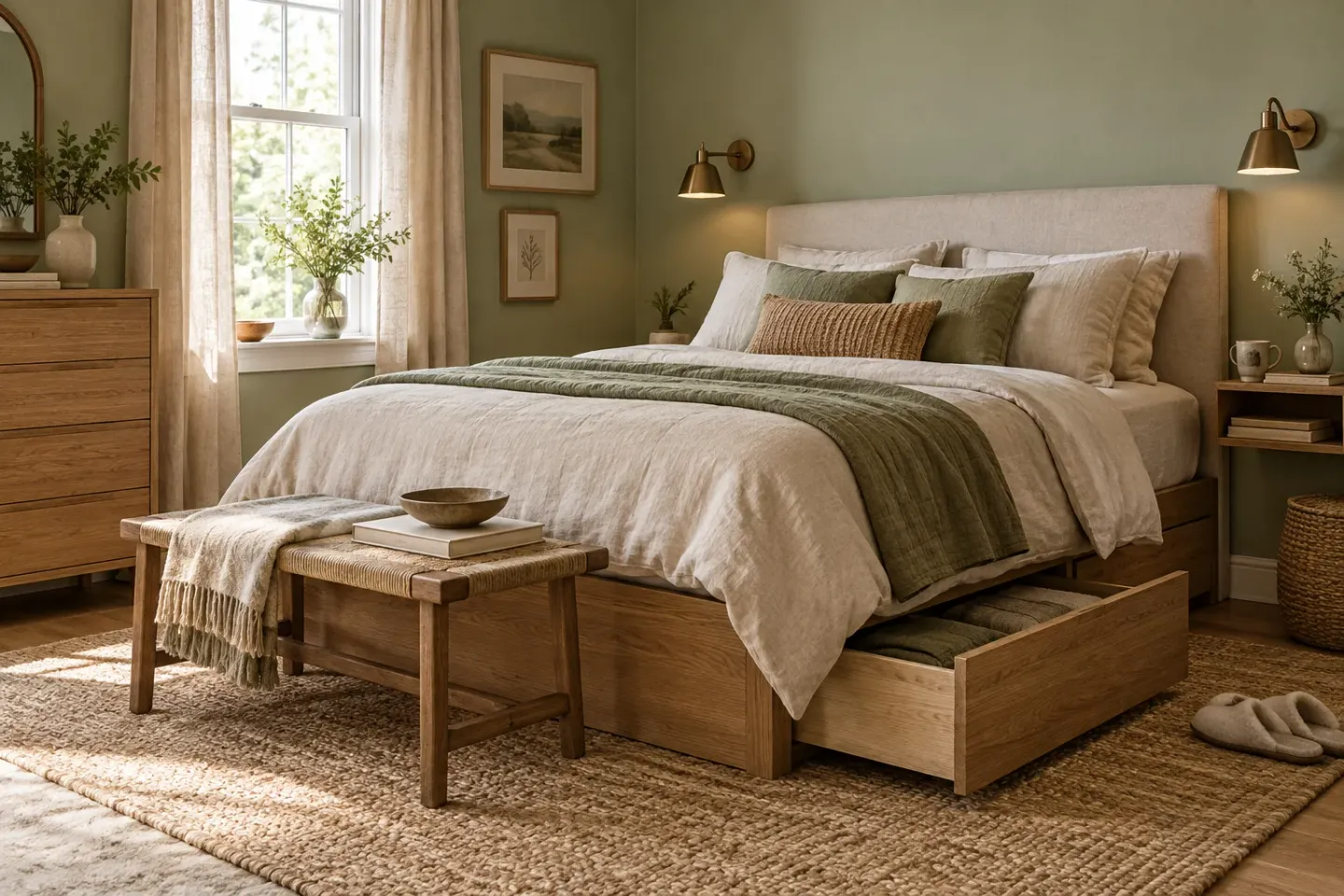
If getting dressed means shifting a pile off the chair, your bedroom storage could use a rethink. Start with the things that keep ending up in the wrong place. Do they need a drawer, a hook, or simply a better spot in the wardrobe? These ideas help you use the space you have before adding another piece of furniture.
1. Start your small bedroom storage ideas beneath the bed
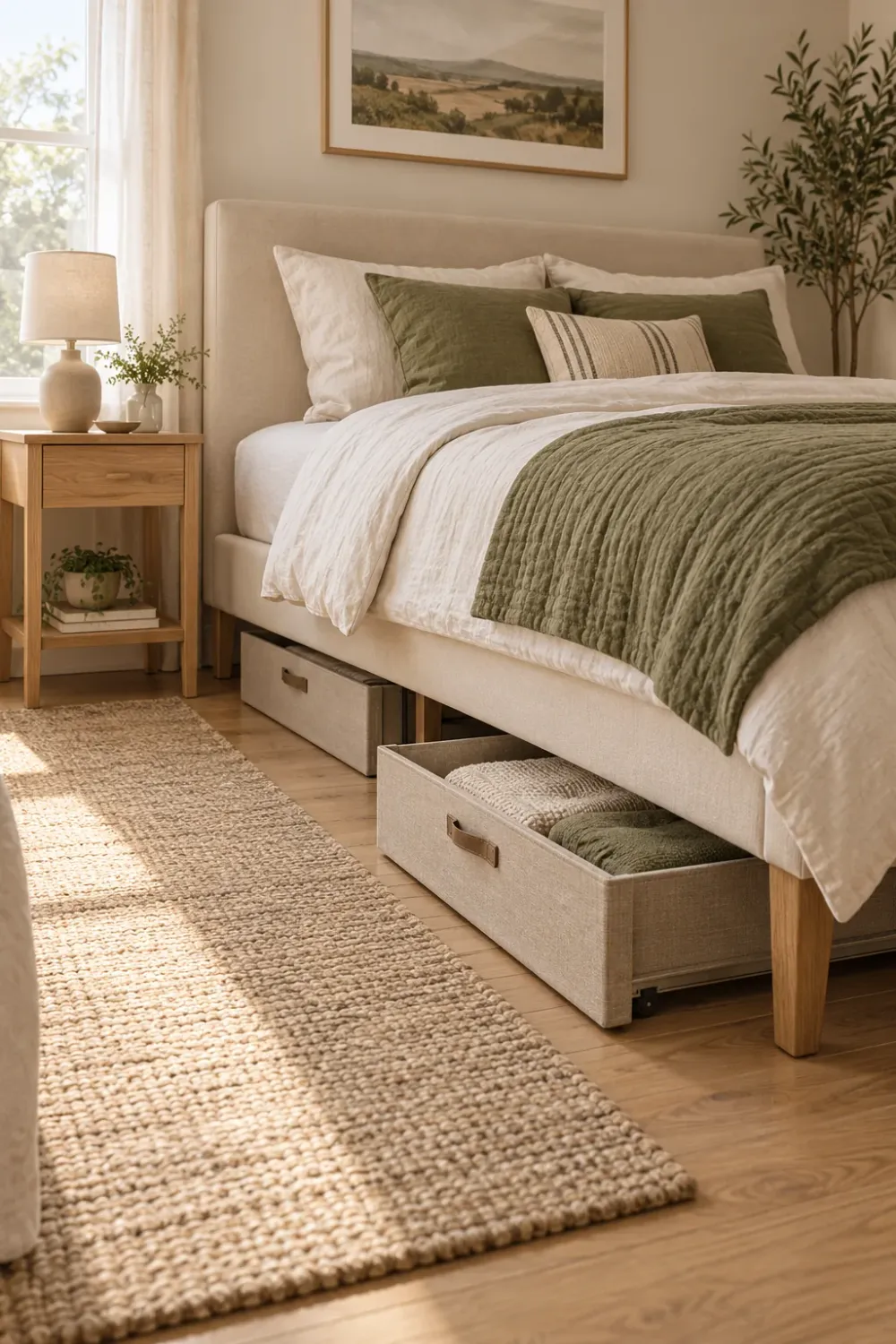
Measure the clearance, the distance between support legs, and the room needed to pull a box out. Choose low containers with lids for items that are not used every day. Soft bags may fit irregular spaces, but rigid boxes are easier to slide on some floors. Avoid storing damp textiles, and leave the ventilation required by your bed or mattress manufacturer.
Label the end facing outward. “Winter bedding” is more useful than opening three identical containers every time you need a blanket.
Think about retrieval as well as capacity. If only one side of your bed is accessible, reserve that side for things you’ll want during the season and put longer-term storage farther back. Before ordering containers, make a cardboard template of their footprint and slide it into position. This reveals awkward bed supports or rug edges that a clearance measurement alone can miss, without committing you to a set that won’t move easily.
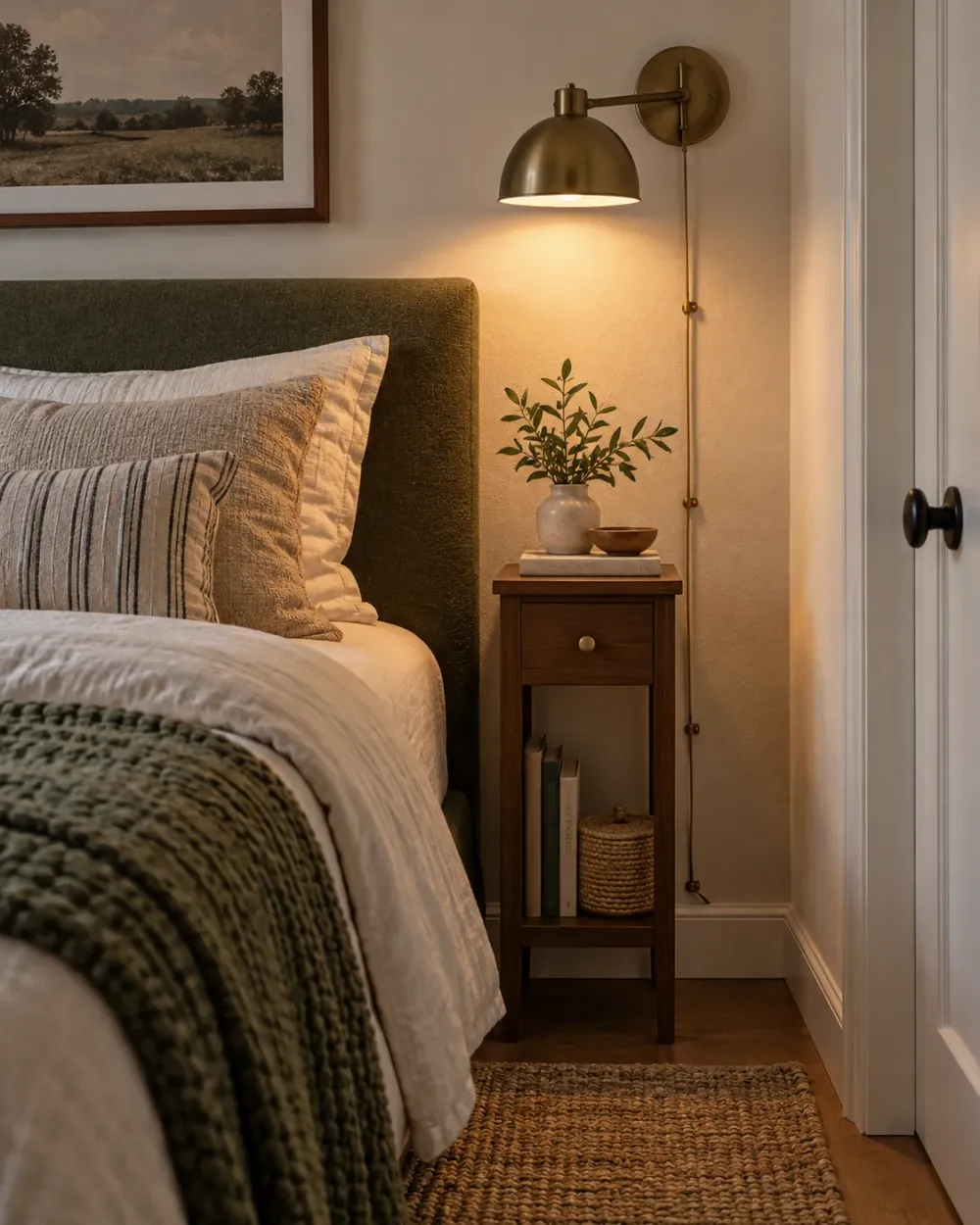
2. Replace an oversized bedside table
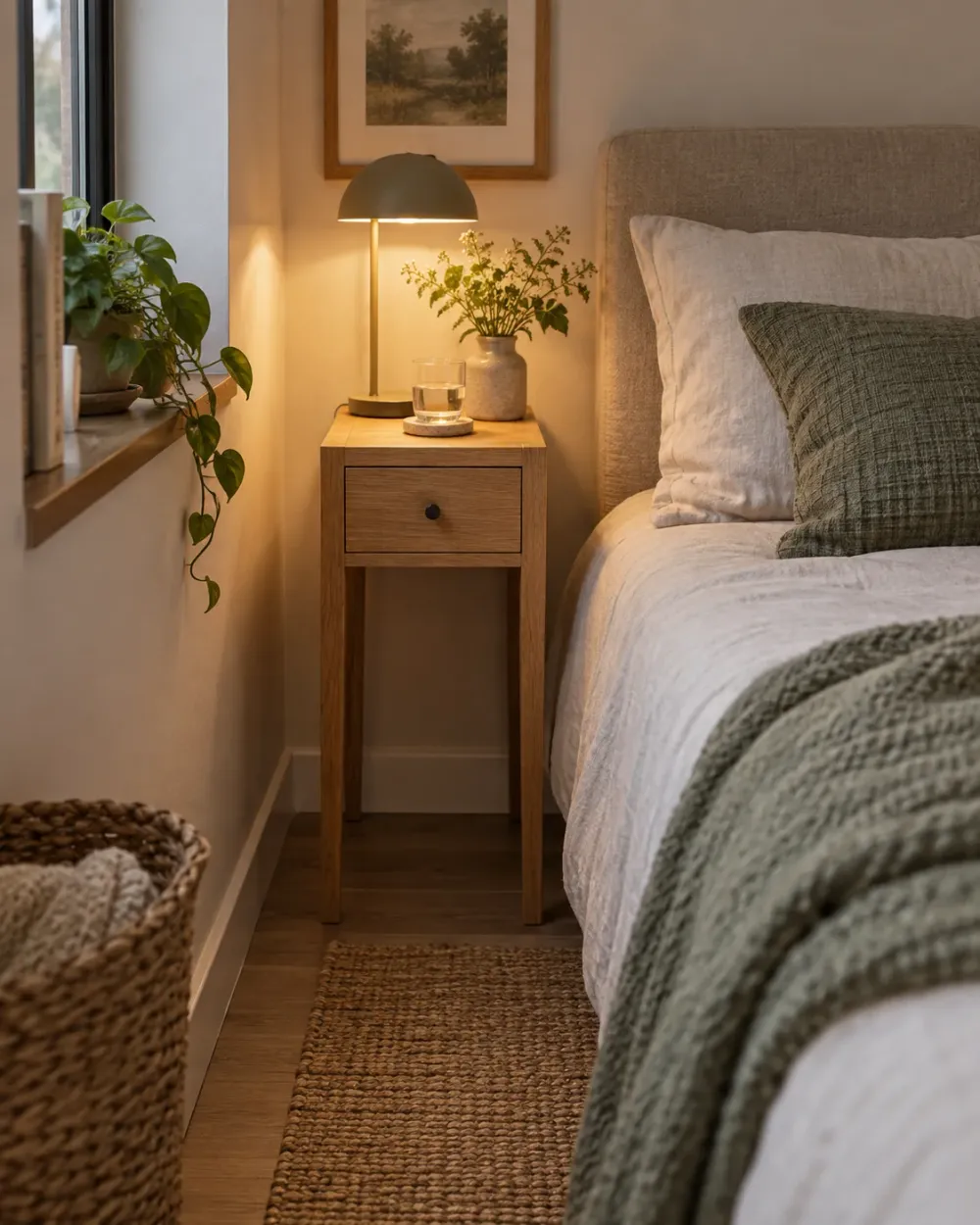
A narrow table with one drawer may handle glasses, a book, and a charger more efficiently than a broad unit that blocks the wardrobe. Check the height against your mattress so that reaching a drink feels natural. If you use the bedside as a medicine or accessibility station, preserve that function rather than prioritizing a minimal look.
Try a smaller bedside footprint before replacing the furniture. Mark its outline on the floor with removable tape, then use a tray on your current table to represent the proposed top. For a few evenings, keep only your usual bedtime essentials inside that area. If a water glass and open book compete for space, look for a slightly wider top rather than assuming the narrowest option will suit your routine.
3. Give the wardrobe better internal zones
Before adding another dresser, look inside your existing wardrobe. An extra shelf, suitable hanging organizer, or divider can separate categories that currently end up in a pile. Place daily clothing in the easiest-to-reach zone and occasional items higher or lower. Check load limits, and avoid unsupported shelf additions.
Sort by how you get dressed, not just by garment type. Someone who wears a work uniform might benefit from keeping complete outfits together, while a person who mixes separates may prefer distinct stacks. Count what each zone needs to hold before choosing inserts. A hanging organizer takes rail space away from longer clothes, so compare that tradeoff with using a shallow shelf bin for folded items already sitting below.
4. Use the back of a door carefully
An over-door organizer can hold light accessories, but it must allow the door to close normally. Check the gap above the door, the hinge clearance, and whether the hooks might scratch the finish. Keep emergency access and ventilation unobstructed. A wardrobe door may be a better location than the main bedroom door.
Match the organizer’s pockets to the objects rather than choosing the largest model available. Deep pockets can hide small hair accessories, while shallow ones may let scarves slip out. Cut a paper outline of the organizer and temporarily hold it against the chosen door to check where its bottom would sit. Open the door through its usual arc and see whether the proposed pockets would brush furniture or catch handles.
5. Consider wall lighting to free a surface
A wall light can leave more room on the bedside table. A plug-in option still needs suitable fixings and a safely routed cord. Hardwired lighting should be installed by a qualified professional. If wall mounting is unsuitable, a compact lamp may be the more practical answer.
Choose the light’s position around your evening habits. Sit against your usual pillows and note where a reading light needs to reach without shining directly into your eyes or a partner’s face. An adjustable shade can be more useful than a brighter exposed bulb. Before buying, compare the fixture’s projection with nearby cupboard doors and your head position when sitting up, so freeing the tabletop doesn’t create an awkward obstacle above it.
6. Keep one visible basket for one purpose
A basket works best when its purpose is specific: tomorrow’s clothes, spare cushions, or a throw. It becomes less useful when it collects unrelated objects. Place it where you actually use those things and check that it doesn’t narrow the route beside the bed. Closed storage may look calmer, but accessible storage is easier to maintain.
Give the basket a capacity that suits its job. For tomorrow’s outfit, check that a folded jumper and trousers fit without needing to be compressed; a much larger basket invites extra contents. If it holds cushions, practice putting them away and taking them out before settling on a location. A soft-sided basket may tuck neatly into a corner, but a firmer rim is easier to use repeatedly with one hand.
7. Reduce duplicates before adding furniture
Review spare linens, bags, and rarely worn clothing before buying a new storage unit. Keep the items you need and can reasonably accommodate. Reorganizing a drawer can solve a problem that another dresser would make worse. This is especially useful when doors already collide or you can’t comfortably change bedding.
Make duplicate decisions around a realistic replacement cycle. For bed linen, consider what stays on the bed, what’s in the wash, and whether you genuinely need another backup. Lay matching pieces together so incomplete sets don’t quietly occupy several drawers. If you share the room, agree on each person’s keep pile before removing anything. Items awaiting donation should have a collection date, rather than becoming a permanent extra storage category.
Start with the storage problem you meet every morning
For a first refresh, choose the chair or surface that collects clothes. Sort its contents into daily wear, occasional items, and things leaving the room. Use an existing box to group the occasional items inside the wardrobe, then rearrange daily clothes where you can reach them easily. Don’t buy a whole matching storage set yet. Prioritize one container or divider only if a specific category still lacks a workable home. Take a quick photo after resetting the space. Over the next week, check whether the chair stays usable and whether getting dressed requires moving anything aside. If clutter returns, adjust the location or capacity before adding furniture.
Questions before you start
How can I add bedroom storage without drilling into the walls?
Start with wardrobe inserts, under-bed containers, or a smaller freestanding bedside table. An over-door organizer is another option if it fits without affecting closure. For lighting, keep a compact table lamp rather than forcing a wall-mounted solution that your room can’t accommodate.
What if my bed is too low for under-bed storage?
Skip that space if containers won’t fit comfortably. Concentrate on unused wardrobe capacity and reducing what needs storing. Don’t raise the bed on improvised supports just to gain room; keeping the bed stable matters more than creating an extra storage zone.
Is open or closed storage better for a small bedroom?
Choose by frequency of use and what you find visually distracting. A single open basket can make a daily routine easier, while enclosed containers suit occasional belongings. You don’t need one approach throughout the room; each storage spot can serve a different purpose.
How can two people share storage in a tiny bedroom?
Divide storage by routine and actual belongings rather than automatically splitting every shelf in half. Give each person a clearly defined daily clothing zone and bedside space. Keep shared linen together, then review the arrangement if one person repeatedly has to move the other’s things.
More ideas for your space
For the space beside the bed, compare our small bedroom nightstand ideas. Once storage is settled, use cozy bedroom lighting ideas to make the room more comfortable in the evening.