7 Small Bedroom Nightstand Ideas That Save Useful Space
Choose a small-bedroom bedside setup with a narrow table, useful storage, and reachable essentials without blocking drawers or the route beside the bed.
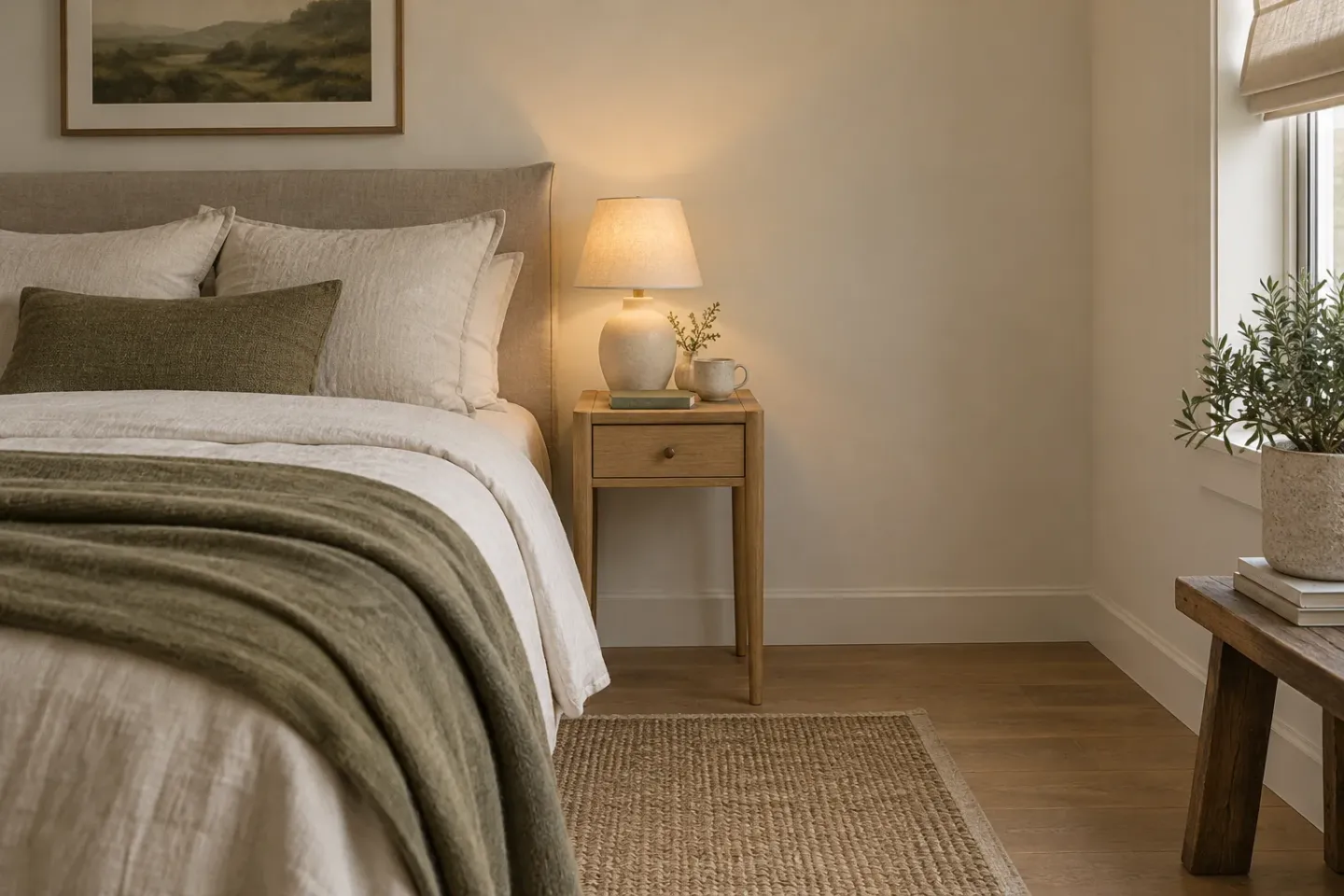
The nicest bedside table is no help if your water glass barely fits on it. Think about what you reach for at night: a book, glasses, your phone, or a lamp switch. In a small bedroom, that list matters more than having two matching nightstands. Measure the gap beside the bed with the wardrobe doors open, then choose something you can comfortably use.
1. Start your small bedroom nightstand ideas with everyday essentials
List what you actually use: glasses, a book, water, a phone, medication, or a lamp. The list helps you judge surface size and drawer needs. A decorative table that can’t accommodate those items will encourage clutter elsewhere.
If the bedside supports an accessibility or health routine, preserve that function. A tidy photograph is less important than a setup you can use comfortably.
Separate your list into things that need a landing spot and things that can stay tucked away. For example, a water glass and reading glasses need clear surface space, while spare tissues may not. Arrange tonight’s essentials on a sheet of paper, leaving room to set each one down without moving another. That footprint gives you a more useful shopping reference than the size of your current table.
2. Match the height to your bed
Compare the table top with the mattress surface, including any topper. Sit or lie in your usual position and test the reach. A table that is too low may be difficult to use even if it fits neatly in the gap.
Tape a cardboard outline to an existing object to approximate a proposed height and width. This can reveal an awkward proportion before you order furniture.
Pay attention to the edge you reach across, not just the tabletop height. A thick mattress edge or upholstered bed rail can make an otherwise suitable table feel distant. With your pillow in its normal place, try picking up an empty cup from the proposed position. If you have to lift your shoulder or lean out of bed, compare a different height before deciding that the table needs to be wider.
3. Choose a narrow table with one useful drawer
A single drawer can hold small objects while leaving the surface calm. Check the usable internal dimensions and whether the drawer opens with the bed in position. Broad handles can add to the footprint.
Measure the table depth as well as its width. A shallow unit may preserve more walking space than a narrow but deep one.
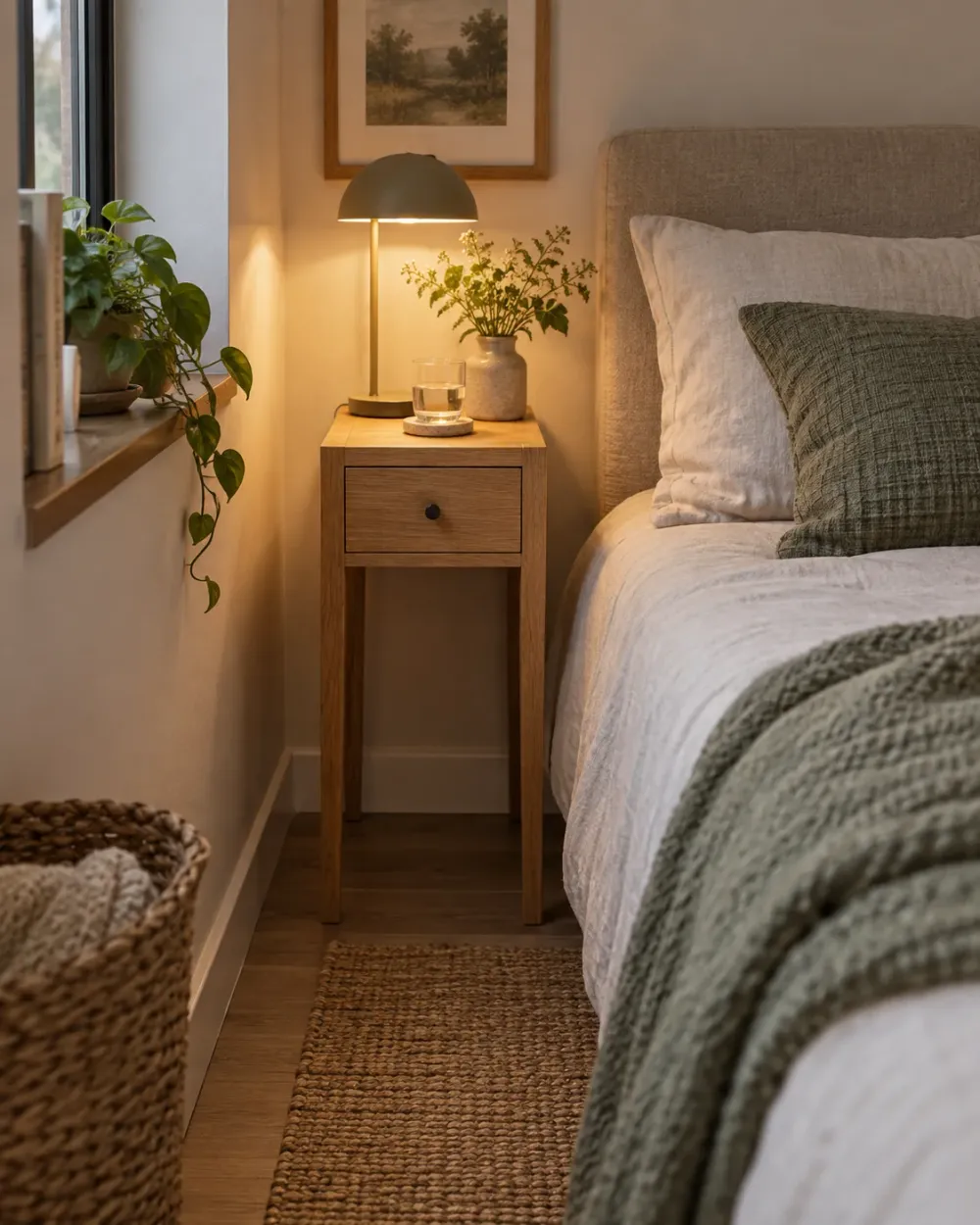
Look at the drawer’s construction before choosing storage accessories. A drawer with thick sides or a recessed back may hold less than its exterior suggests. Sketch the inside footprint using the seller’s dimensions, then place your intended contents within it. For reading glasses, lip balm, and a remote, a removable divider may help. Skip a bulky organizer if it leaves too little room for your longest everyday item.
4. Consider an open shelf for frequent items
An open shelf keeps a book or small basket visible and reachable. It’s useful when the items are changed often, but it can make the corner look busy if it becomes general storage.
Use a basket only if it slides out easily and allows you to find things. Don’t add a container just to conceal an inconvenient arrangement.
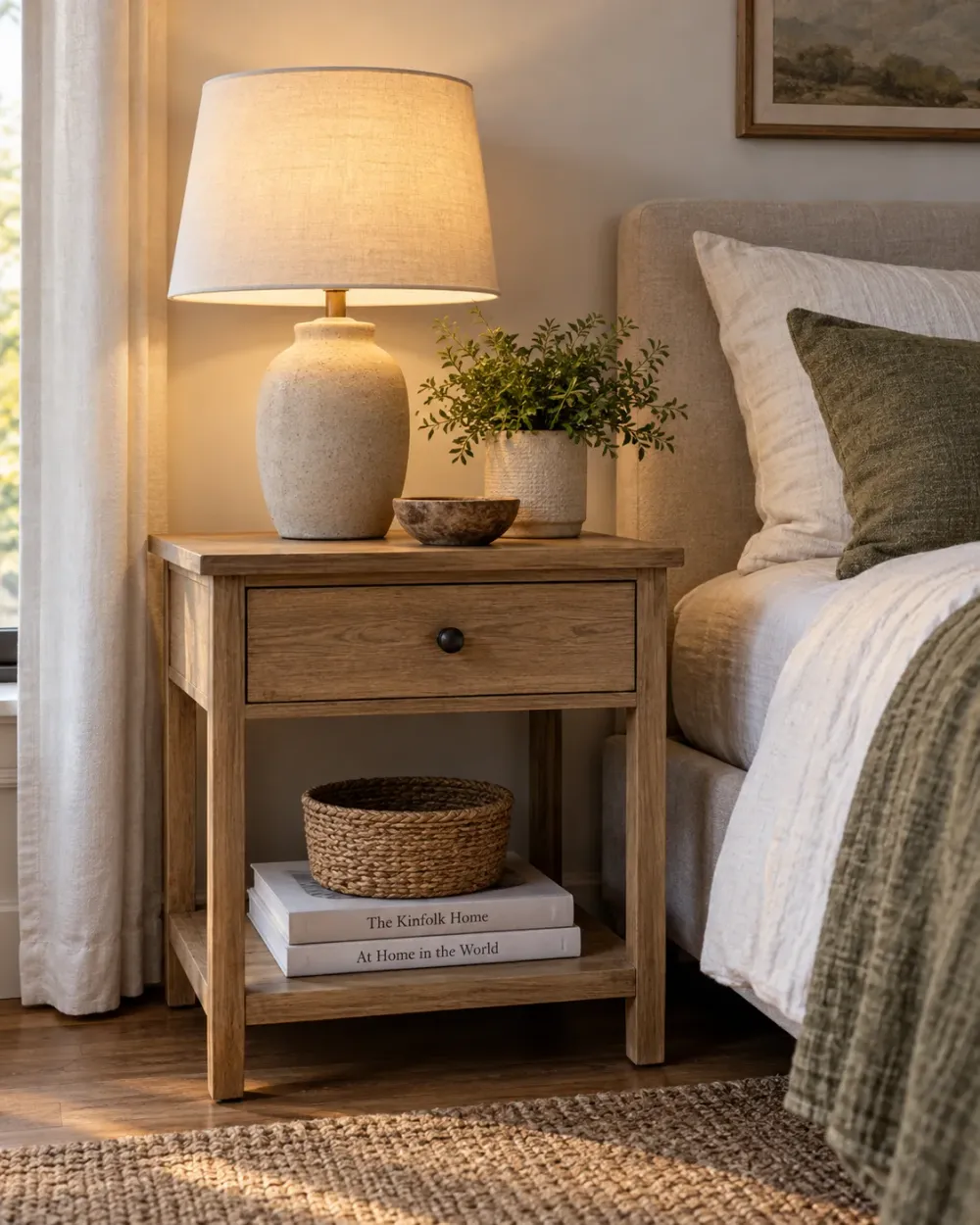
Shelf placement changes what belongs there. If you can reach the shelf while seated but not while lying down, reserve it for tomorrow’s book rather than something you need during the night. Check the clear opening above it against your tallest intended item. A paperback stack might fit comfortably where an upright tissue box won’t, so choose the contents before deciding how many shelves would actually be useful.
5. Use a wall-mounted option only when suitable
A wall-mounted shelf or drawer can leave floor space visible. It requires permission where applicable, appropriate hardware, and a surface capable of supporting the load. Follow installation instructions and seek qualified help where needed.
Check bedside reach before marking the wall. A shelf at an attractive visual height may be uncomfortable to use from the bed.
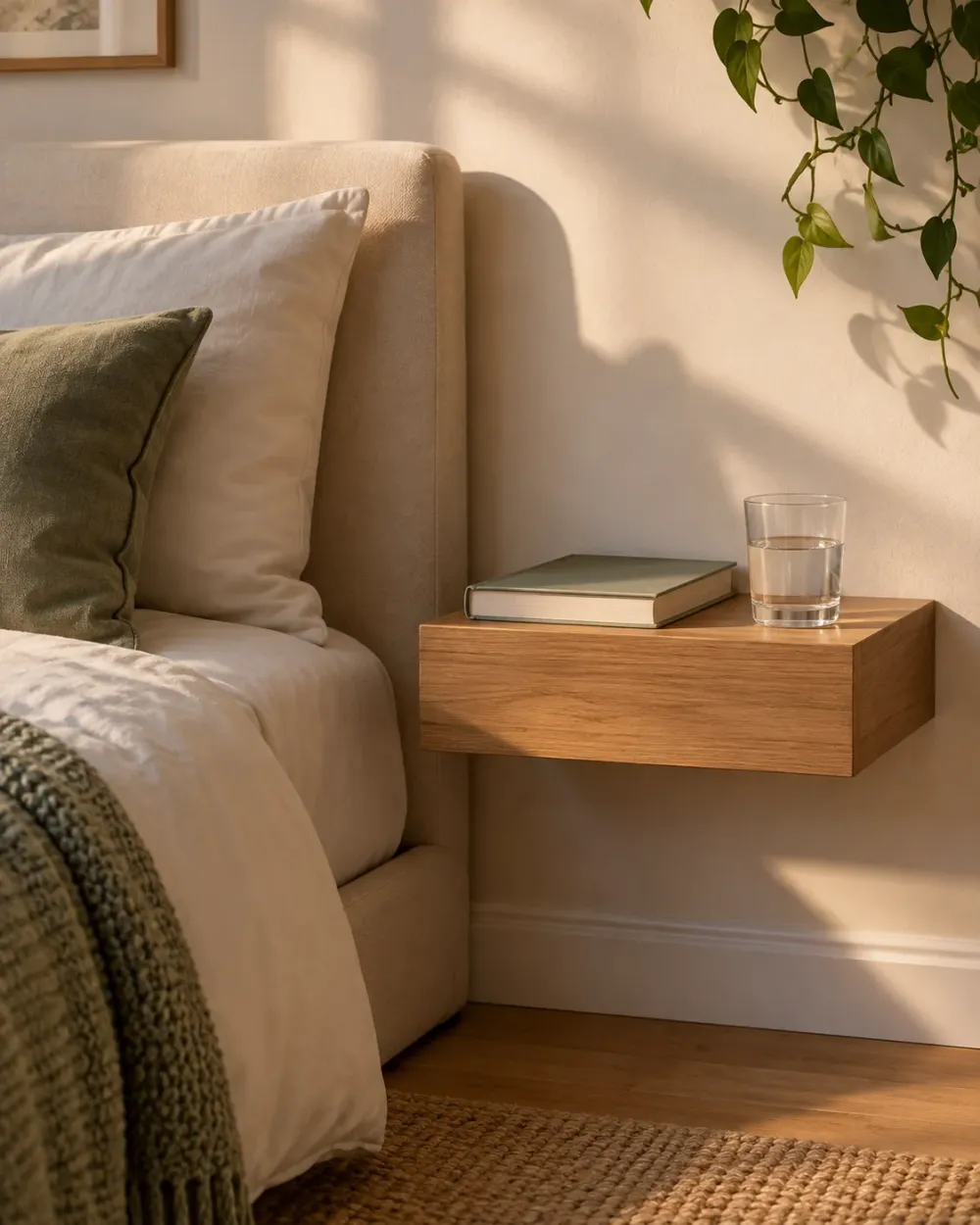
Think about whether your bed position is likely to change. A fixed bedside shelf is less forgiving if you later shift the bed to accommodate a different mattress or rearrange the room. Before committing, mark the shelf’s full outline with removable tape and leave it visible while considering the layout. If the bed moves seasonally or the room serves several purposes, a freestanding piece may be the more adaptable choice.
6. Let lighting free the surface
A compact lamp may be enough. A suitably installed wall light can leave more table space, but installation and cable routing still matter. Hardwired work belongs with a qualified professional.
Keep charging cords manageable and away from the walking route. Follow device and charger guidance rather than enclosing warm equipment inside improvised storage.
Compare the whole lamp shape, not just its base. A small base beneath a wide shade can still crowd the place where you set down a drink. Cut a paper circle matching the shade’s widest point and hold it above the proposed lamp position. Then check whether the switch is easy to find and whether the shade blocks your view of the remaining surface from your usual sleeping position.
7. Avoid adding a second table automatically
If one side of the bed is beside a wall or rarely used, a matching pair may not be necessary. A smaller alternative can work on the tight side if it meets the occupant’s needs. Symmetry is a visual choice, not a requirement.
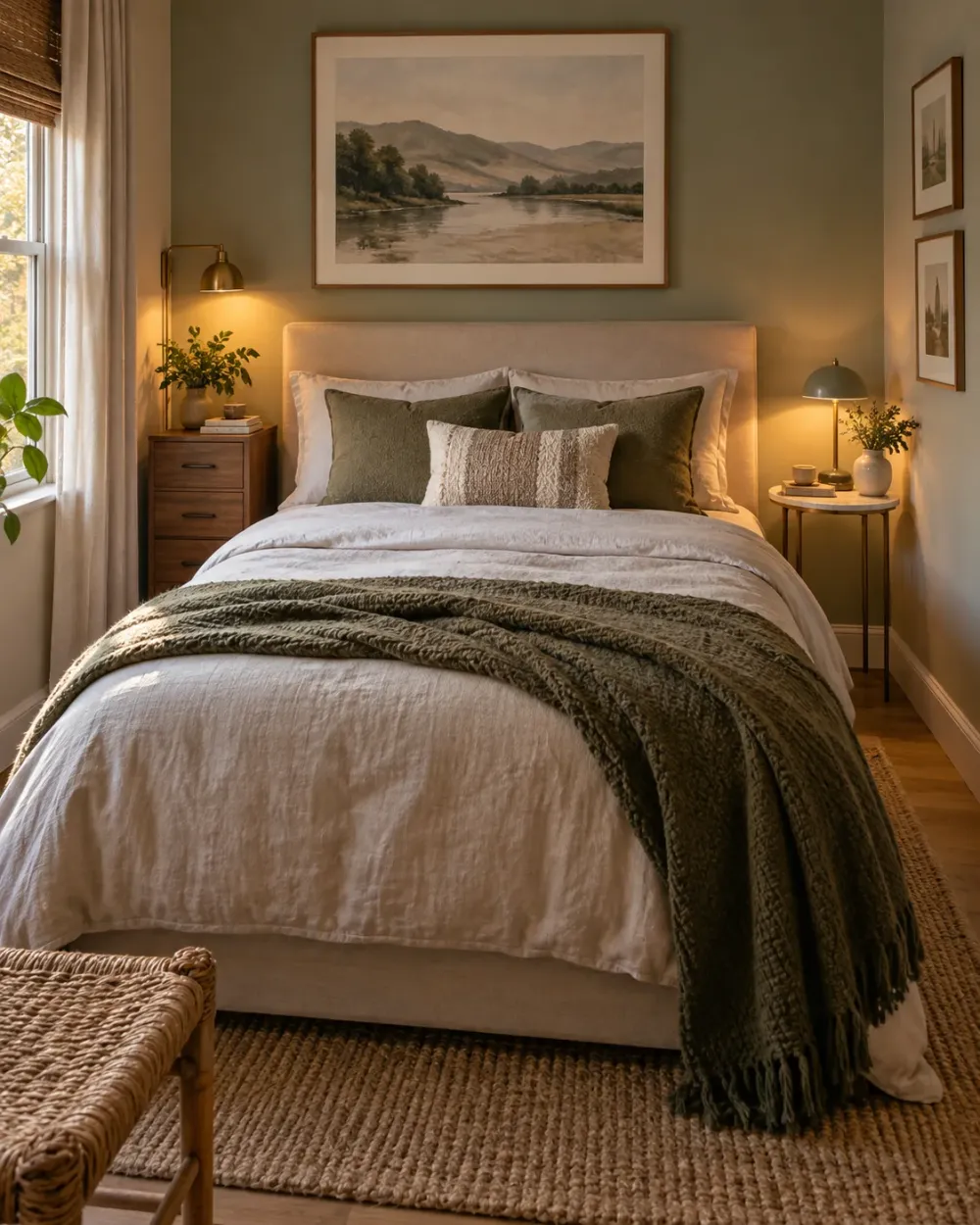
Give each sleeper a separate brief rather than shrinking the same arrangement twice. One person might need space for a paperback and water, while the other only needs a spot for glasses. Different pieces can still feel related through a shared wood tone or similar finish. If the tighter side is unused, leaving it empty can make changing the sheets easier without sacrificing a bedside function anyone actually needs.
Plan a Bedside Refresh Before Buying Anything
Start with one evening’s belongings and the bedside furniture you already own. Remove objects you don’t use at bedtime, then arrange the remaining items as you’d like to reach them. Record the furniture’s footprint and photograph the arrangement so you can compare alternatives without relying on memory. For the first refresh, move an existing small table into place if it fits, rather than buying a matching set. Prioritize a replacement only when the current piece fails a specific task, such as holding your essentials or opening its storage. Use the setup for three ordinary evenings. Note any item you repeatedly relocate or struggle to reach, then spend on that problem before choosing decorative extras.
Questions before you start
Can I use a stool as a nightstand in a small bedroom?
Yes, if it’s stable and its top suits your essentials. A flat stool can work for a book and glasses, but a curved or slatted seat may be awkward for a drink. Choose it for its usable surface, not just its footprint.
How can I tell whether a nightstand will fit beside my bed?
Check the available space at floor level and tabletop level, since bed frames and skirting can affect placement. Compare those measurements with the piece’s full dimensions, including projecting handles. Also account for the space its drawer or door needs when open.
What if I wear glasses but have almost no bedside surface?
Give your glasses a dedicated landing spot before adding decoration. A slim protective case may suit a very small surface better than a broad catchall tray. Practice finding and returning it from bed so the arrangement works without searching in the dark.
Should a small nightstand match the bed frame?
It doesn’t have to. A contrasting finish can make a compact piece feel intentional, especially if it relates to another detail in the room. Focus first on function, then decide whether you want the bedside piece to blend in or stand apart.
More ideas for your space
Our small bedroom storage guide covers the rest of the room. For evening light placement, see cozy bedroom lighting ideas.