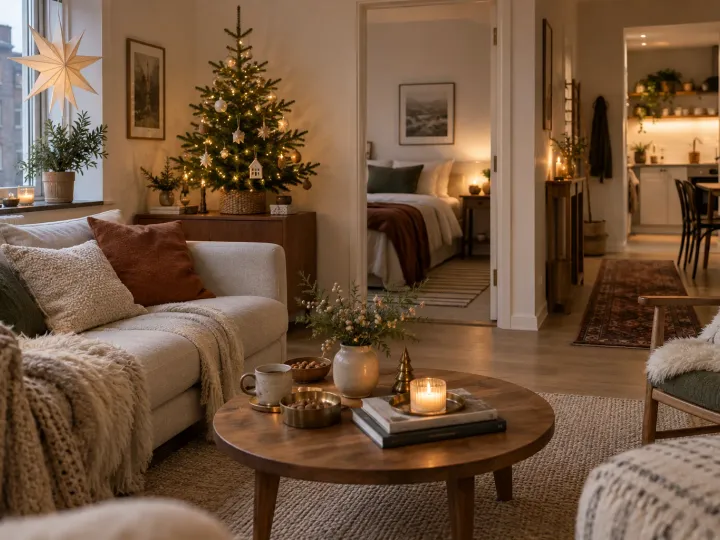
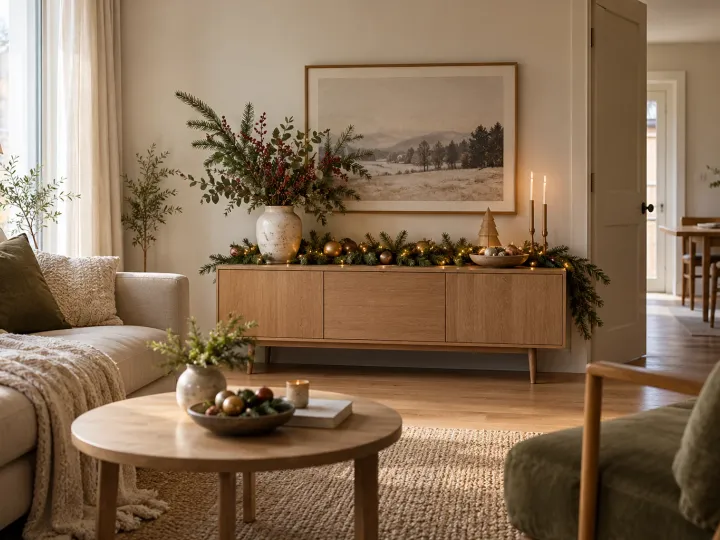
7 Slim Christmas Tree Layouts for Small Living Rooms
Find seven slim Christmas tree layouts that make a small living room feel festive without sacrificing its everyday function.
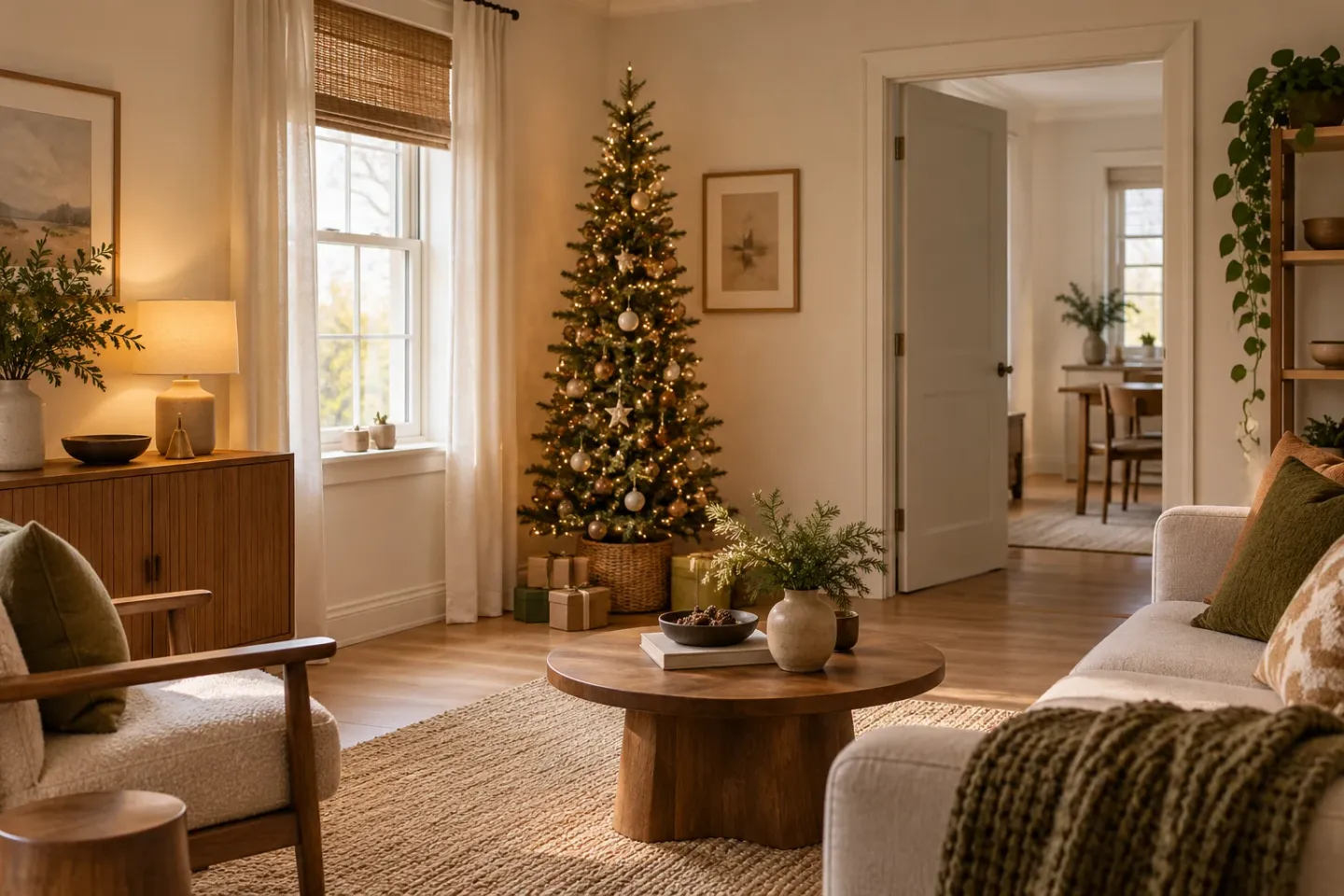
A slim Christmas tree can add seasonal warmth without claiming the center of a small living room, but its footprint is only one consideration. You also need access to seating, storage, windows and everyday routes. Start with how the room normally works, then choose a position that supports it. These seven layouts are original illustrative decorating concepts, not completed renovations.
Before you rearrange: a practical checklist
- Measure the assembled tree’s widest branches, stand and height, including any topper; check the proposed space at floor and branch height.
- Mark the footprint with finish-safe tape or paper, plus door swings and open drawers or dining chairs.
- Test normal routes, seating, windows and storage.
- Follow heater, tree and light manufacturers’ instructions; plan a cord route clear of walkways, rugs and pressure.
- Check any displaced furniture’s destination, or the stability, capacity and usable dimensions of a tabletop.
Compare the options
| Layout | Best when | Main tradeoff | Key check |
|---|---|---|---|
| Unused corner | A corner is genuinely free | Heat or door access | Clearances and door swing |
| Beside the window | You want a visible glow | Curtains and access need room | Window and cord route |
| End of sofa | The sofa has an open end | Branches may intrude | Seat access |
| Furniture swap | One piece can move | Relocation is required | Both locations |
| Dining and living boundary | An open-plan edge is spacious | Dining routes may conflict | Pulled-out chairs |
| Cabinet-adjacent niche | Storage remains accessible | Doors may be blocked | Opening arcs and width |
| Tabletop alternative | Floor circulation is tight | Less height and presence | Surface stability, heat and cord |
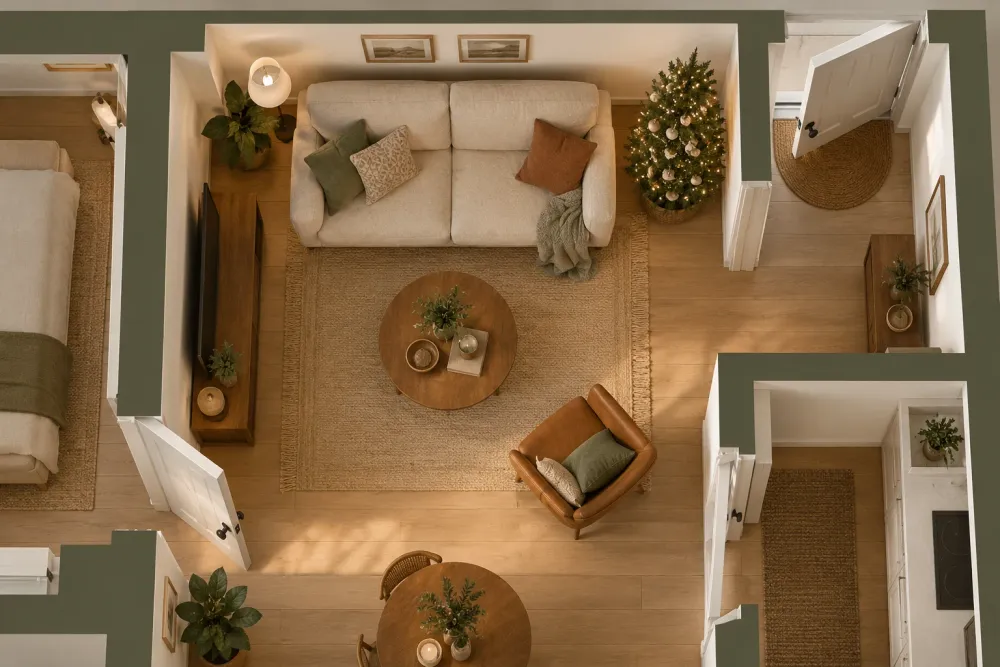
1. Unused corner: a slim Christmas tree layout with a small footprint
An unused corner gives a floor tree a natural backdrop while keeping the middle of the room open, but first make sure the apparent vacancy is not needed for a door swing, walking route or radiator access. Check the assembled tree’s widest branches and stand against the available space, then walk around the marked footprint and open nearby doors. Keep the tree away from heaters and follow both the appliance and tree manufacturers’ clearance instructions. If branches must be pressed against furniture or a heat source, choose another position or a narrower tree. A skirt or low-profile collar can finish the base without obstructing ventilation or concealing a damaged cord.
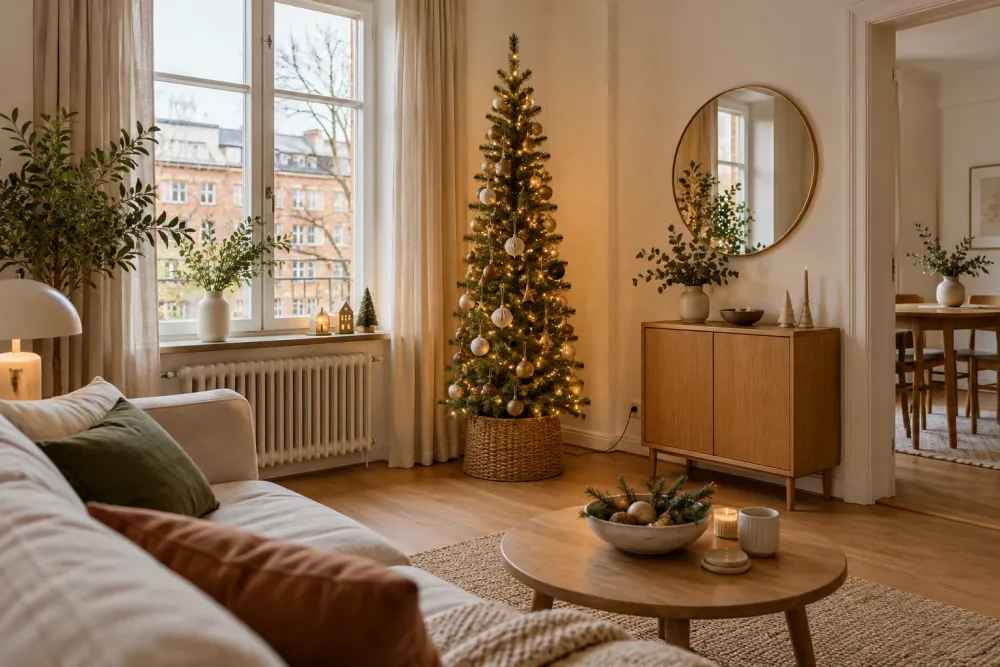
2. Beside the window
A tree beside the window creates a glow visible from inside and out while leaving the room’s center open. Position it to one side if that preserves access to the handle, curtains or blinds, and ensure it does not obstruct an exit or required escape route. Test the window treatment as you normally use it; if fabric sweeps into the branches, move the tree rather than pinning curtains near lights. Route the cord to a suitable outlet without crossing a walkway, trapping it beneath furniture or rugs, or pinching it in the window. Follow the light manufacturer’s indoor-use and switching-off instructions, and avoid this location if a heater makes the available space unsuitable.
3. End of sofa
A slim tree just beyond a sofa arm can frame the seating area without replacing a central coffee table. Check whether that end already accommodates a reading lamp, charging outlet or route to another room before committing the space. Sit down and stand up from the nearest seat, and walk past while someone is using the sofa; if branches catch sleeves or block an essential side table, try a narrower tree or another layout. Secure decorations on the sofa-facing side and consider soft, lightweight ornaments where people may brush past. The tree must stand independently in its manufacturer-approved stand, not be braced against the sofa or an unstable table.
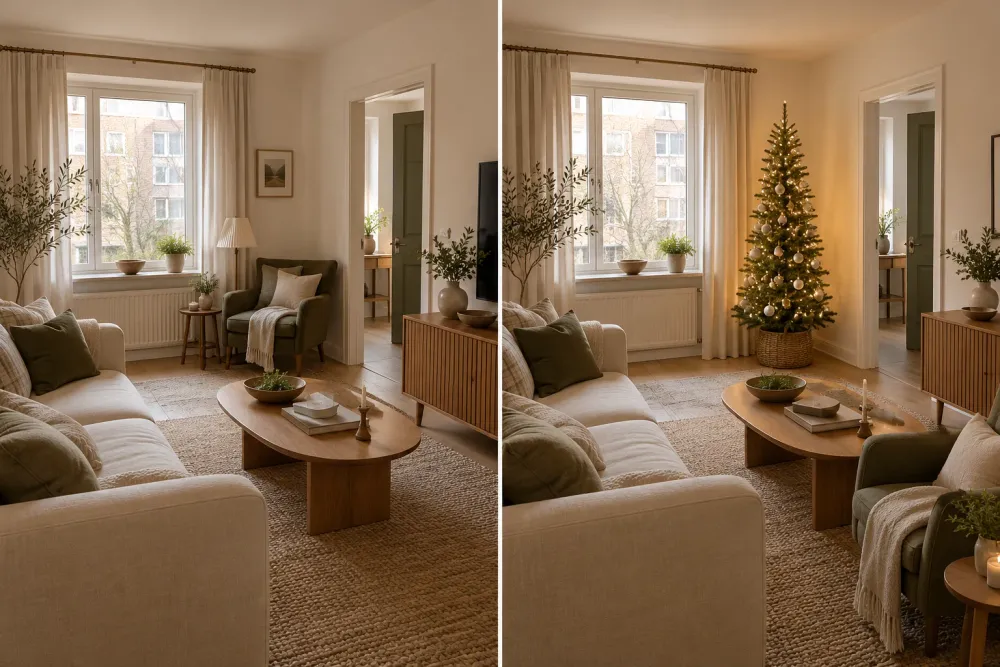
4. Furniture swap
When every corner has a purpose, temporarily moving an occasional chair, plant stand or small side table can give a tree a deliberate position. Plan the displaced piece’s destination before removing it: a chair in another usable corner remains helpful, while one wedged into an entry route merely transfers the problem. Compare the furniture and tree dimensions with both locations, then test door swings and circulation around each. If the item is essential every day and has no workable temporary home, a tabletop tree may be the better compromise. Keep small accessories together so the room can be reset after the season.
5. Dining and living boundary
In an open-plan apartment, a slim tree can mark the transition between dining and lounging without adding a permanent divider. Place it at the seating zone’s edge, visible from both areas but outside the direct route between the table, kitchen and door; a tree decorated on all visible sides suits this exposed position. Pull out each dining chair as it is normally used and rehearse carrying a plate or serving dish through the remaining space. Check the outlet route, too, and never place a cord where chairs will roll or drag over it. If dinner access feels tight, move the tree toward a wall or choose a tabletop version.
6. Cabinet-adjacent niche
A recess beside a cabinet can make a tree feel integrated with existing storage, provided doors, drawers and their contents remain accessible. Measure the niche at floor level and higher up because trim, handles or overhanging furniture can change its usable width, then compare it with the assembled tree and stand. Open every nearby door and drawer fully; if everyday supplies require moving the tree, choose another location or a less frequently used cabinet. Do not rely on the cabinet to hold the tree upright. Store dry seasonal supplies inside, but operate heat-producing appliances on a safe, open surface with their manufacturer-specified clearances; echoing a cabinet color in the decorations can unify the look.
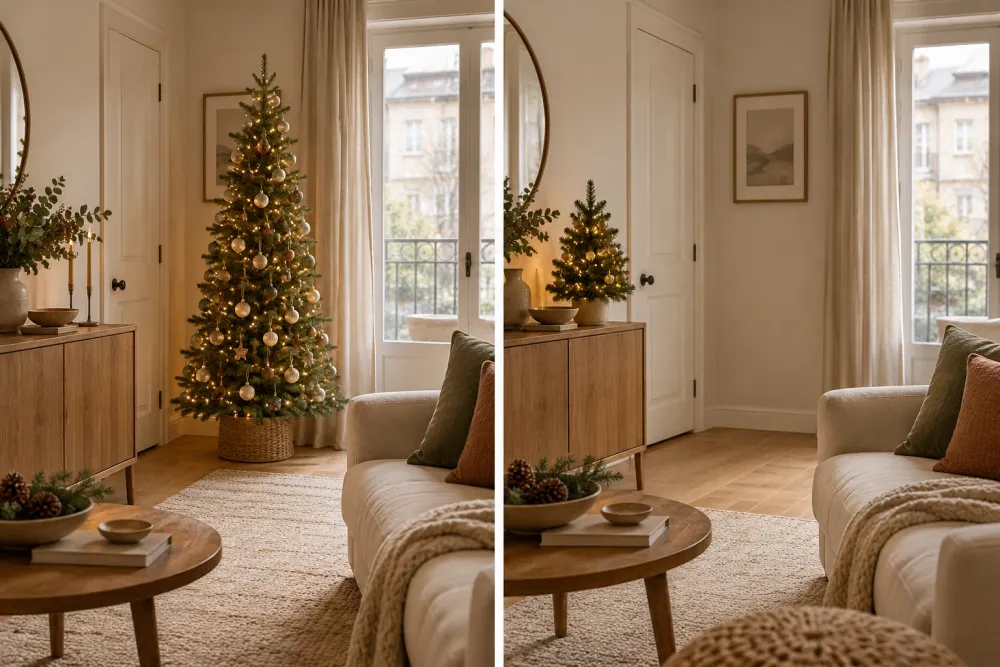
7. Tabletop alternative
A tabletop tree can preserve circulation when a floor tree would interrupt a route or displace necessary furniture, though it offers less height and floor presence. Choose a stable, level surface capable of supporting the tree and decorations, and follow the tree’s setup instructions. A sturdy side table or dedicated cabinet top may work, but avoid sacrificing a surface needed for hot appliances, food preparation or daily work. Compare the base with the usable surface dimensions, including raised edges, and keep the tree clear of doors, chairs, passing elbows, overhead shelves, lamps and heat. If using lights, route the cord to an appropriate outlet without letting it dangle into a walkway.
Your first refresh
Choose two plausible locations and compare each with your assembled tree. Mark both footprints and, if practical, live with the outlines for a day while testing routes, seating and storage. Select the position that best supports daily life. Move displaced furniture to its checked destination before assembly, then add lights according to their instructions and arrange suitable ornaments. Finally, recheck the cord, doors, windows and walking routes; adjust anything that interferes with normal use.
Questions before you start
Where should a slim tree go if the only open corner is beside a heater?
Try the end of the sofa, a furniture swap or a tabletop alternative instead. A narrow tree is not automatically safe beside a heater: follow the heater and tree manufacturers’ instructions, including applicable clearances. Keep exits and normal walking routes usable when choosing another position.
Can I put a tree in front of a living room window?
Possibly, if the window remains accessible, curtains and blinds operate without contacting the tree, and the placement does not obstruct an exit or required escape route. An offset position may work better than centering it. Test the actual window and covering with the footprint marked.
How do I choose between a slim floor tree and a tabletop tree?
Mark the floor tree’s complete footprint and test your normal routes and furniture access. If it disrupts those activities, measure a stable tabletop that is not needed for heat-producing appliances or daily work. The smaller tree gives up height but may preserve a more functional room.
What should I do with the chair I move to make room for the tree?
Measure a temporary destination before moving it, then check that the chair can still be used and does not obstruct a door, exit or walking route. If there is no workable destination and you need the seat, try a different tree location or a tabletop tree.
Keep planning your space
For more ways to arrange a compact room, explore narrow living room layouts and cozy small living room ideas. Both offer further inspiration for making a small space feel welcoming. For seasonal details beyond the tree, see Christmas decor for small apartments, with ideas for bringing festive touches into a compact home.