7 Thanksgiving Table Ideas for Small Dining Spaces
Make a small Thanksgiving table feel welcoming with compact centerpieces, flexible serving space, and easy-to-clear details.
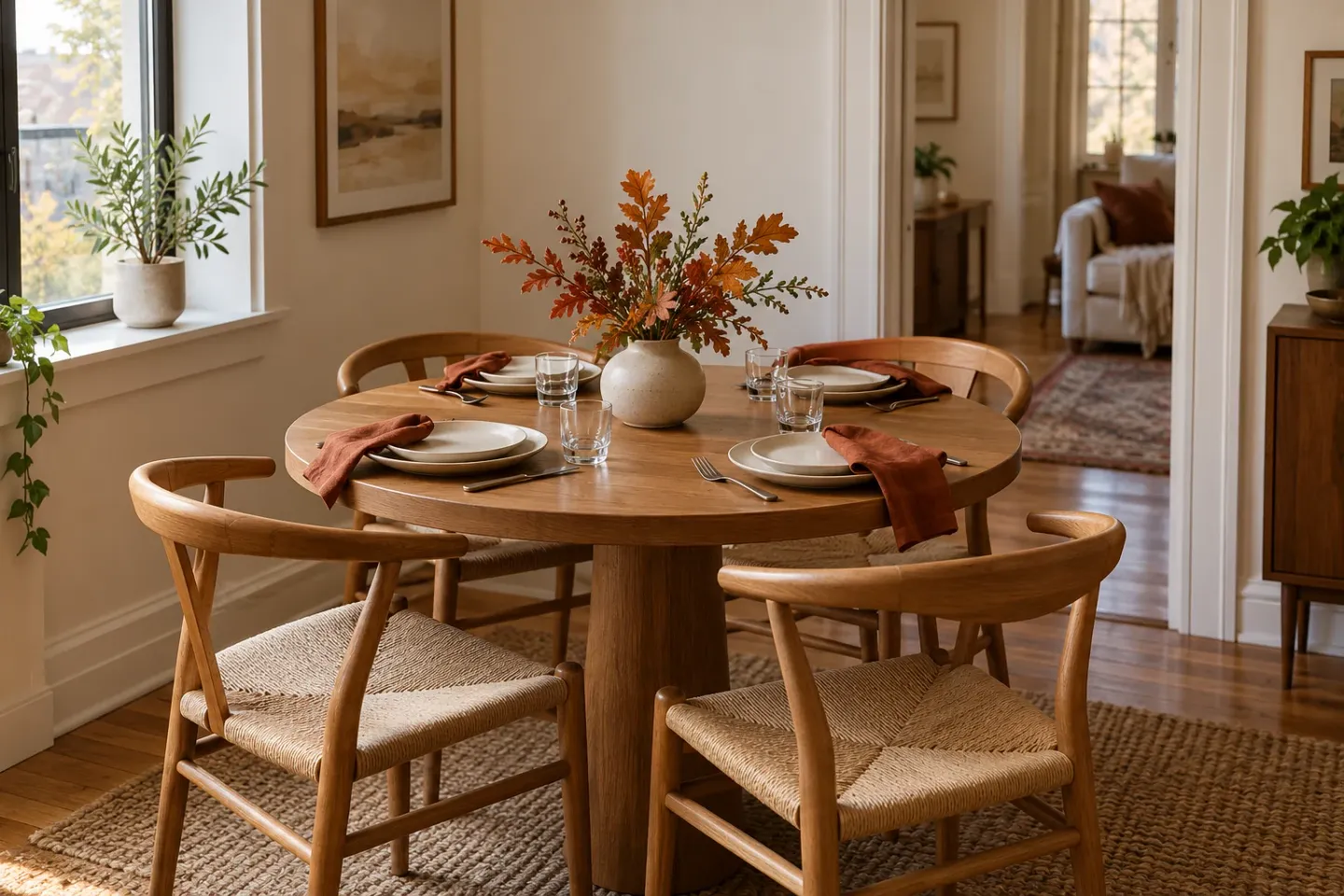
A small Thanksgiving table does not need to hold every dish, drink, and decoration at once. Create a comfortable place to eat, and give extras a nearby home. Start with everyday plates and chairs, then add seasonal details around the remaining space. These seven ideas suit compact round or rectangular tables; adjust them to your furniture. Imagery shows illustrative concepts.
Before you rearrange: a practical checklist
Practical measurement checklist
- Measure the usable tabletop and any extension.
- Set out chairs; mark occupied and pulled-back footprints, then test sitting, standing, and walking past.
- Arrange complete settings at every seat and check overlap, reach, and sightlines.
- Mark runner, centerpiece, largest dish, and tray footprints, including handles; check off-table landing spots.
- Measure the drink station and pouring area; walk the route with chairs occupied and check doors and exits.
- Check fabric care, table-finish guidance, appliance instructions, and trivet heat suitability.
Compare the options
| Choice | Best when | Tradeoff | Check |
|---|---|---|---|
| Low bowl centerpiece | You want a movable focal point | Uses serving space | Sightlines, stability, landing spot |
| Short, slim runner | You want color without full coverage | Folds can make dishes wobble | Width and fabric care |
| Extra plate layer | A separate course needs it | More washing-up and less space | Whether guests need it |
| Off-table drink station | Bottles crowd the table | Guests need a clear refill route | Pouring space, doors, chairs |
| Moveable tray | Small items travel together | Needs a landing spot | Footprint and loaded weight |
| Minimal dinner decor | Serving dishes need room | Arrival look changes | Storage for removed pieces |
1. Low single-vessel centerpiece for a small Thanksgiving table
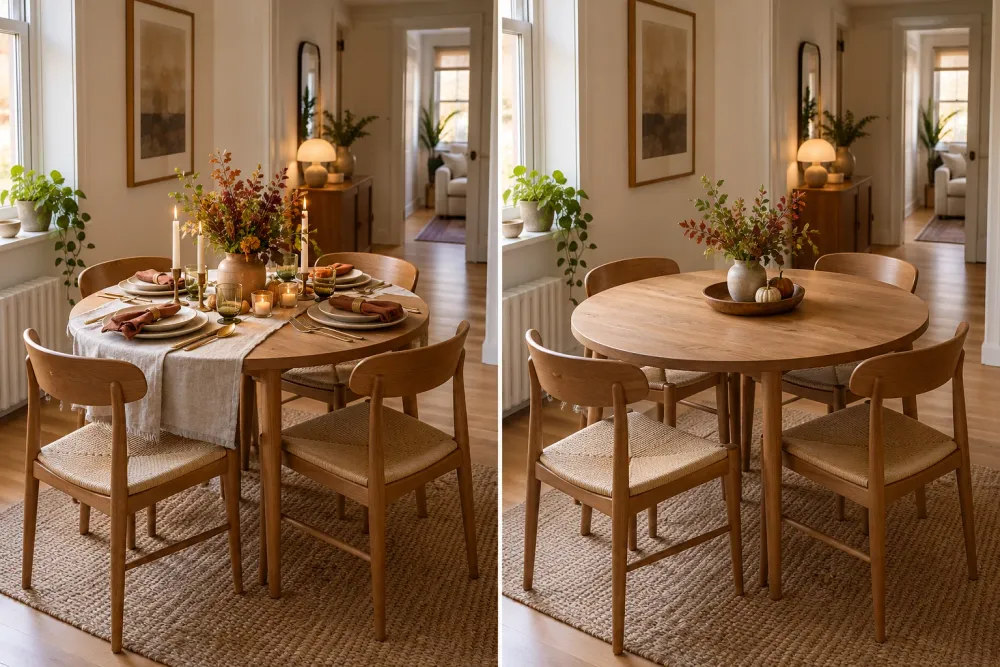
Choose one low bowl, squat vase, or shallow serving dish and fill it with a few seasonal stems, small gourds, or unshelled nuts. A contained arrangement looks finished without scattering decorations across spaces needed for plates and serving dishes, and it can be lifted away in one trip. After setting the table, sit down to check sightlines and test the largest serving dish; reduce or remove the centerpiece if either is compromised. Pick a stable, wide-based vessel, keep it away from hot cookware, and skip loose pieces that could fall into food. For candlelight without an open flame near napkins and sleeves, use a battery-operated light.
2. Compact runner
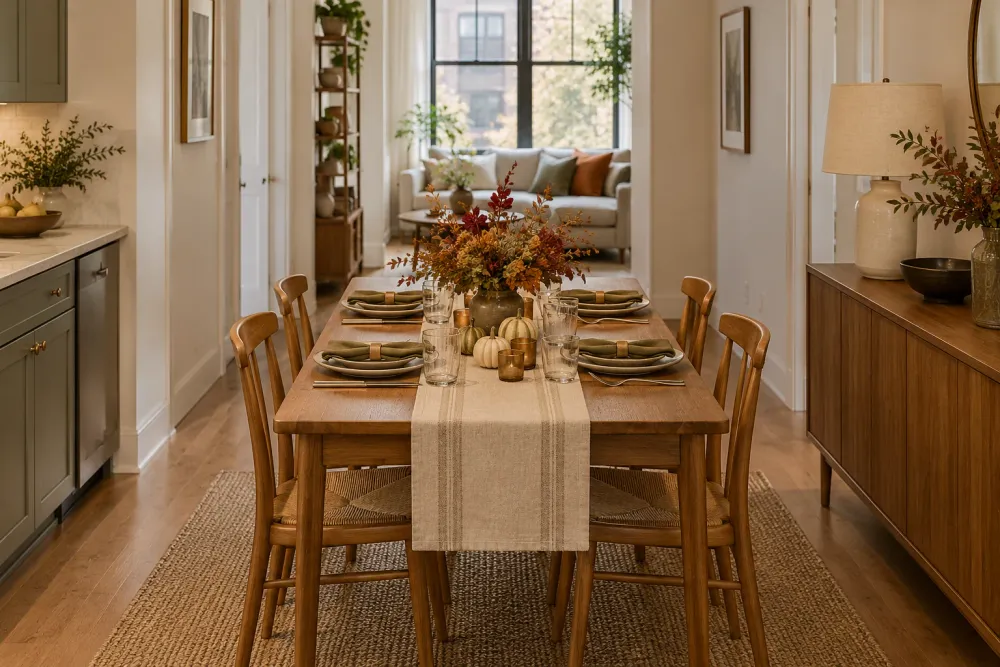
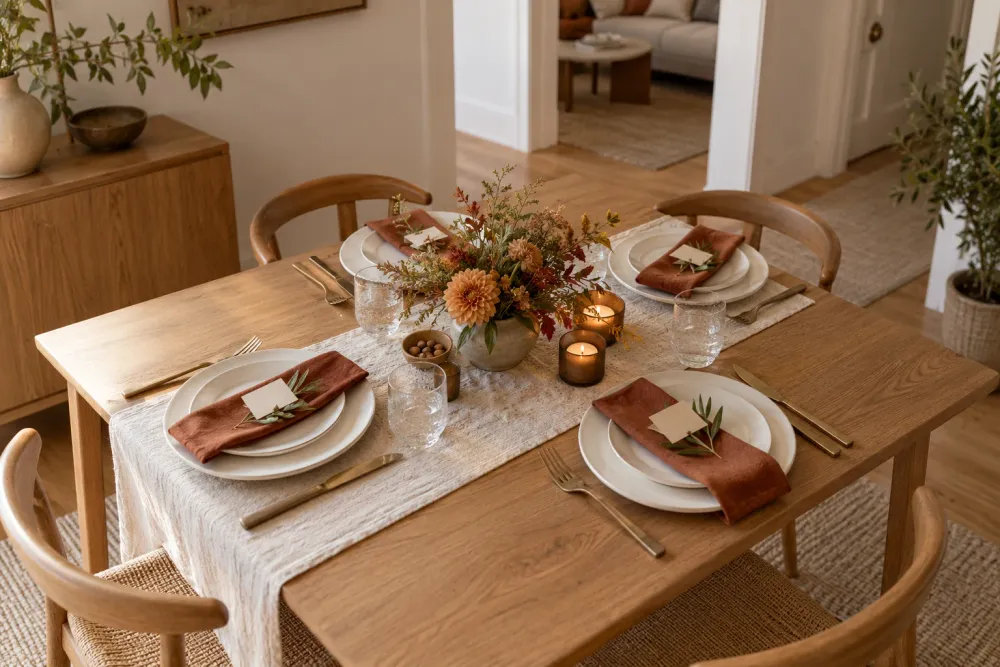
A runner adds color and protects part of the table without covering the whole surface. Try a slim strip on a narrow rectangular table or a short folded length on a round one; a clean scarf or hemmed remnant can work if it lies flat and suits the finish. Size it to the space left between complete place settings, and ensure glasses and dishes sit level rather than straddling thick folds. Little or no overhang is easier around close chairs; if you prefer a drape, check that it will not catch on knees or chair arms. Choose washable fabric for spills and follow the table manufacturer’s guidance on damp or hot items.
3. Layered everyday plates
Make familiar dishes feel intentional with a repeated combination of dinner plate, folded napkin, and a smaller plate or bowl only when the menu calls for it. White dishes offer a quiet backdrop for autumn colors, while mixed plates can look cohesive through a shared napkin fold or color family. A separate salad plate helps with a first course but otherwise adds washing-up; chargers can push glasses or cutlery into a neighbor’s space. Test one complete setting before committing to extra layers, then arrange the settings at every seat, shifting them around a round table’s curve as needed. Keep later-course dishes nearby instead of stacking the table from the start.
4. Napkin and place-card combination
Pair a folded cloth or sturdy paper napkin with a handwritten place card for color and clear seating without another centerpiece object. Place the combination on the dinner plate or immediately beside it, using card stock or clean, stiff paper and writing names large enough to read while standing. Plan seating around guests’ accessibility needs before writing cards, or leave them blank until the guest list is settled. A clean, food-safe herb sprig is optional; avoid varieties that may bother a guest and skip scented additions if unsure. Keep twine and clips off plates, and move cards aside when dinner is served.
5. Separate drink station
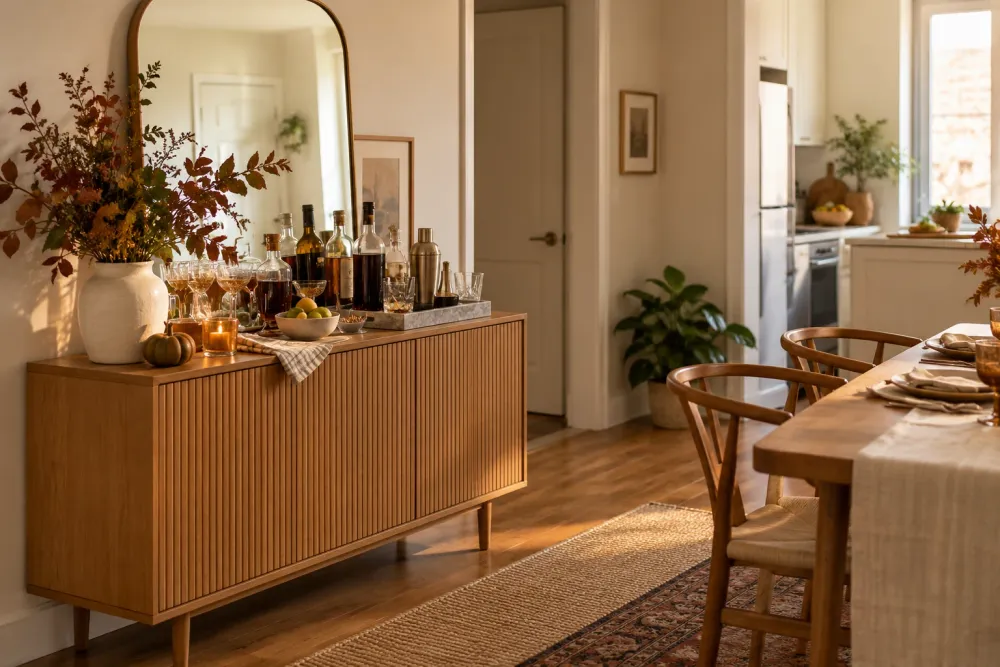
Move drinks to a sideboard, suitable kitchen counter, or stable cart so bottles and pitchers do not compete with dinner plates. Group glasses, a water pitcher, and drinks on a tray or washable mat, with napkins or coasters nearby and a clear area for pouring. Check the route from occupied seats, including chair movement, door swings, and exits; if the surface is too small, keep refills in the kitchen. Use hot-drink appliances only on a safe, open operating surface according to manufacturer instructions, never inside a cabinet or enclosed cart. Store only dry supplies inside, or prepare hot drinks in the kitchen if no suitable surface is available.
6. Moveable serving tray
A tray gathers small items into one manageable load: it can hold decor before dinner, carry condiments or bread during the meal, and collect empty glasses afterward. Give it a designated off-table landing place, and check its full footprint, including handles, against both surfaces and the largest serving dish. A rim helps contain small items, while a flat tray may slide more easily under a bowl; choose one you can lift comfortably when loaded and center heavy items. If the tray crowds a setting, use it for transport only. Do not treat it as a trivet unless both tray and underlying surface are rated for the heat; otherwise use appropriate protection.
7. Easy-to-clear decor
Plan two phases: a welcoming arrangement for arrival and a simpler working surface for dinner. Choose pieces that lift together, designate a clear shelf, counter section, or tray landing spot for them, and photograph or sketch the first layout if you want to recreate it. Keep serving utensils separate from decor, and remove anything that obstructs passing dishes or reaching glasses. If the runner may bunch beneath dishes, remove it before serving rather than pulling it from under a loaded table. Afterward, clear leftovers and perishables first, following appropriate food-safety guidance, then dishes, linens, and decor; return the centerpiece for coffee only if there is room.
Your first refresh
A few days before Thanksgiving, test complete settings and the largest serving dish, then choose a vessel and runner for the space left. The day before, clear the drink station and landing spot, and write place cards. On the day, fold napkins, add stems or gourds, and check sightlines. Before serving, remove competing decor. Afterward, clear perishables and dishes first, then wash linens and store reusable pieces for later use.
Questions before you start
Where should the Thanksgiving centerpiece go when the food arrives?
Move it to a pre-cleared counter, shelf, or tray landing spot if it competes with serving dishes or blocks conversation. Check beforehand that the spot fits the vessel securely. If it stays on the table, guests should still be able to reach food and glasses comfortably.
How can I decorate a round table without making it feel crowded?
Arrange complete place settings first, following the table’s curve, then use the remaining center space for one low vessel. Skip the runner if it makes the layout feel busy. Test the arrangement from each chair, since the space between settings varies around a round edge.
What if I do not have a sideboard for a drink station?
Use a suitable kitchen counter section or stable cart if it provides enough open pouring space and leaves the route clear. Test the arrangement with paper footprints. If neither fits, keep drinks in the kitchen and bring refills rather than crowding an exit or balancing bottles on an edge.
Can I set the table ahead if I still need it for everyday meals?
Prepare portable pieces instead of leaving the whole table set. Fold napkins, write cards, and group centerpiece materials on a tray stored elsewhere. Test the layout in advance, then assemble it shortly before guests arrive, keeping the tray’s landing spot clear for the switch to dinner.
Keep planning your space
For more ways to make shared rooms work harder, explore our cozy small living room ideas and narrow living room layout ideas. When the season changes, see Christmas decor for small apartments for another space-conscious approach to decorating around the furniture and activities already in your home throughout the year.