7 Renter-Friendly Wall Decor Ideas to Make a Room Yours
Personalize rental walls with freestanding displays, a restrained gallery, textiles, and practical choices that account for your lease and wall finish.
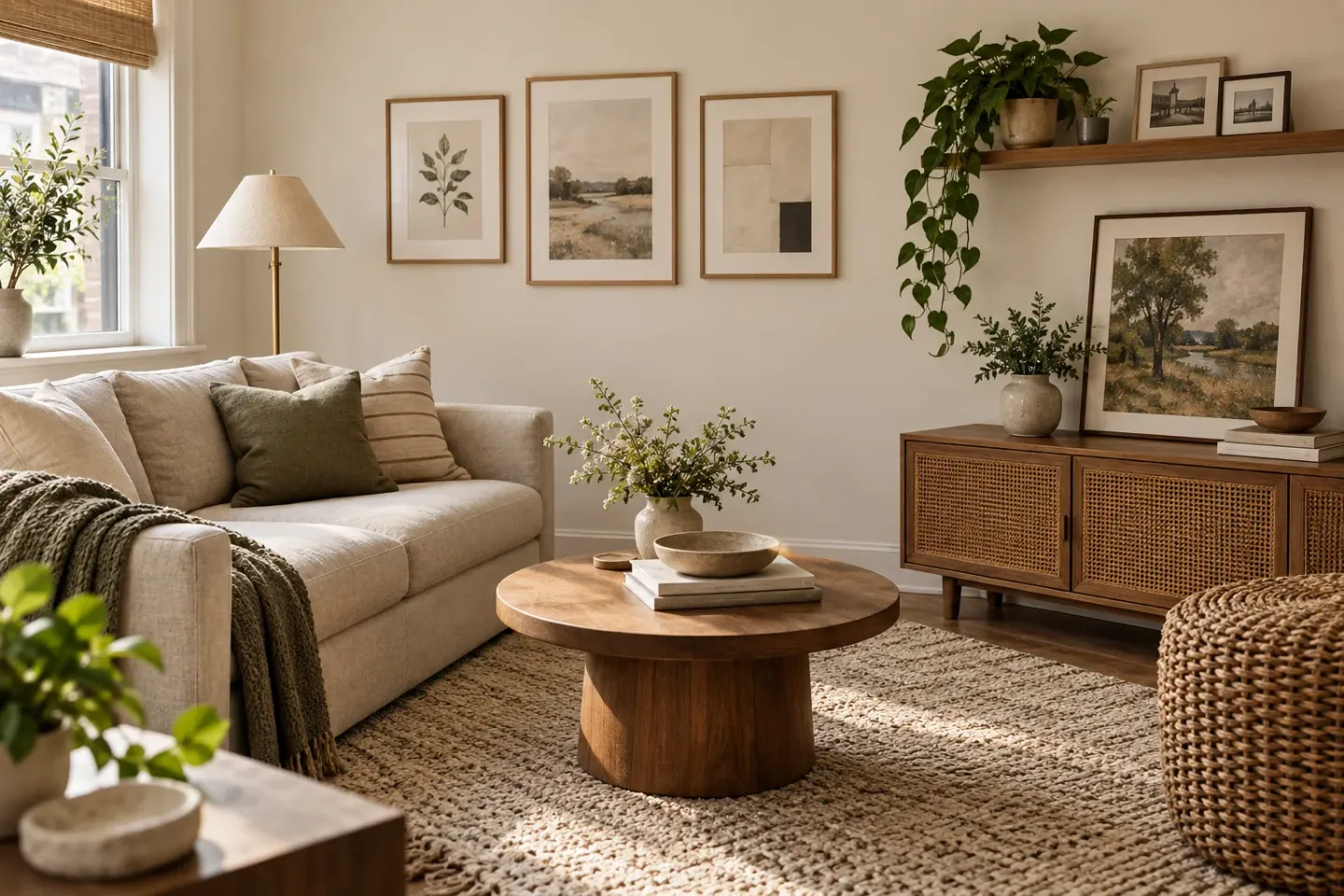
Blank rental walls can make a room feel unfinished. You can give them some personality without committing to a whole wall makeover. Start with art you already own and a surface where you can display it. Before attaching anything, check your lease and the wall finish. A product marked removable can still lift paint, so choose the method as carefully as the picture.
1. Start Your Renter-Friendly Wall Decor on an Existing Cabinet
A low cabinet can hold a small framed print, a vase, and a few books without requiring a new wall installation. Keep the display stable and leave room for the cabinet’s daily function. A frame should not be balanced where it can slide or be knocked over.
Choose one larger visual element and one or two supporting objects. A long line of small unrelated items often looks busier than a simple grouping.
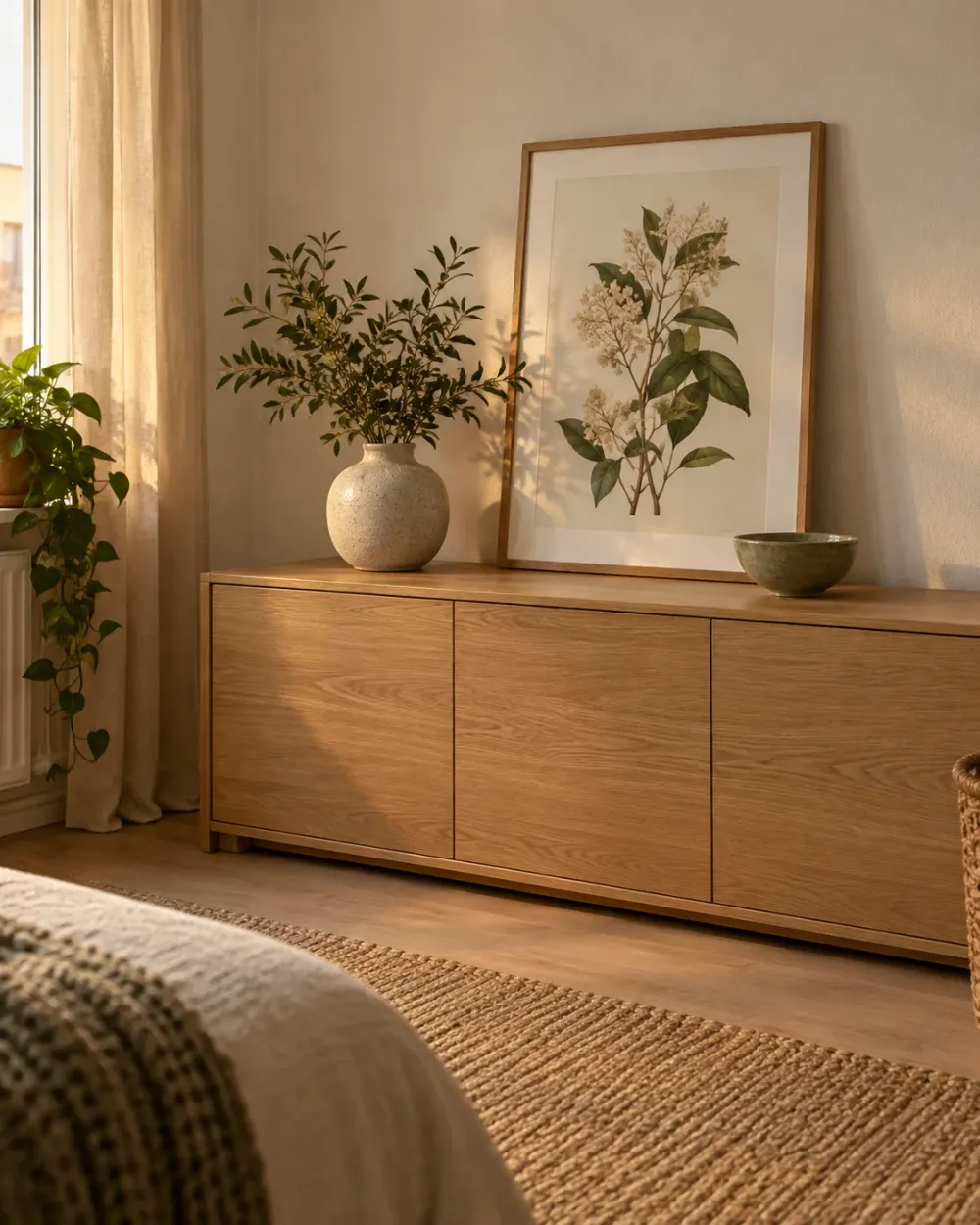
Match the display to how you use the cabinet. If it holds your keys and mail, reserve that landing spot before arranging anything decorative. A frame with a built-in tabletop stand is useful here because its footprint is easy to measure. Set it toward one end, then open every drawer and door. If reaching for everyday items disturbs the arrangement, reduce the display rather than sacrificing useful storage.
2. Use a freestanding picture ledge or display unit
A freestanding display shelf can give art a place when wall installation is unsuitable. Check that the unit’s stable and follow any anchoring instructions; a freestanding design isn’t automatically safe to leave unsecured.
Avoid introducing a deep shelving unit only for decoration in a tight room. The floor space it takes may be more valuable than the display area it creates.
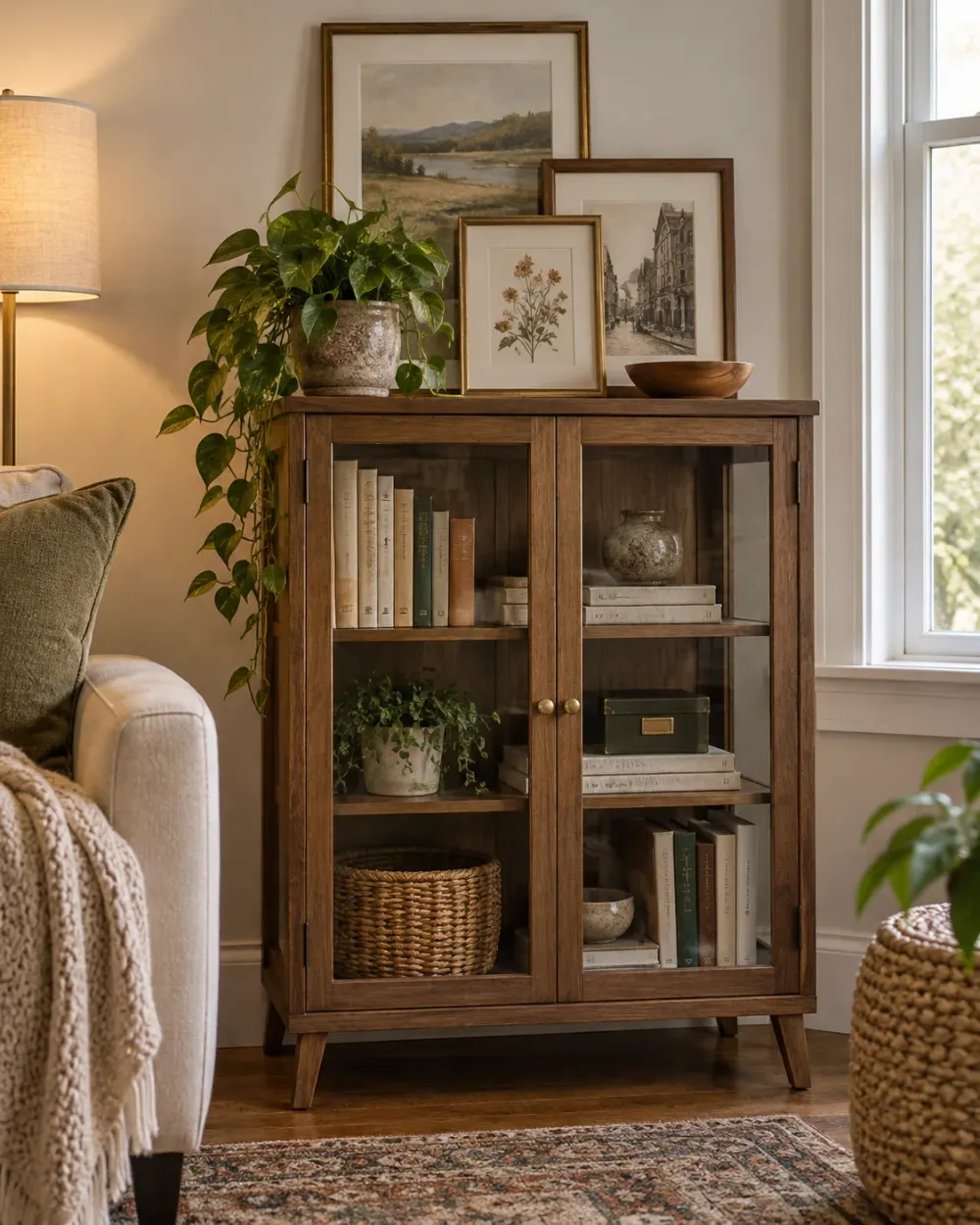
Measure the proposed unit’s full footprint, including projecting feet, and mark it on the floor with loose paper. Walk past it carrying a laundry basket to see whether the remaining route suits your routine. Also compare shelf height with your largest frame, since a shallow shelf may fit the base but not the picture. If required anchoring isn’t permitted, that particular unit isn’t a suitable option for your rental.
3. Plan a small gallery before hanging anything
Arrange frames on the floor or use paper templates to test spacing. A group of three related images can be enough for a compact wall. Confirm permitted hardware, object weights, and the wall’s condition before installation.
Place the group where you’ll see it comfortably from a normal seat. A gallery hung only for the view from the doorway may feel too high when you spend time in the room.
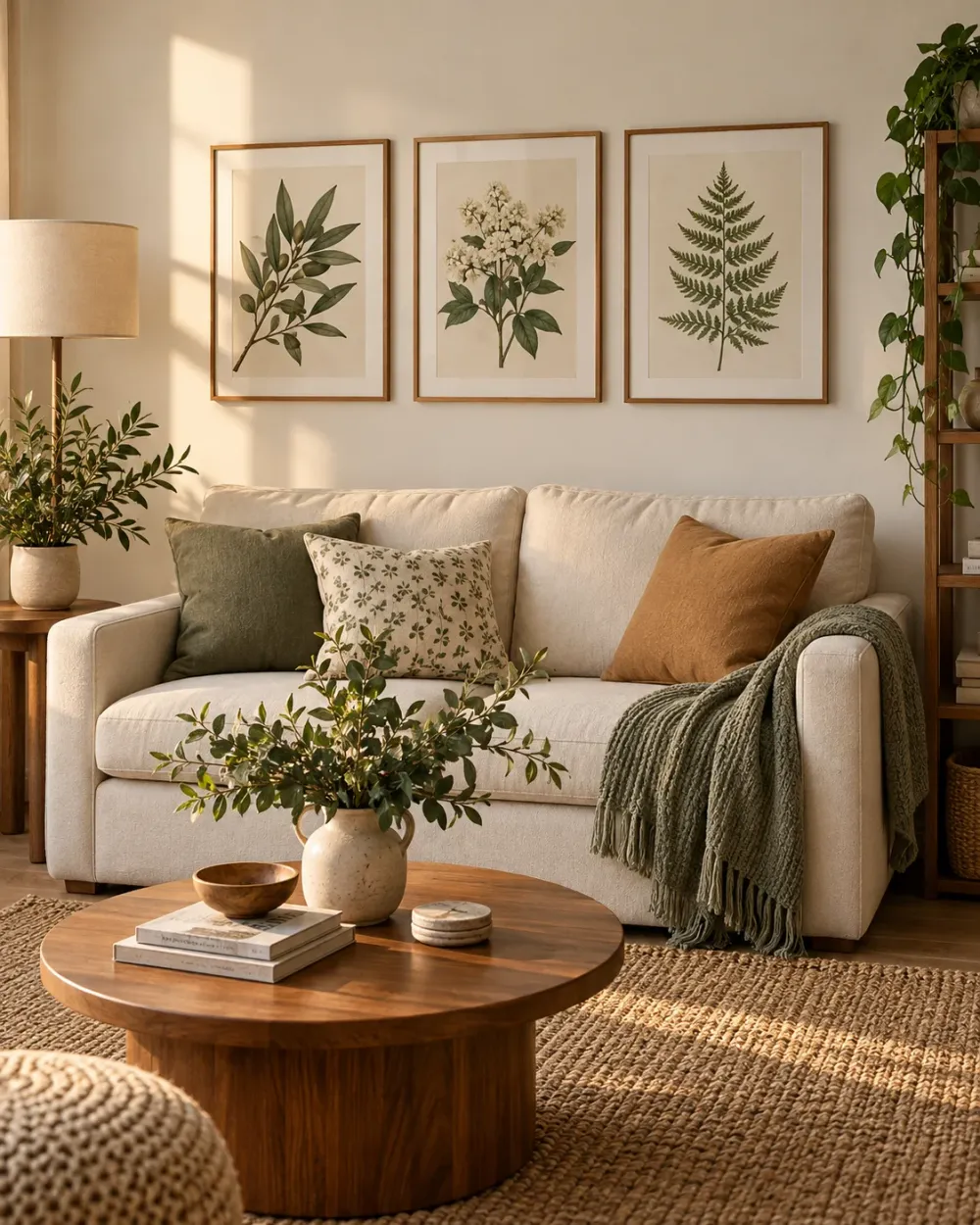
Give the gallery a defined outer boundary before deciding individual gaps. For example, on a particular 150-centimeter-wide wall between two doorways, you might mock up a 90-centimeter-wide arrangement and compare it with a narrower version. These are layout examples, not hanging rules. Measure the frames themselves, including their edges, and photograph both layouts. Comparing the overall shapes makes it easier to choose without repeatedly moving templates.
4. Try art with a shared visual thread
The images don’t need to come from the same set. A repeated color, similar frame finish, or related subject can make varied pieces feel connected. Mix only one or two of these elements initially.
Include something personal if you like: a photograph, a postcard, or a print you already own. A rental room gains character from choices that matter to you, not just from filling empty walls.
Look for a small detail that already appears in two pieces, such as an olive leaf in a print and an olive sweater in a photograph. That can be enough connection without buying matching art. If one image feels out of place, try a different mat before replacing it. A pale mat can give a dense photograph more breathing room, while preserving the subject that makes it worth keeping.
5. Use textiles where they have a practical role
Curtains can add color and soften a room while serving privacy or light-control needs. A fabric panel may work as wall decoration only if its mounting is suitable and it stays clear of heat sources, doors, and vents.
Consider cleaning and dust as well as appearance. A textile beside a busy doorway can be harder to maintain than a framed print.
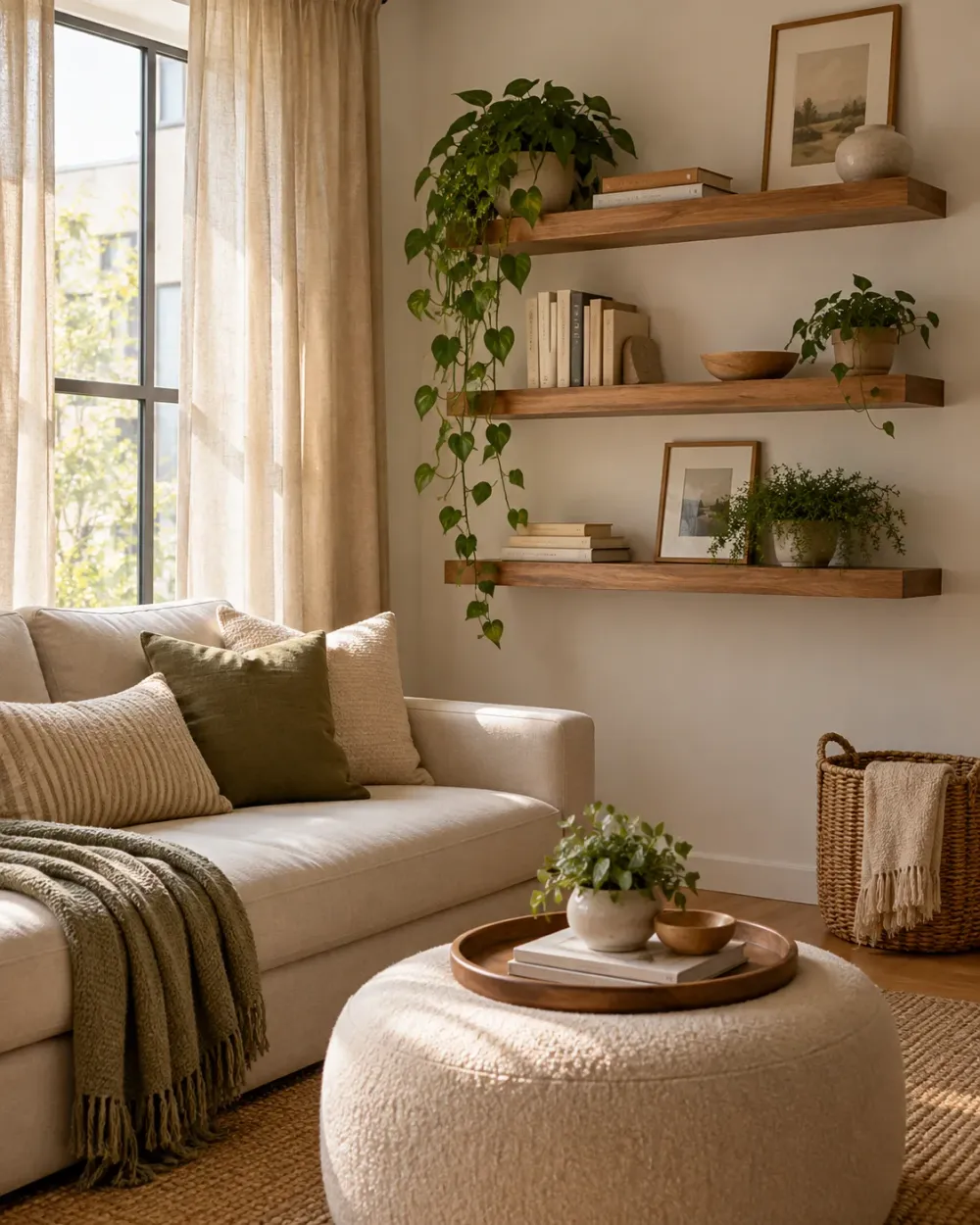
Choose curtain fabric by the window’s job before choosing its pattern. In a living room overlooked by neighbors, compare how sheer and denser samples look with the lights on after dark. Sheers may soften daylight without providing the privacy you expect at night. Before buying panels, measure the existing permitted rod and the intended finished length. Check the care label too, especially if the fabric will need frequent washing.
6. Treat peel-and-stick products as a considered project
Check compatibility with the wall finish, manufacturer guidance, lease restrictions, and removal instructions. Test only where permitted. Painted surfaces, uneven finishes, and older walls can react differently.
A smaller application may be easier to manage than covering an entire room, but it still needs careful preparation. If damage would be costly or unacceptable, choose a display method that doesn’t attach to the wall.
Before ordering, sketch the exact patch you want to cover and check the product’s repeat and panel width. A pattern that looks simple online may require extra material to align across joins. For a permitted application in a small alcove, work out where the seams would land and whether narrow leftover strips would be awkward. Keep the product instructions with your rental paperwork so the removal method is available when you move.
7. Leave some wall space unfilled
A quiet wall allows the art you enjoy to stand out. It also gives a small room a bit of empty space. Before adding another piece, remove a few objects from the nearby cabinet and see whether the whole corner feels better.
Judge empty space from your usual sitting position, not just while standing directly in front of the wall. Notice whether a blank stretch separates two strong features, such as a window and a colorful artwork. That pause can help both remain distinct. Take a photo before adding anything, then compare it with a version showing a paper placeholder. If the new shape competes with your favorite piece, leave the gap.
Plan a Cabinet-Top Refresh Before Buying Anything
For your first refresh, choose one cabinet you already use and gather two framed pieces, a few books, and one favorite object from elsewhere in the room. Clear the top, keep its everyday essentials, and try each frame separately with just one supporting item. Take a photo from your usual seat, then live with the simpler arrangement for a few days. Check whether you can still use the cabinet comfortably and whether you enjoy the view. Buy only what solves a specific gap: a suitable tabletop frame for an unframed print, for example, before more decorative objects. Consider a larger display purchase only after measuring its footprint and confirming any required installation is permitted.
Questions before you start
How can I decorate rental walls if I can’t make any holes?
Use an existing cabinet or another suitable surface to display framed art with tabletop stands. Curtains on an existing permitted rod can also bring color into the wall area. You don’t need to attach something directly to every wall for the room to feel personal.
Are removable adhesive products always safe for rental paint?
No. Removable describes the product’s intended use, not a guarantee for every painted surface. Check your lease, the product’s compatibility guidance, and removal instructions. If testing isn’t permitted or paint damage would be unacceptable, choose a display that doesn’t adhere to the wall.
How do I make mismatched frames look intentional?
Choose one connection rather than trying to match everything. Similar mat colors can unite different frame finishes, or a repeated color in the images can connect varied shapes. Lay the pieces together first and remove any that distract from the relationship you want.
Should I fill the blank wall above my sofa?
Not necessarily. Look at that wall alongside the windows, curtains, and nearby furniture from where you usually sit. If the room already has a clear focal point, leaving it empty may feel calmer. Try paper placeholders before committing to an arrangement.
More ideas for your space
Begin with art on an existing surface, then consider a small gallery only if the permitted installation method is clear. Our warm neutral living room guide can help connect the colors. If floor space is tight, review narrow room layouts before adding a display unit.