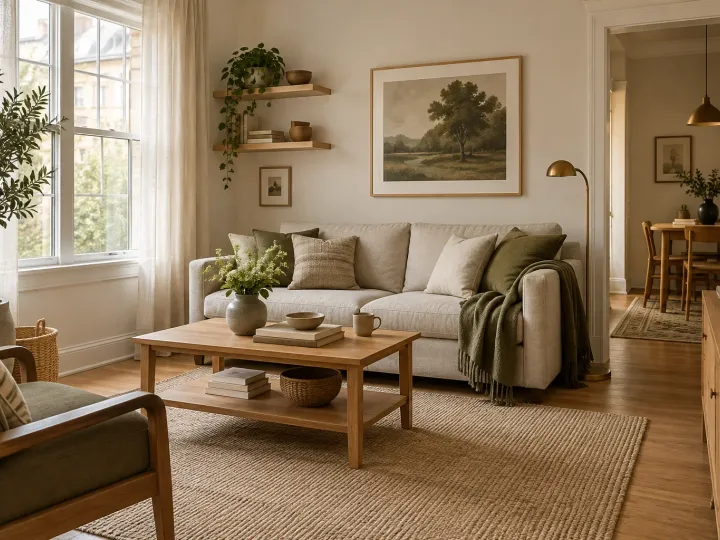
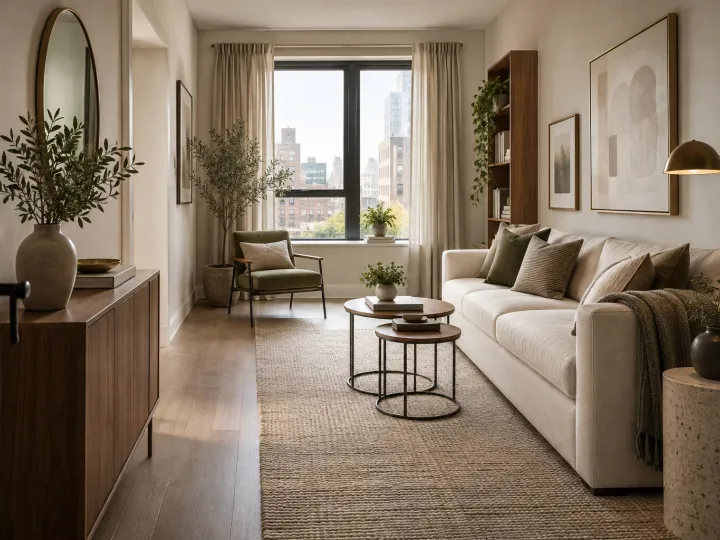
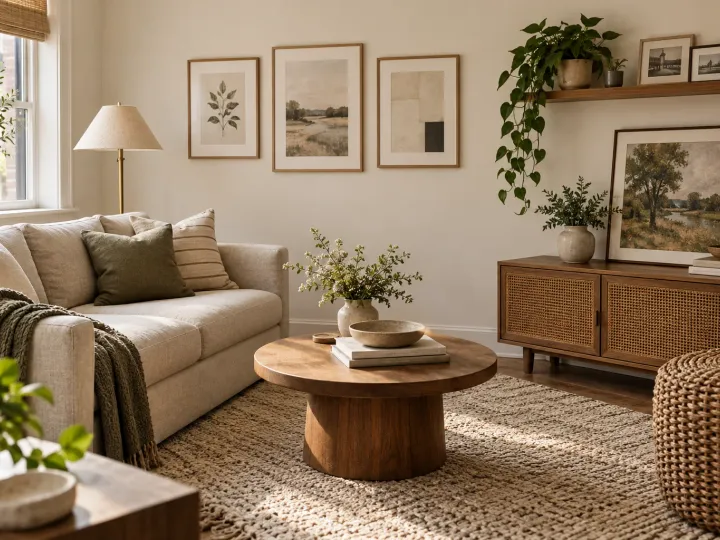
7 Warm Neutral Living Room Ideas with Depth and Texture
Build a warm neutral living room with balanced undertones, layered textures, wood finishes, and a few darker details that keep the space interesting.
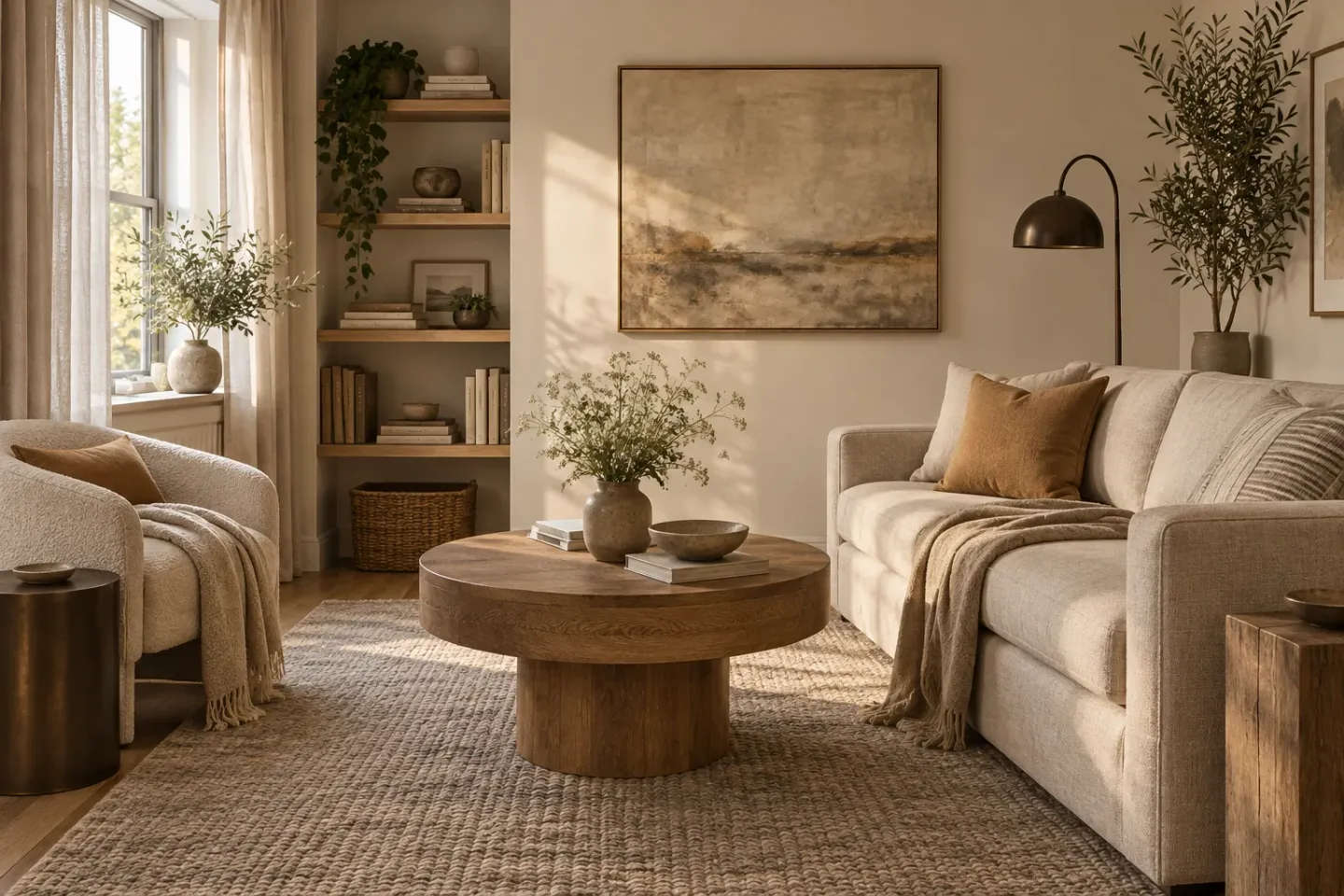
Cream walls, an oatmeal sofa, a beige rug. It sounds easy enough, but put them together and the room can still feel flat. A warm neutral living room needs a few differences in shade and texture. Before buying anything, look at your sofa, floor, and largest cabinet. Those pieces give you a better starting point than a paint color you liked online.
1. Choose a Reference Piece for Your Warm Neutral Living Room
Use a sofa, rug, wood floor, or cabinet as the starting point. Notice whether its color leans yellow, pink, gray, or brown. You don’t need a technical color chart; you need to see which nearby samples feel comfortable together.
Place samples beside that piece in daylight and again in the evening. A cream that looks soft in one room can appear yellow or gray in another. Choose for your actual space rather than a photograph on a screen.
Pick the piece you’re least likely to replace, not necessarily the one you like best. If a large sofa has a pinkish beige cast, treat that as a fixed condition while choosing companions. Hold each candidate beside a sheet of plain white paper to make its undertone easier to notice, then bring it back to the sofa. Narrowing the choice to two candidates makes subtle differences easier to judge.
2. Keep the largest surfaces related
Walls, curtains, and the sofa can share a general warmth without matching exactly. A warm ivory wall might sit beside an oatmeal sofa and a light taupe curtain. The small differences keep the room from feeling flat.
If painting isn’t an option, work with textiles. Curtains and a rug can connect existing furniture to the wall color without altering a rental.
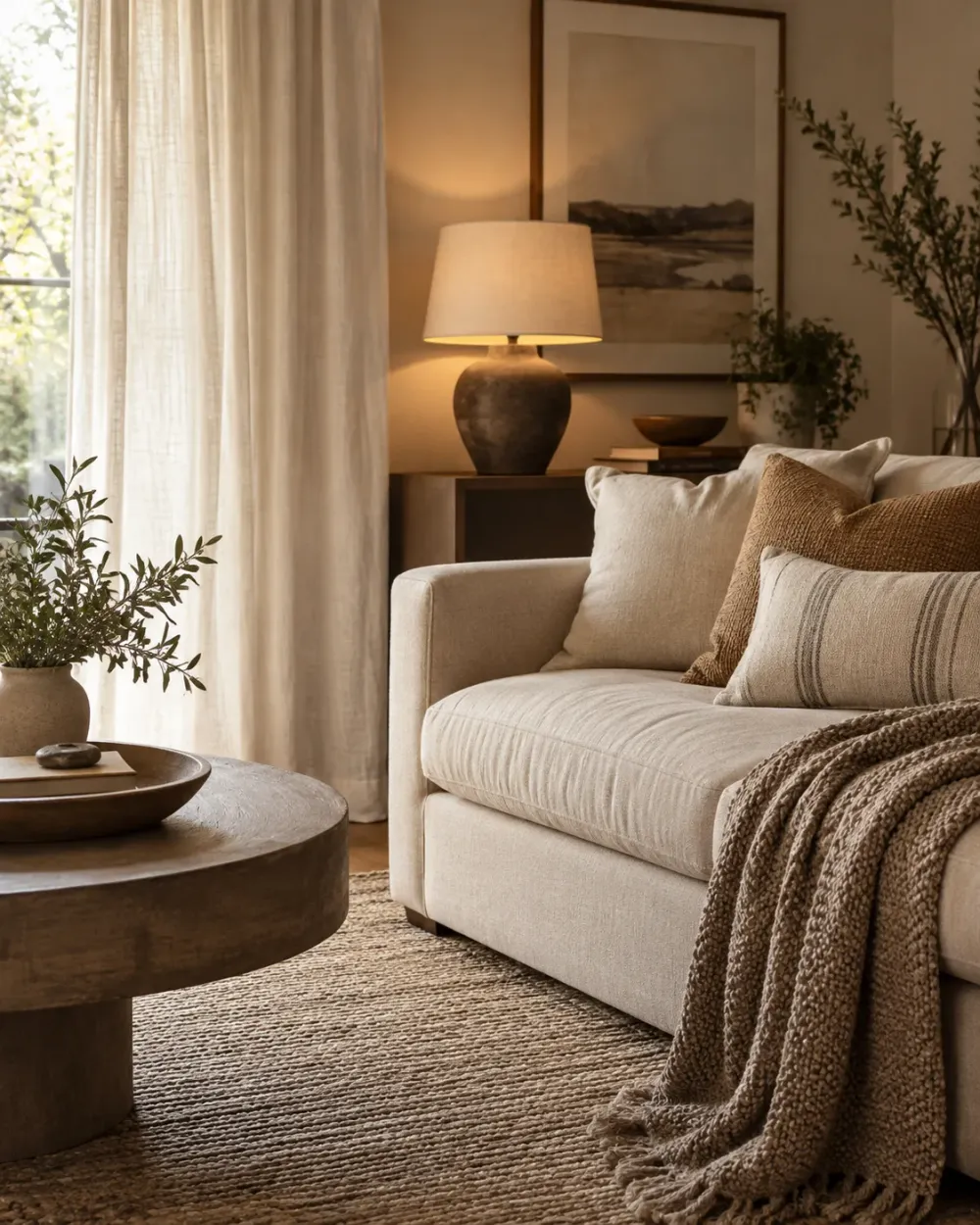
Consider how much of each surface you actually see. In a compact room with a wide window, closed curtains may occupy more visual space than the painted wall. Borrow a pale sheet to approximate a lighter curtain before ordering fabric. If the room already has light walls and seating, a slightly deeper curtain can define the window while staying within the same warm family. Judge it both open and closed.
3. Add a darker anchor
A dark frame, bronze lamp, or deep brown cushion gives the eye somewhere to rest. Repeat that darker note in a second small detail if it helps the room feel intentional. You don’t need to turn the whole room high-contrast.
Look at a quick phone photograph. If the shapes blur together, try a darker object before adding another accent color.
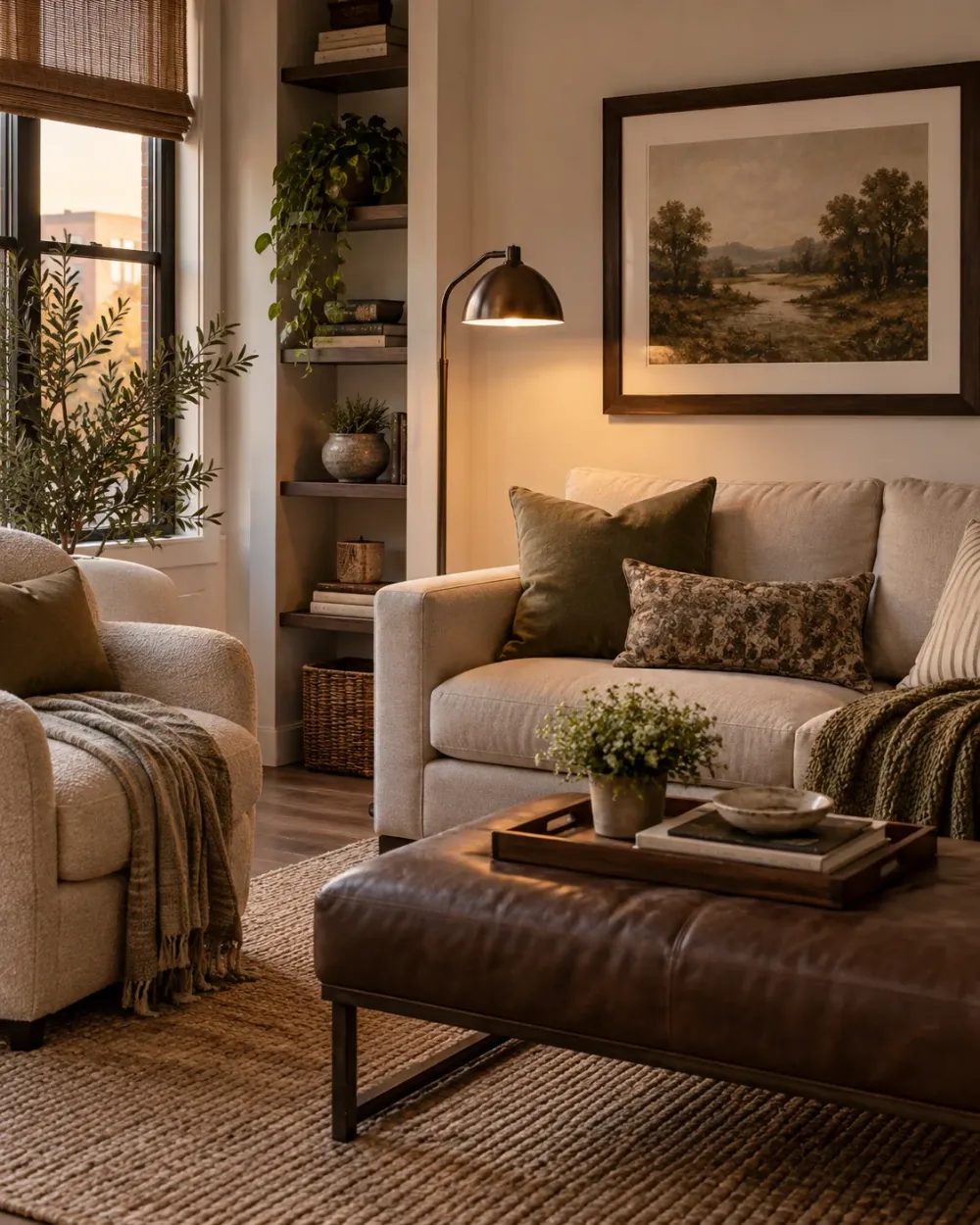
Choose the anchor’s position as carefully as its color. A dark object beside the sofa can clarify that seating area, while the same object on an already crowded shelf may disappear into clutter. Move one existing brown or charcoal item between those locations and compare from the doorway. In a small living room, a modest dark silhouette often supplies enough definition without the visual weight of another large furniture piece.
4. Mix textures before patterns
Linen, woven cotton, wool, and wood can make a limited palette feel varied. Combine a smoother sofa fabric with a textured cushion or throw. Too many thick textiles can feel heavy in a small room, so keep their purpose in mind.
Think about washing and everyday wear, too. A delicate pale throw may be a poor fit for the seat used by a pet. Choose fabrics that suit the household rather than styling every surface for a photograph.
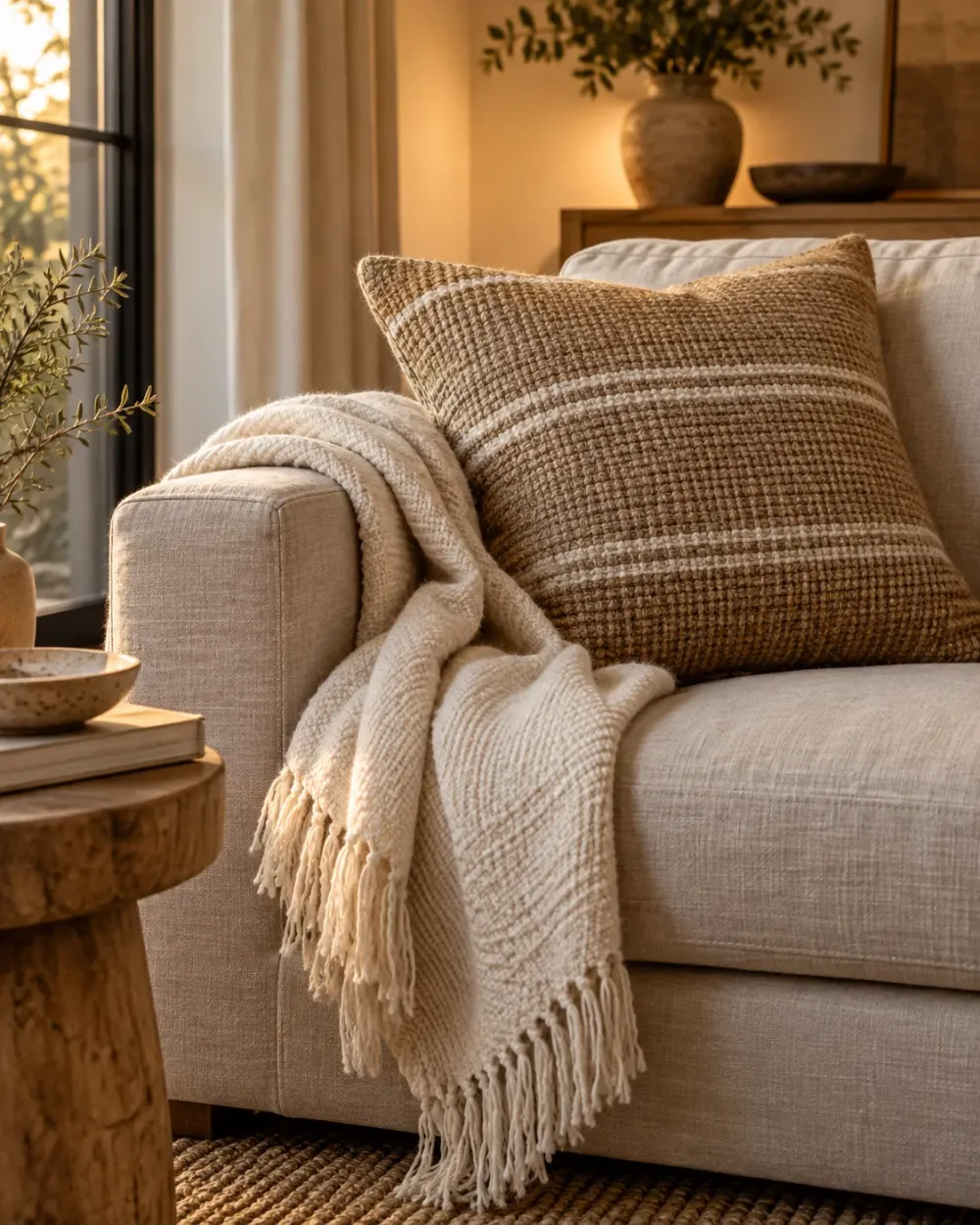
Vary the scale of the texture, not just the material names. A fine weave and a chunky knit look different even when both are cream, whereas several similarly nubby fabrics can blend together. For one sofa corner, pair a tightly woven cushion with a loosely knitted throw and leave the seat uncovered. If you dislike scratchy fabrics, reserve coarse texture for a basket rather than something that touches your skin.
5. Let wood provide warmth
An oak table, walnut frame, or existing wood cabinet can carry much of the room’s warmth. Several wood tones can work together when there is one finish used more often than the others. Try repeating one finish instead of introducing a new tone in every furniture piece.
If your floor is strongly colored, view wood samples against it. A finish that looks attractive alone may compete with the largest surface in the room.
Decide whether a new wood piece should blend in or stand apart. Beside a substantial oak cabinet, a small walnut side table can read as a deliberate contrast; another almost matching oak finish may look accidentally mismatched. Compare the grain as well as the color. Strong grain adds visual activity, so a quieter finish may suit a room where several wood surfaces are visible together from the main seat.
6. Bring in one muted accent
Sage, clay, or dusty blue can sit comfortably within a neutral room. Start with a cushion, a print, or a ceramic object. A small accent is easier to adjust than a painted wall or a major furniture purchase.
The accent doesn’t need to appear everywhere. Two or three deliberate uses can feel more relaxed than distributing identical colored objects around the entire room.
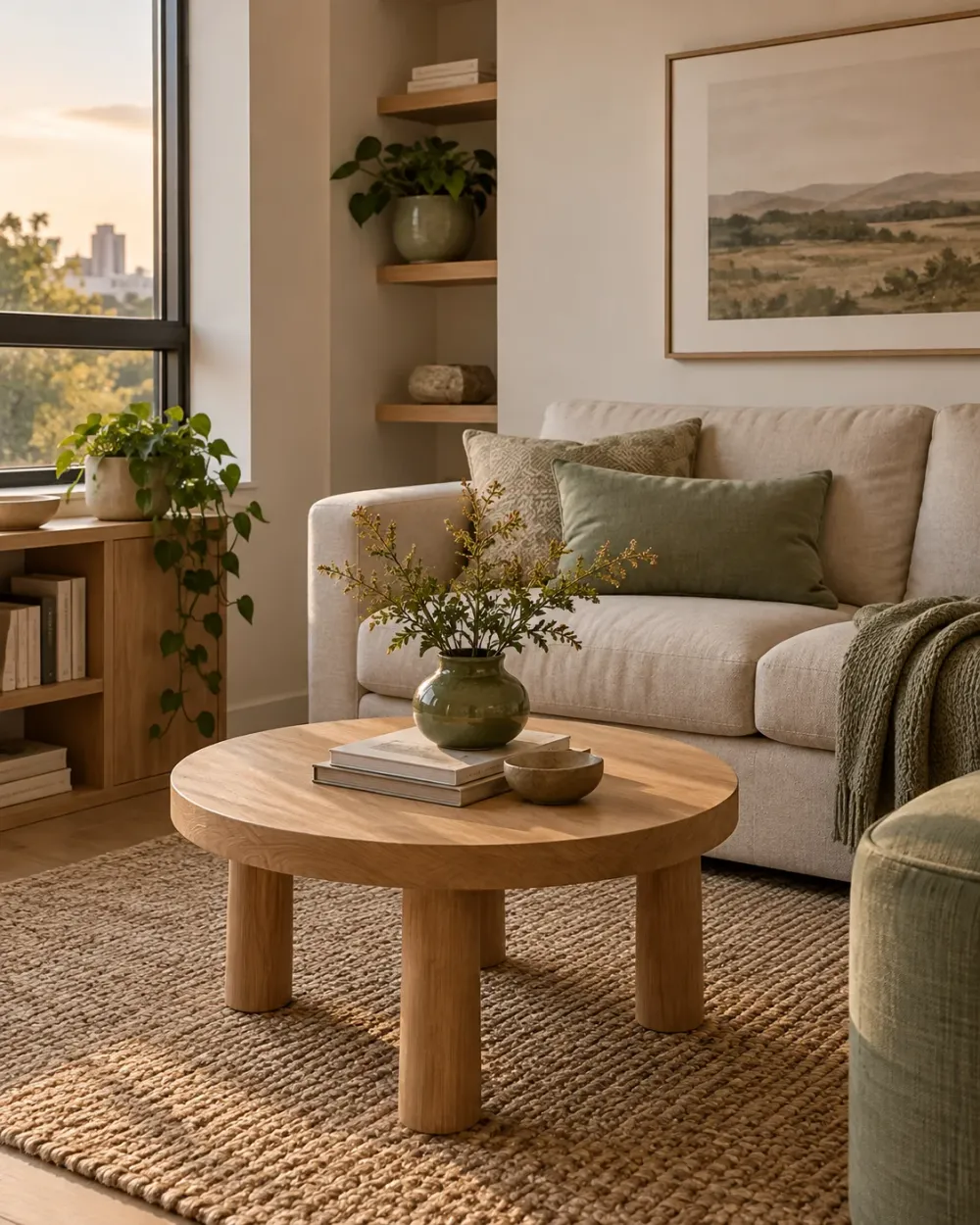
Let the accent’s saturation guide the choice, rather than its color name alone. Two cushions labeled sage can differ greatly, with one looking softly gray and the other noticeably bright. Lay a candidate beside your neutral textiles and ask whether you notice the room first or the cushion first. If the accent takes over, try a more subdued version or use that color on a smaller object instead.
7. Look at the palette under your lamps
Evening lighting changes the appearance of fabrics and paint. Test samples under the lighting you regularly use, and avoid selecting colors only in bright midday sun. A room may need better light distribution rather than warmer paint.
Compare what happens in each seating area, not just beside the main lamp. A shade can concentrate light on a table while leaving the sofa fabrics looking dull. With your existing lamps switched on, move a cushion between the sofa ends and note the difference. If one corner feels disconnected, reposition a portable lamp where its cord can stay out of walking routes before reconsidering the palette.
Plan a Warm Neutral Refresh Around Your Sofa
Start with the sofa and gather a throw, two cushions, a wood object, and one darker item you already own. Clear only the coffee table and one sofa corner, then arrange those pieces there as a small palette trial. Leave the rest of the room alone so you can judge the change. Photograph the setup from the doorway in daylight and after dinner. If it feels more connected, list what’s still missing. Prioritize a washable cushion cover or a useful throw before replacing furniture; consider curtains only if the window area still feels separate. Live with the trial for several days, checking that the seat remains comfortable and the table stays usable.
Questions before you start
Can a warm neutral living room work with a gray sofa?
Yes. Look closely at whether the gray leans brown, blue, or violet. A brownish gray usually sits easily with oatmeal and cream. For a cooler gray, try a restrained warm textile beside it rather than surrounding it with strongly yellow beige.
How can I keep pale neutrals practical with children or pets?
Put the palest shades on lower-contact surfaces, such as curtains, rather than the favorite seat cushion. For frequently handled textiles, check the care label and choose removable covers. A medium oatmeal fabric with visible weaving can be more forgiving than smooth ivory.
Do I need a rug to make the room feel warm?
No. Soft curtains, comfortable upholstery, and visible wood can provide warmth without a rug. If you prefer bare floors, give the seating area enough textile variation that it doesn’t feel stark. Avoid buying a rug solely because the palette seems incomplete.
What should I do if cream walls make my beige sofa look pink?
Before repainting, hold a larger sample of a less yellow wall color beside the sofa. The contrast between yellowish cream and pinkish beige can exaggerate both undertones. If painting isn’t possible, test an oatmeal textile between them to soften the transition.
More ideas for your space
For furniture placement, see narrow living room layouts. For a smaller corner within the same room, explore reading nook ideas.