7 Small Living Room Desk Ideas That Don't Take Over
Make room for a practical living room desk with seven space-conscious layouts, measuring tips, and a realistic refresh plan.
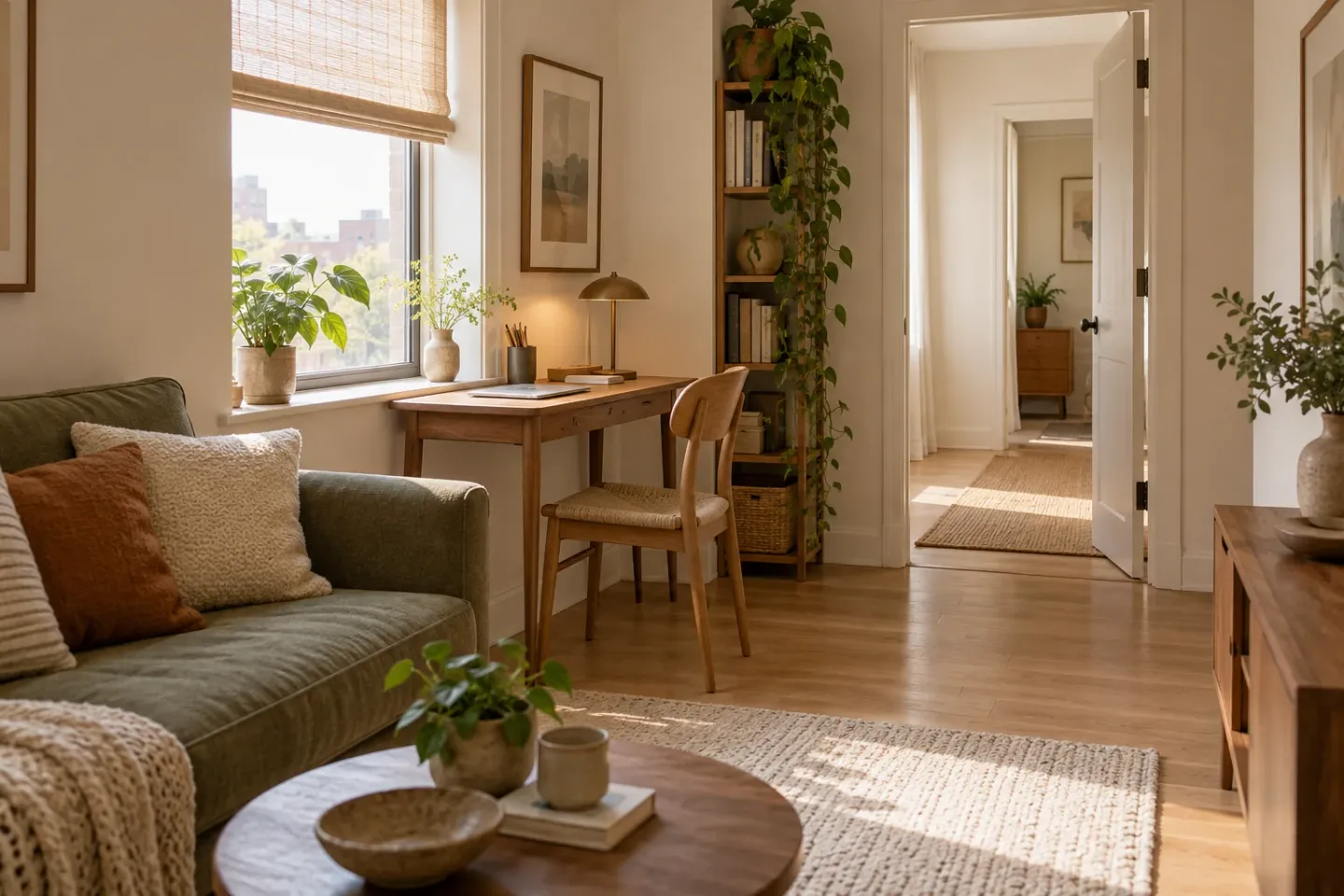
A desk in a small living room should support work without taking over the space. Protect the routes, seating, storage, and natural light you already use, then consider whether you need room for a laptop, monitor, keyboard, or papers. Compare these seven layouts with your routines and room shape. The accompanying imagery shows illustrative concepts, not photographs of completed renovations.
Before you rearrange: a practical checklist
Practical measurement checklist
- Measure available space, noting baseboards, outlets, radiators, windows, and door swings.
- Record furniture dimensions, including handles, overhangs, and open panels; check chair arms and knee clearance beneath the tabletop.
- Test painter’s tape on an inconspicuous surface first and follow removal instructions. Mark the furniture and chair in working and standing positions, then sit, type, stand, and walk occupied routes.
- Check access to exits, curtains, storage, and heater controls.
- Arrange equipment cutouts on the proposed surface and check the cable route. Keep cords out of walkways and follow equipment and power-strip instructions.
Compare the options
Compare the seven options
| Option | Best fit | Main tradeoff | Key check |
|---|---|---|---|
| Slim wall desk | Dedicated laptop station | Limited depth | Equipment fit and chair pullback |
| Corner desk | Unused corner | Projects into room | Front edge and chair movement |
| Console-height workspace | Furniture that blends in | Possible height or legroom issues | Typing position and underside |
| Secretary desk | Work that closes away | Packing up; restricted interior | Open footprint and device fit |
| Behind-sofa desk | Floating sofa | Chair may block circulation | Occupied routes |
| Dining surface | No room for another table | Clearing work for meals | Seating and storage |
| Portable workspace | Occasional work | Setup time and posture | Stable surface and cart parking |
1. A slim wall desk for a small living room
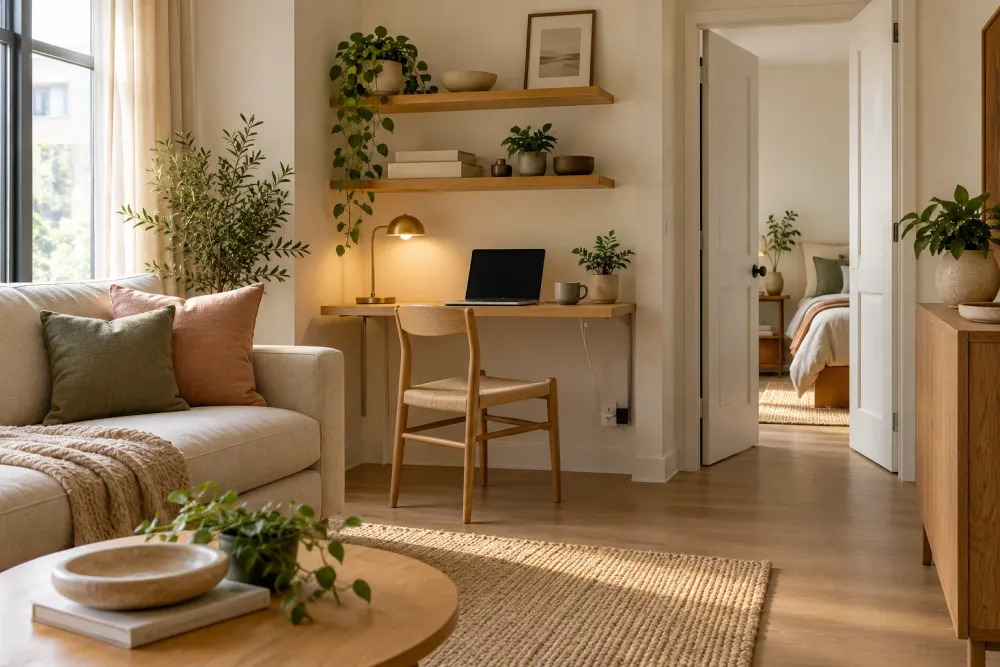
A slim wall desk gives a laptop a consistent home without the visual bulk of a deeper office setup. Choose a narrow freestanding model, or consider a wall-mounted desk only when the wall construction, lease, hardware, and manufacturer’s installation instructions support it. Position it beside a window if that preserves the view and keeps curtains usable, and test the chair in both tucked-in and working positions. A shallow top may not accommodate a monitor at a comfortable viewing distance, so compare its depth with your equipment before buying. A small drawer or desktop tray can contain supplies without sacrificing much work surface.
2. Corner desk
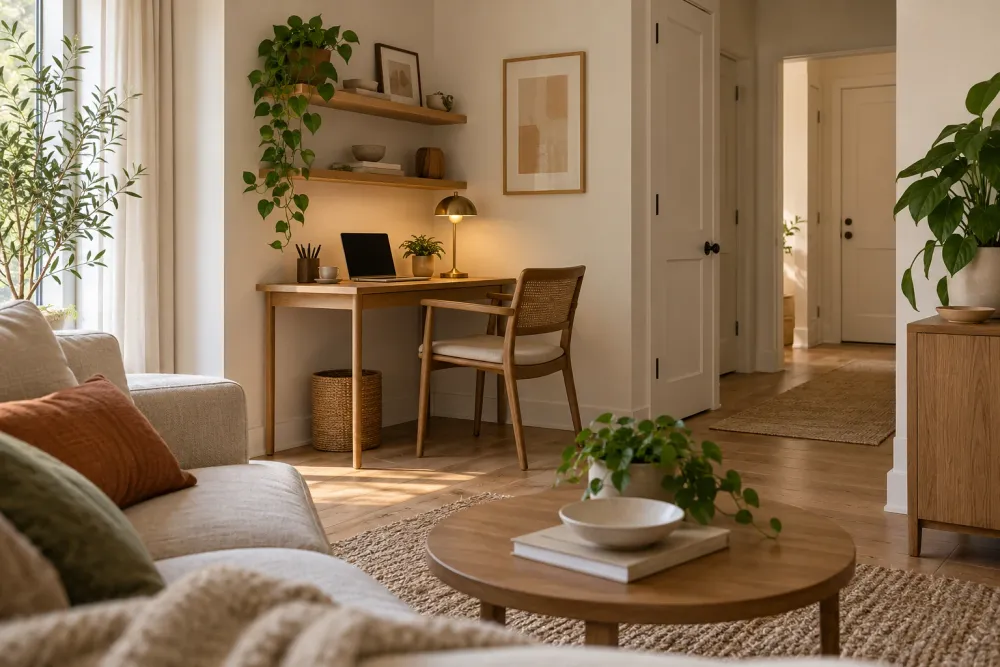
A corner can become a defined work zone, particularly when the sofa faces away from it. Compare a compact rectangular desk against one wall with a purpose-built corner model: the latter may offer more surface, but its angled front and deeper center can project farther into the room. Check the complete outline and chair movement, while keeping doors, radiator controls, and curtains accessible. Orient the desk toward an outlet where its lead can run without crossing a walkway or becoming trapped under furniture. A small task lamp can brighten the area, provided it leaves enough usable workspace.
3. Console-height workspace
A console-style table can resemble living room furniture once work is put away, making it useful beside a media unit or behind an occasional chair. First check that it is stable and deep enough for your equipment; a narrow decorative console is not automatically a comfortable desk. Compare the tabletop height with your typing position, and check that your knees and chair arms clear the underside and any apron. A basket can hold a laptop sleeve and notebook, although it may need moving to make legroom. This understated option suits short sessions; for longer work, prioritize chair comfort and screen position.
4. Secretary desk
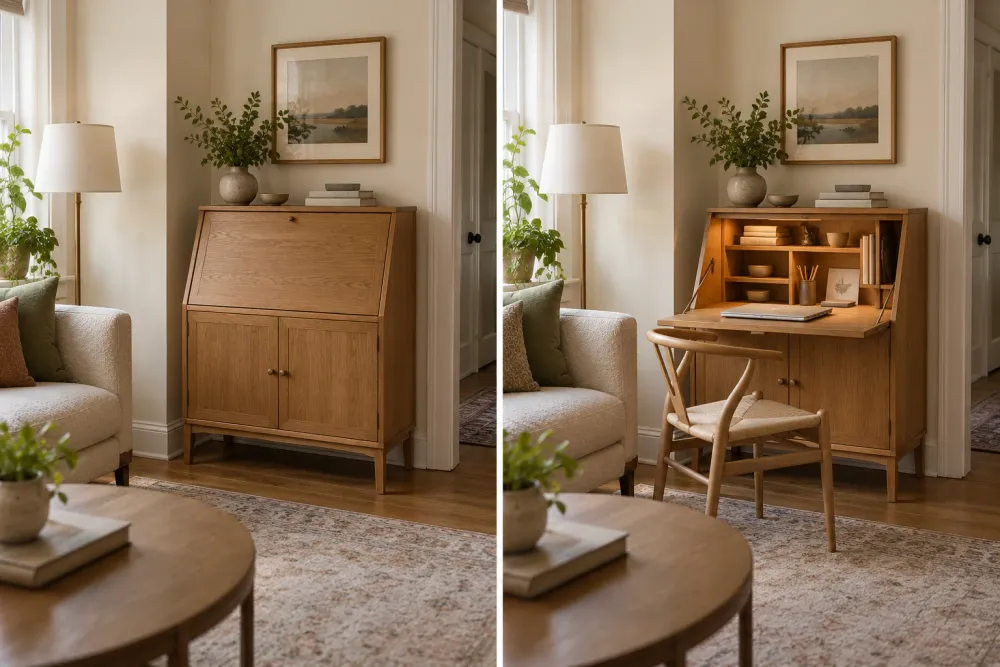
A secretary desk hides its work surface behind a hinged panel or doors, giving the room a clear transition between work and rest. Compare its closed dimensions with the full open footprint, including the lowered panel, chair, and space for your body, and check that the panel clears nearby furniture. Inside, look for usable laptop width, accessible storage, and a cable opening if needed; dividers can make an otherwise generous compartment awkward. Follow the manufacturer’s load and installation instructions, including any required wall restraint. Some models limit legroom or screen height, and closing up may require packing everything away.
5. Desk behind sofa with clearance
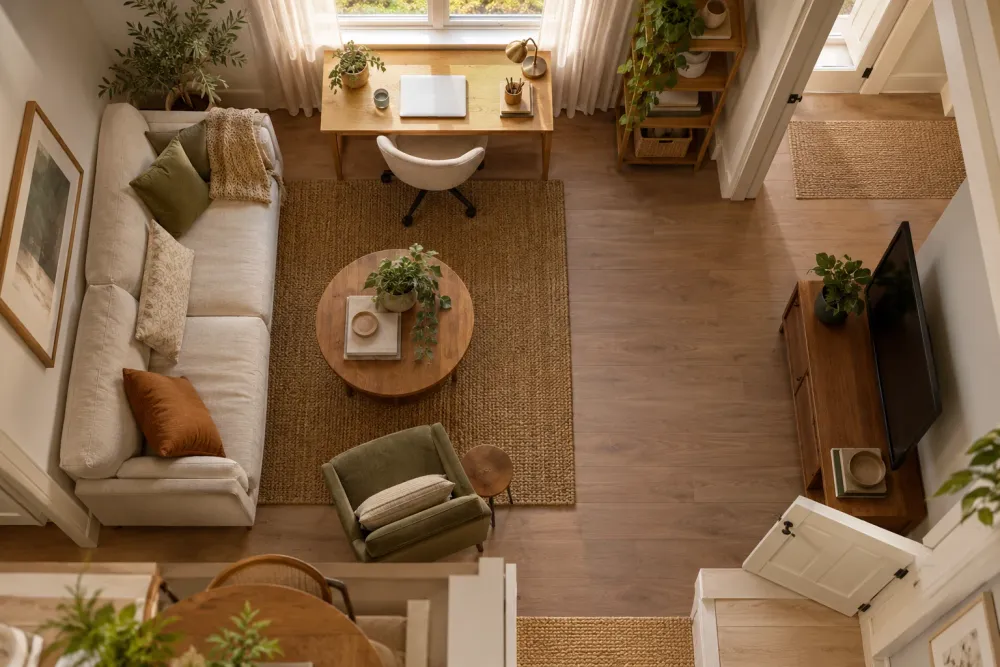
A desk behind a floating sofa can serve both work and living areas, but only if the occupied chair leaves circulation intact. Check the sofa and desk footprints together with the chair tucked in, pulled out, and moved back far enough to stand; then walk between the doorway, seating, windows, and exits. A desk no wider than the sofa may look orderly, but width alone cannot establish whether the arrangement works. Check television sightlines and whether the sofa can still be cleaned or moved. Run power leads alongside furniture and away from foot traffic, never pinched beneath sofa legs.
6. Dual-use dining surface
A dining table can be the most practical workspace when the room cannot accommodate another permanent piece of furniture. Choose a seat with knee room and a tabletop position that supports comfortable typing; a cushion may help a dining chair, but check that it does not make the table feel too low. Store supplies in a handled box, drawer, or closed cabinet, sized for your largest item, so clearing the table does not mean moving loose piles. If others share the surface, agree on working hours and storage. Protect the tabletop from scratches and spills, and separate drinks from electronics.
7. Portable workspace
A portable setup suits occasional work or a room where no single spot is reliably free. Keep a laptop, notebook, charger, and accessories in a handled case, and use a stable table rather than balancing equipment on a soft sofa cushion. A rolling cart can carry dry supplies, but check its full footprint and turning path, including protruding items, and park it clear of exits and heaters. Keep any heat-producing appliance’s operating surface open and follow its manufacturer’s instructions; store only dry supplies inside cabinets or carts. Expect some setup time and less consistent ergonomics, and put cables away after each session.
Your first refresh
Clear the proposed area and list the equipment you use weekly. Measure the room, furniture, chair, and outlet route; tape out a layout and live with it for a day. Try another option if sitting or walking feels awkward. Before buying, test your existing table and chair. Set up essentials, add a supply container, and route cables away from walkways. After several work sessions, adjust chair position, lighting, or storage before adding decoration to the room.
Questions before you start
Where should a desk go in a narrow living room?
Start with an available wall or corner and mark the desk and occupied chair footprints. A slim wall desk may work if the main route remains usable. If chair pullback blocks it, try a dining surface or portable kit rather than a desk too shallow for your equipment.
Can I put a desk directly behind my sofa?
Yes, if the desk, working chair, and space needed to stand fit without obstructing routes or exits. Mark all three before moving furniture, and check the outlet route. A sofa against a wall may need a wider rearrangement to create usable space behind it.
How can a living room desk look less like an office?
Choose a console-style table or a secretary that closes, and give papers and accessories a specific storage home. A restrained lamp and chair that relates to the room can help, but test comfort and legroom first. Conceal clutter without covering vents or trapping power cords.
Is a wall-mounted desk suitable for a rental?
Possibly, with landlord permission and a wall and fixings appropriate for the desk’s stated load. Follow the manufacturer’s installation directions; do not improvise weight-bearing attachments. Removable mounts are not automatically damage-free or suitable for supporting a desk. A freestanding slim model avoids drilling.
Keep planning your space
For more ways to arrange seating and circulation, explore our narrow living room layout ideas. If your work corner also needs to feel restful after hours, borrow zoning ideas from the small reading nook guide or soften the surrounding space with cozy small living room ideas for a more comfortable setting.