7 Cozy Fall Reading Nook Ideas for Small Spaces
Create a cozy fall reading nook with a comfortable chair, warm autumn colors, a reachable table, and useful lighting that fits a small room.
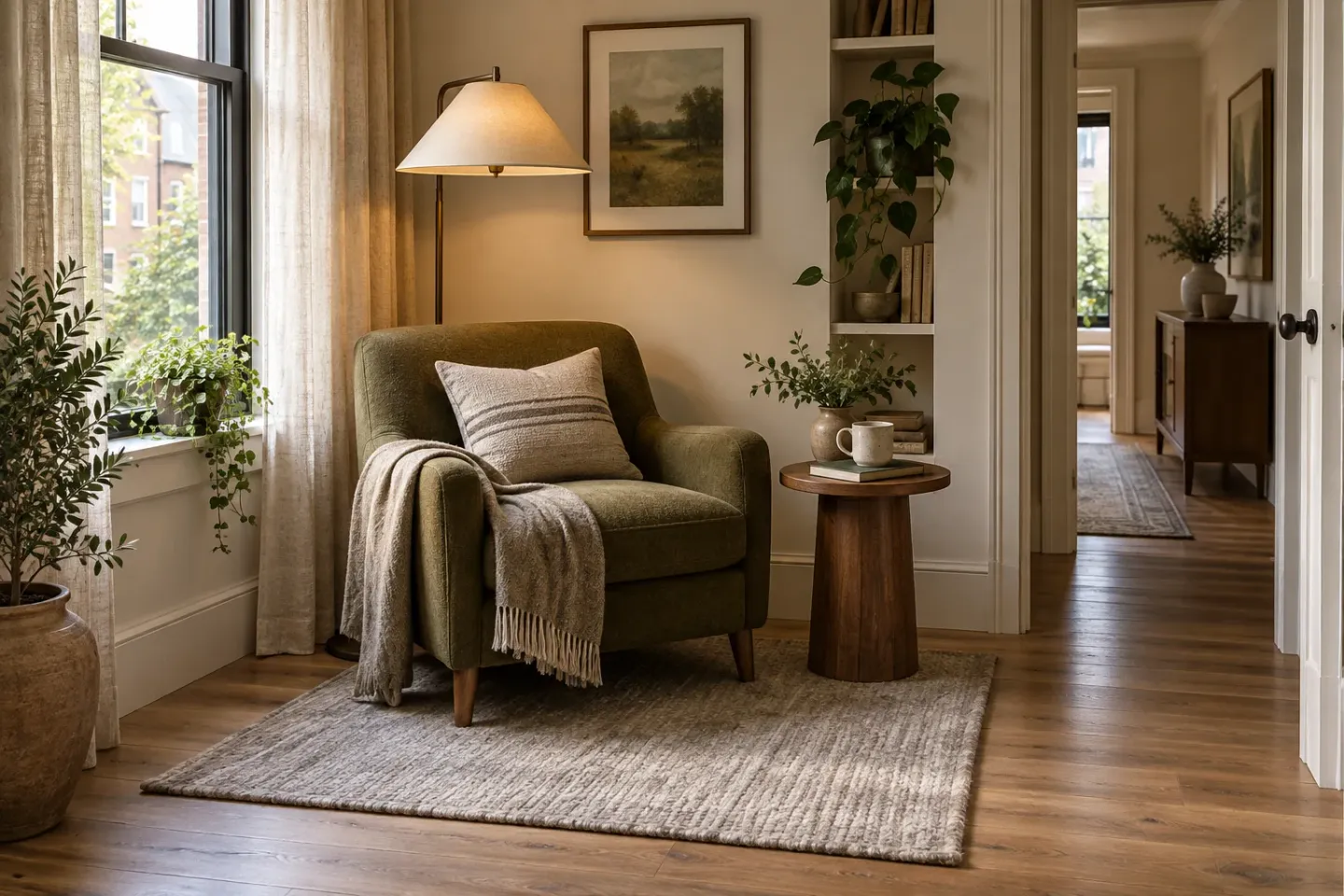
A reading nook should make you want to sit down and stay for another chapter. For October, a soft rust-colored throw or an olive cushion can bring in a little fall color. First, though, get the seat and light right. You might already have a good spot at the end of your sofa. There is no need to buy an armchair just to give the corner a name.
1. Choose the right seat for a fall reading nook in a small space
Some people prefer an upright chair; others like to curl up with their feet supported. Test the position you normally use. Consider arm height, back support, and whether a footstool will fit without becoming an obstacle.
A compact armchair can work well, but an existing sofa corner may be better. Don’t buy a smaller chair if it’s less comfortable than the seating already available.
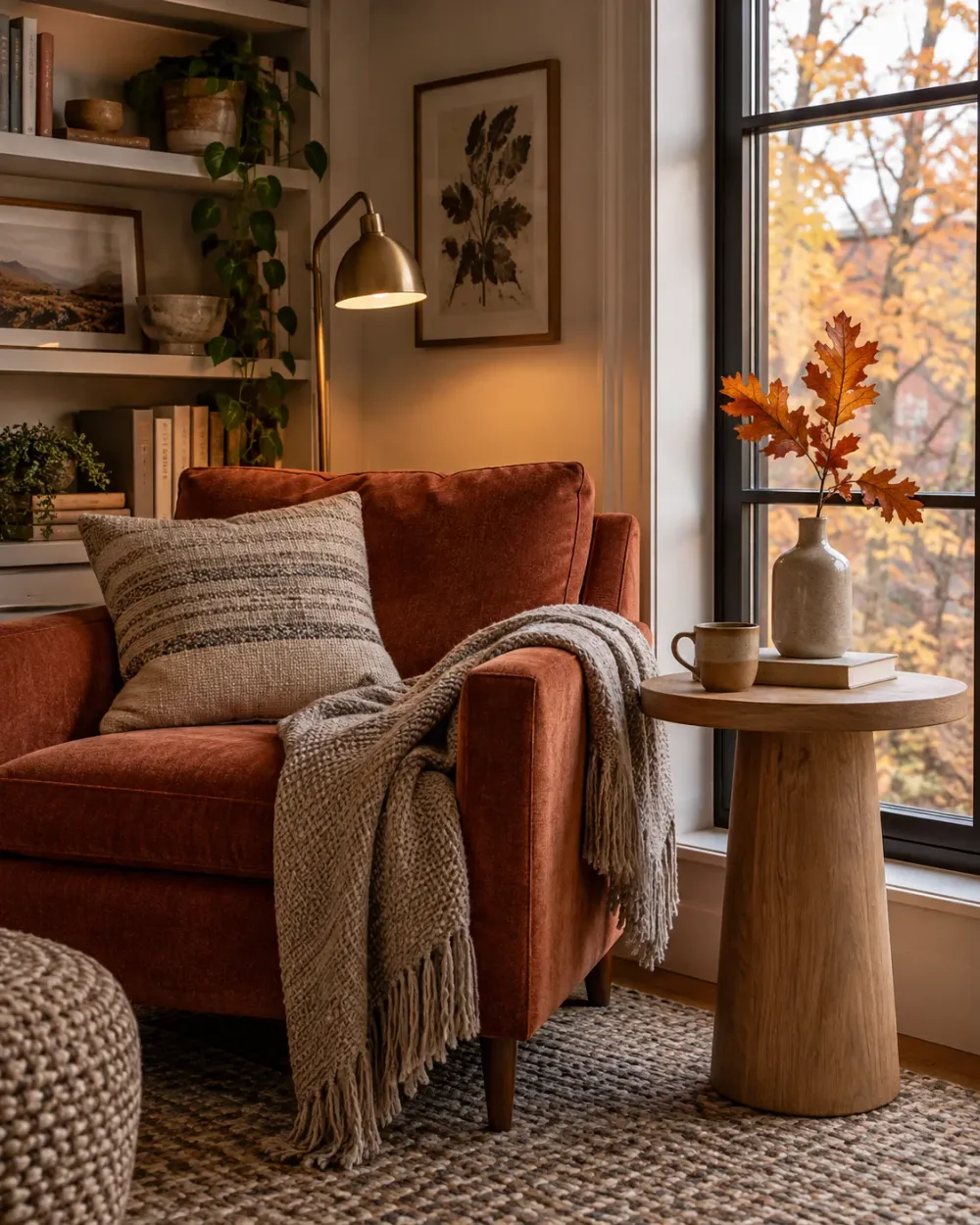
Seat depth matters as much as the chair’s overall footprint. If you read upright, notice whether you can rest against the back while your feet feel supported. If you tuck your legs underneath you, check the usable space between the arms. Before shopping, measure your comfortable existing seat and use those dimensions as a comparison, not a target you must match. A narrow frame with thick arms can leave surprisingly little sitting room.
2. Check the corner at the time you’ll use it
A window corner may look inviting in morning light but feel cold, noisy, or glaring later. Sit there for a while before committing. Notice drafts, screen reflections, traffic through the room, and whether the window still opens freely.
Natural light is helpful, but it isn’t a substitute for a suitable evening reading light. Plan for the time you’re most likely to read.
Give each possible spot a short trial during your usual reading hour, with the room operating normally. Let someone watch television or prepare dinner nearby if that’s your evening routine. You may find that a corner farther from the window feels calmer because it faces away from household movement. Note what interrupts your attention rather than judging the spot only by its appearance. That helps distinguish a pretty corner from a useful one.
3. Put a small table within easy reach
A side table should be reachable without leaning across the room. Check its height against the chair arm and its stability on the floor. Give it enough surface for your usual items: perhaps a book, a drink, and glasses.
A stool can serve as a table if it’s stable and suitable for that use. Avoid a top so small that a mug sits beside an unstable stack of books.
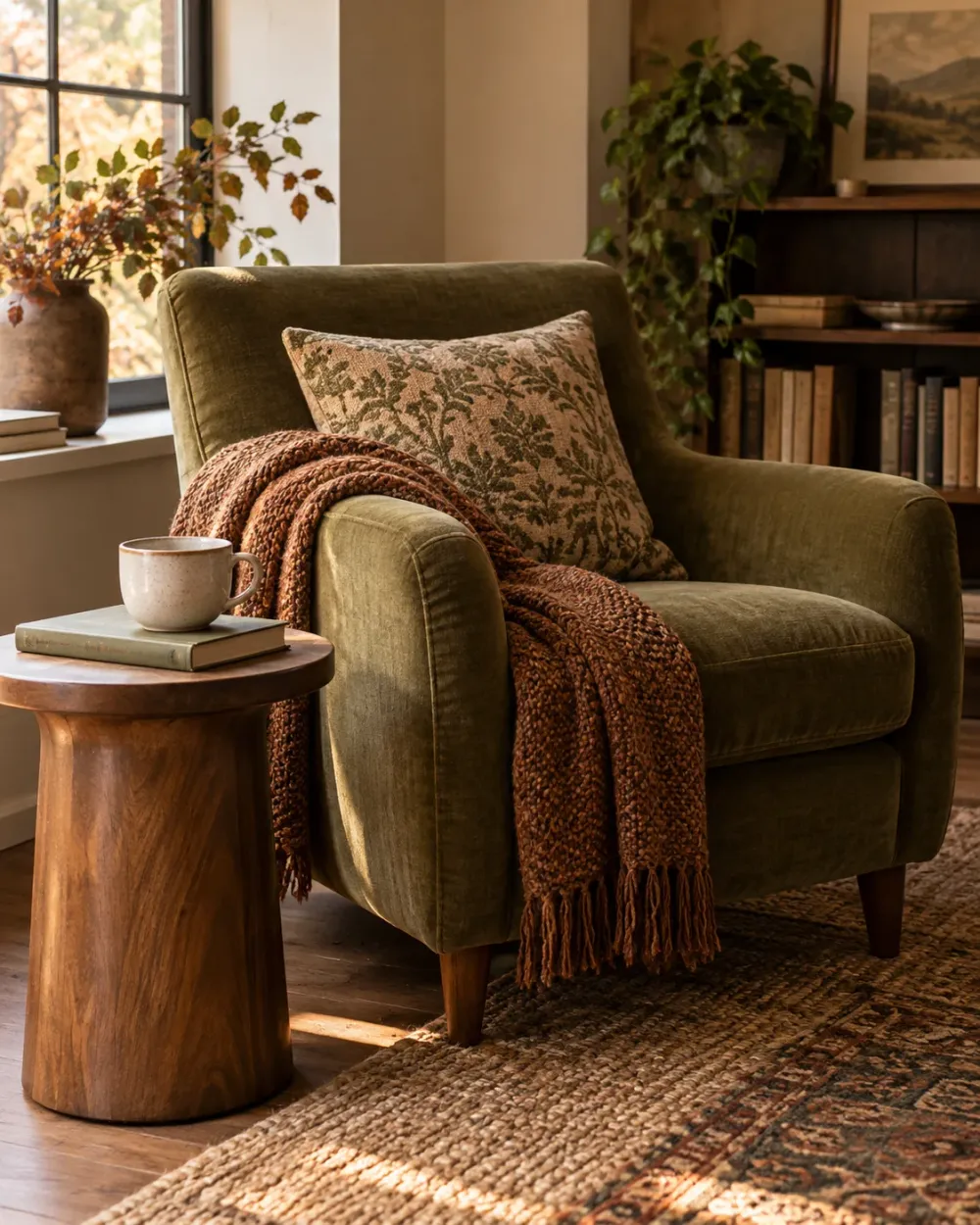
Mock up the tabletop with a sheet of paper before choosing a shape. Arrange your open book, coaster, and glasses on it, then trim the paper to see how much surface you actually need. In a tight gap, an oval top might offer useful length without a projecting corner. Remember to check the base too: a table that looks compact from above can have feet that interfere with your chair or your own feet.
4. Position the lamp around the activity
Use a shaded or adjustable lamp that directs useful light toward the page without shining into your eyes. Test it while seated. Glare on a glossy book may call for changing the angle rather than increasing brightness.
Keep cords out of walking paths and follow the lamp’s bulb and placement instructions. A nearby table lamp may work as well as a new floor lamp.
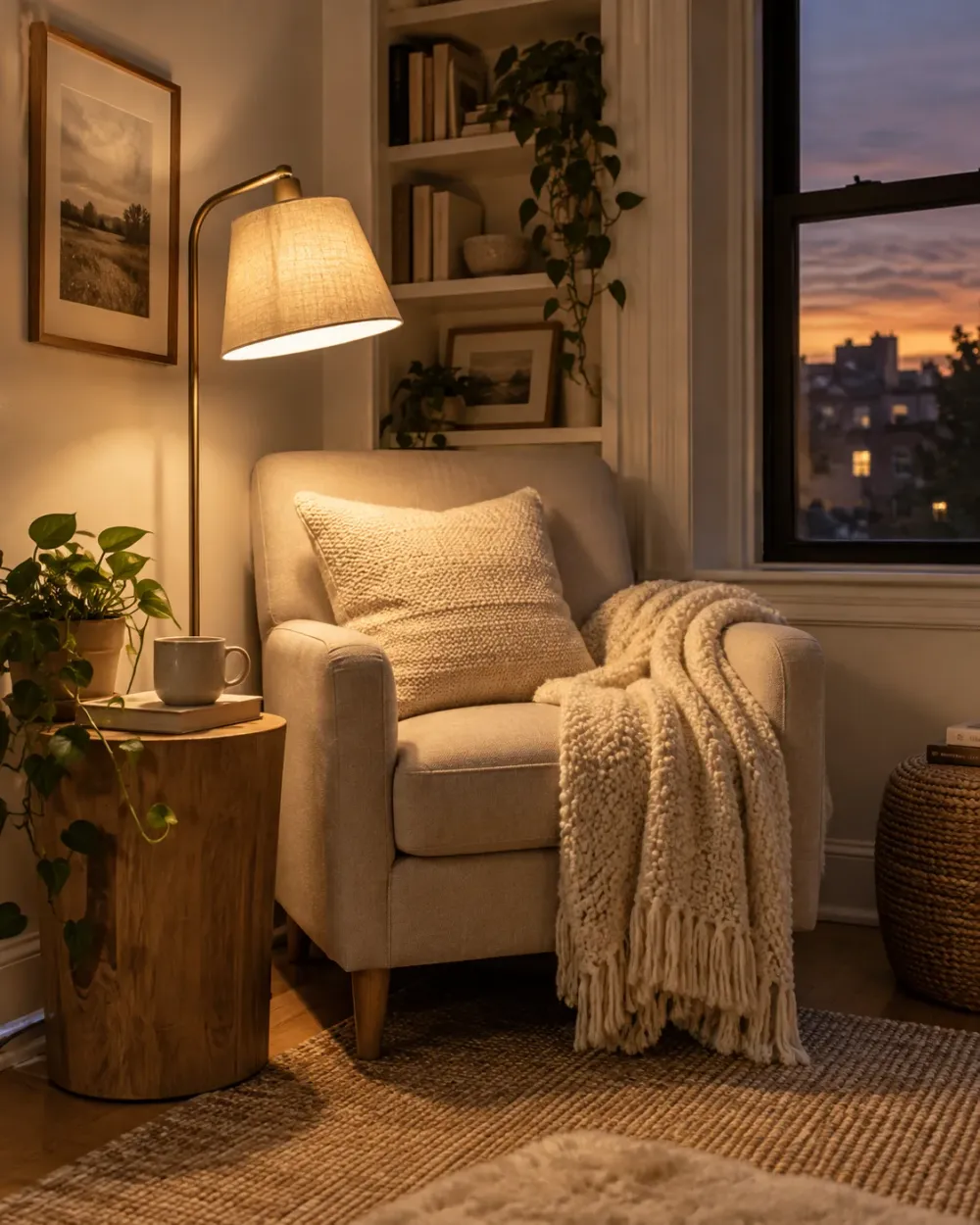
Pay attention to shadows from your body and the book itself. A lamp behind the chair may leave the lower half of the page dim when you lean forward. Move an existing lamp between possible positions and read both a paperback and any larger book you use regularly. If you write notes while reading, check whether your writing hand blocks the light. Choose the lamp’s reach and adjustment range around those tasks.
5. Keep only a small book selection nearby
A handful of current books makes the nook easier to maintain than an overflowing pile. Put the main collection somewhere that can hold its weight and remain accessible. The nook’s table is for use, not a place to store every book you own.
If you like a basket for books, check that titles can be found without emptying it. Storage works best when it lets you grab a book without unpacking the basket.
Give the nearby selection a clear job: one book you’re reading, one you might start next, and perhaps a slim notebook. Library books can have their own visible place so return dates don’t disappear beneath other reading. For a basket, compare its internal width with your largest current book, including any handles that narrow the opening. Store paperbacks upright only if they stay supported; a loose row that slumps can bend covers.
6. Add one autumn comfort layer
A washable wool-look throw or a cushion in rust, ochre, or olive can make the seat more pleasant and bring October color into the corner. Repeat a tone already in the room rather than adding a separate seasonal palette. Choose based on how it feels and how easily it can be cleaned. Several decorative cushions may look inviting but need to be moved every time you sit down.
A small rug is optional. If used, it should lie flat and avoid making the chair unstable or introducing an edge into the walking route.
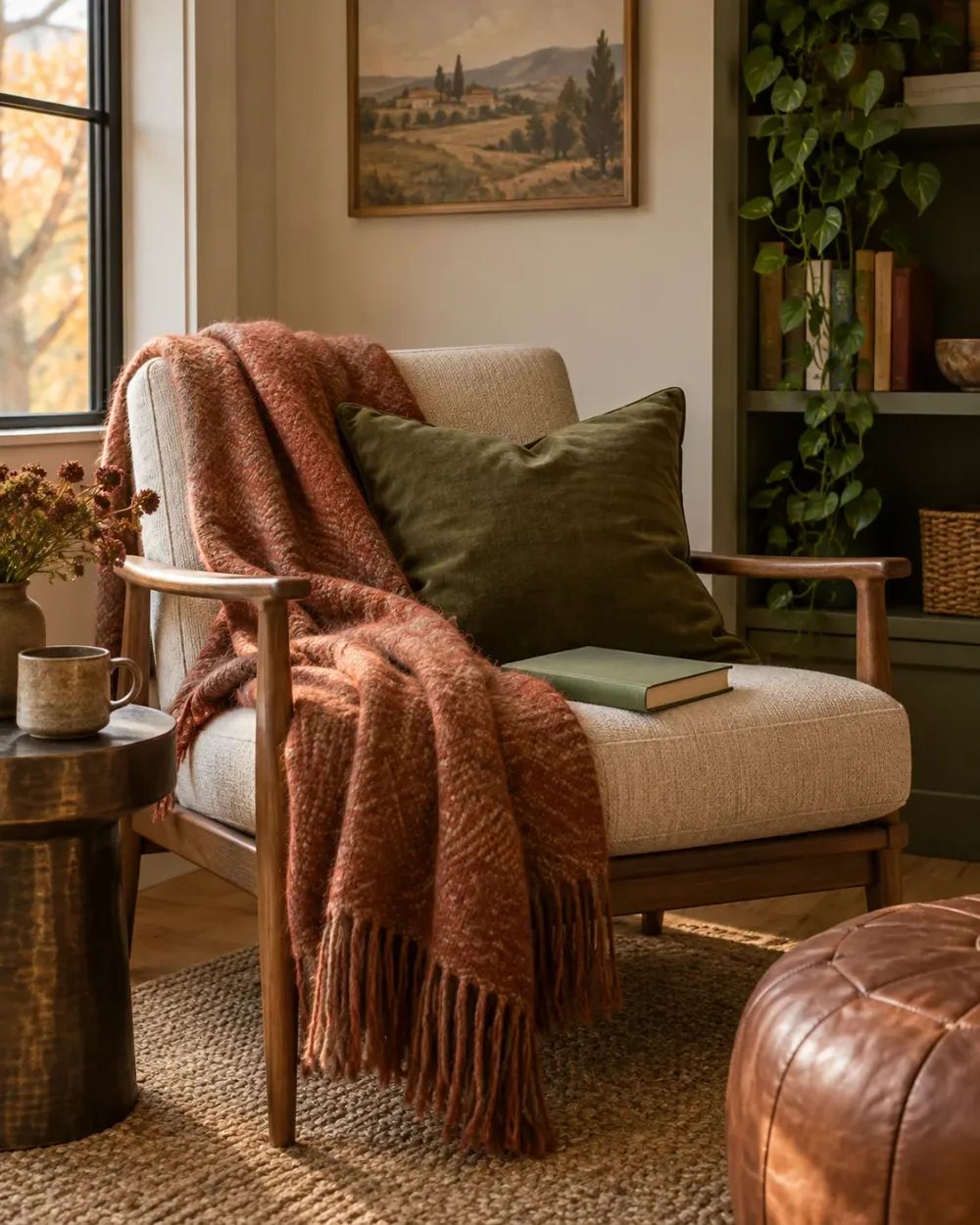
Think about how the textile behaves when you settle in, not just how it looks folded. A loosely knitted throw may catch on rings, while a smooth weave can be easier to pull over your knees. If the chair fabric is already strongly textured, try a quieter finish for contrast. Borrow a blanket from another room first and check whether its folded bulk fits on the seat without taking up the space you need.
7. Let the corner share the room
The nook doesn’t need a different design style from the rest of the home. Repeat one color or wood finish from nearby furniture. Keep the layout flexible if the corner also serves guests or everyday living.
Decide what the corner needs to become when you aren’t reading. If it doubles as guest seating, angle the chair so it can join conversation without a full furniture shuffle. If the room is also a workspace, avoid a layout that makes the nook feel like an extension of the desk. Take a photo from the doorway to check the whole arrangement: the reading corner should look connected without becoming the room’s only focal point.
Refresh a Sofa Corner Before Buying Anything
For a first refresh, choose one end of your existing sofa and gather a lamp, a small table, and a blanket you already own. Set them up for one ordinary evening rather than styling the whole room. Read a chapter, put down your drink, and get up as you normally would. Note the single biggest inconvenience. If the page is poorly lit, prioritize a suitable reading lamp; if setting down a cup is awkward, prioritize the table. Leave seasonal textiles until the setup works. After several evenings, check whether you use the corner without rearranging it first. Keep what helps, return borrowed pieces that don’t, and buy only for the remaining gap.
Questions before you start
Can I make a fall reading nook without buying an armchair?
Yes. A sofa end or a chair you already enjoy can become the reading spot. Give that seat a dependable place for your book and drink, then check the light while seated. The arrangement matters more than having a separate chair.
How can I tell whether a reading nook will fit in my small living room?
Measure the furniture you’re considering and mark its footprint with paper on the floor. Include projecting lamp bases and table legs. Walk through your normal routines, including opening nearby doors or drawers, before deciding whether the corner can spare that space.
What if my only available corner has no window?
A window isn’t essential if the corner feels comfortable and has useful lighting. Try an existing lamp there during your usual reading time. Check the page, your seated view, and the surrounding room so the spot doesn’t feel isolated in darkness.
How do I add fall color without making a small nook feel busy?
Choose one textile with an autumn tone that relates to something already in the room. An olive blanket can echo artwork, for example. Let that piece provide the seasonal change instead of adding several small decorations that compete for limited surface space.
More ideas for your space
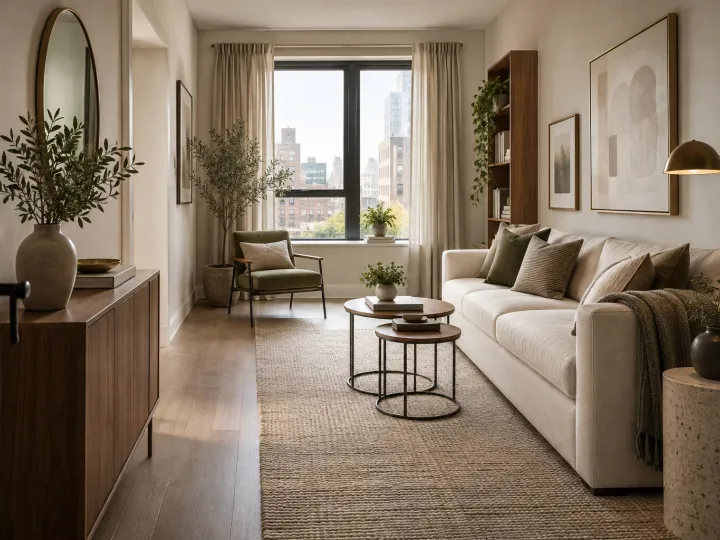
If the nook sits within a long room, see narrow living room layouts. For a soft, connected palette, explore warm neutral living room ideas.