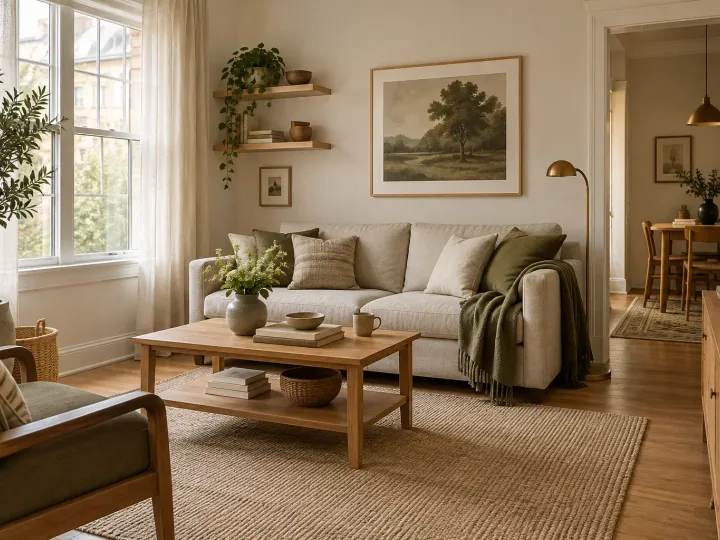
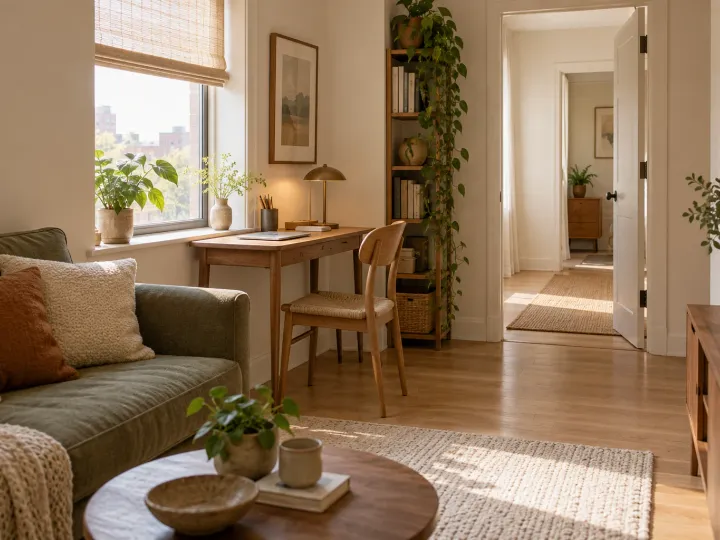
7 Coffee Table Alternatives for Small Living Rooms
Explore seven coffee table alternatives that keep a small living room comfortable, useful, and easier to navigate.
A coffee table can be useful without claiming the center of a small living room. The best alternative depends on what you set down, where you sit, and which paths need to stay open. Measure your room and test a footprint before buying rather than borrowing clearance from another layout. The accompanying images show illustrative decorating concepts, not actual renovations.
Before you rearrange: a practical checklist
Measurement checklist
- Note usable floor area, door swings, heaters, outlets, and storage access.
- Measure relevant seat heights, arms, under-sofa gaps, and reclined positions.
- Measure each proposed piece at its widest and deepest, including rims and bases.
- Mark footprints, including nesting tables both stored and separated.
- Test seated reach, walking routes, doors, drawers, and lids.
- Check manufacturer fit and load guidance. Before using removable mounts, check your lease and product instructions; mounts are not guaranteed to be damage-free.
Compare the options
| Option | Best when | Check | Tradeoff |
|---|---|---|---|
| Nesting tables | Needs change | Stored and separate footprints | Pieces need parking space |
| C-table | One seat needs a surface | Base clearance and height | Limited sharing |
| Side-table pair | Two seats need surfaces | Reach and routes | Less shared space |
| Compact round table | Sharing matters | Diameter and base | Center stays occupied |
| Ottoman with tray | Footrest and storage matter | Stability and lid clearance | Tray must be cleared |
| Sofa-arm tray | Floor space is tight | Arm fit and load limit | Small surface |
| No central table | Movement comes first | Landing spots | Drinks need another home |
1. Nesting tables: Flexible coffee table alternatives
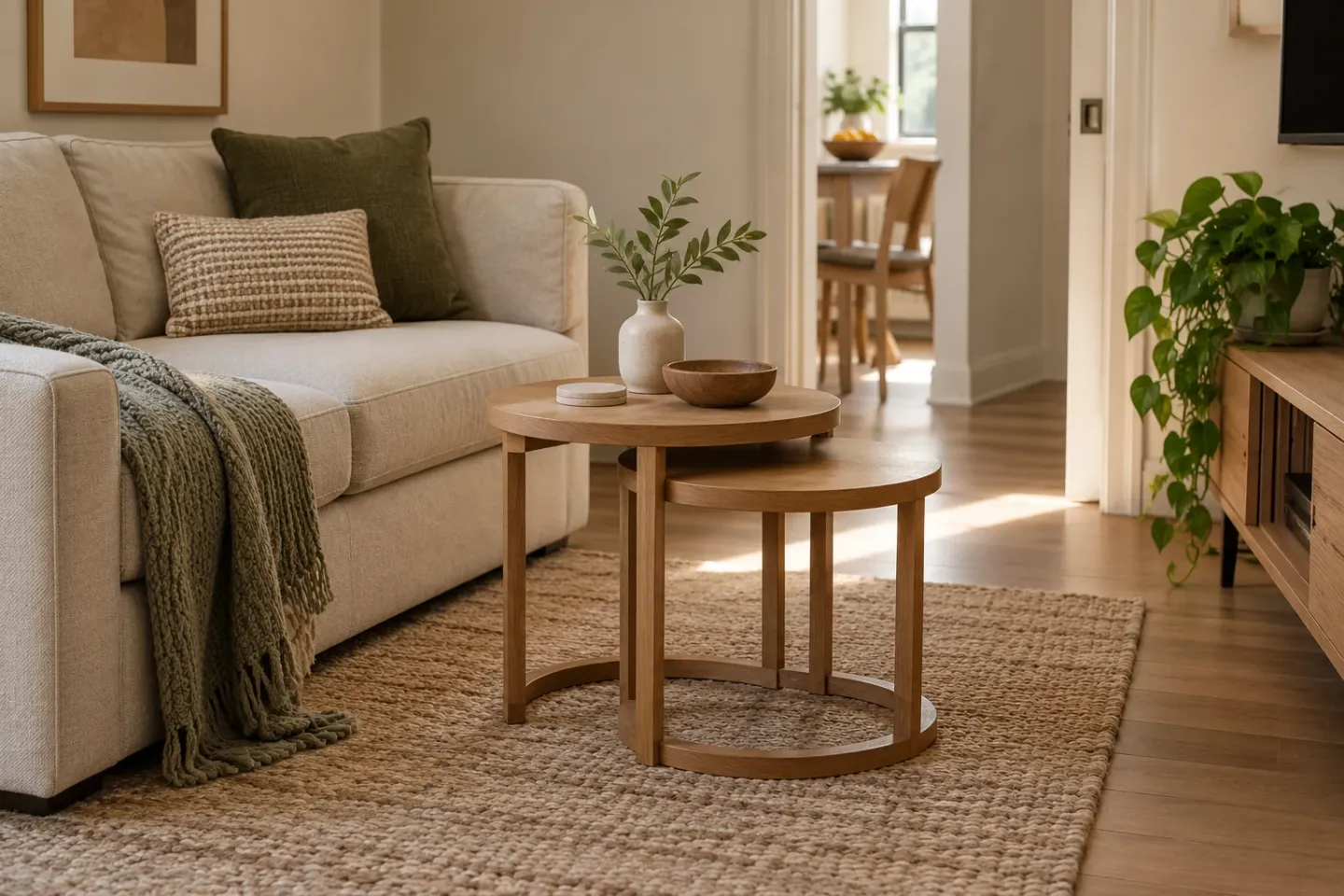
Nesting tables provide a central surface when needed and take up less room when tucked together beside a sofa. Pull the smaller piece out for a drink, puzzle, or guest, and move the pieces to different seats as needed. Check that the smaller table can slide out in the direction your arrangement allows, and test both stored and separated footprints. Choose stable legs and tops suited to the objects you use; a lipped edge can contain small items but will not prevent every spill. Separated pieces can look busy and still need somewhere to go, so compare their combined footprint with a compact table if both will usually remain out.
2. C-table
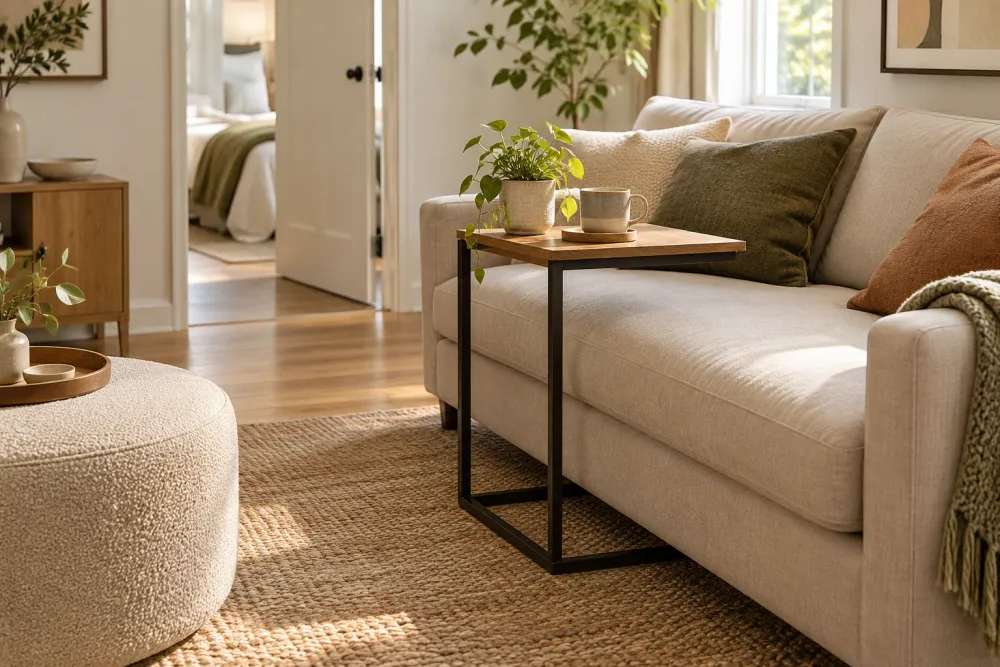
A C-table brings a mug, notebook, or occasional laptop close to one seat while leaving the room’s center open. Its base slides beneath a sofa or chair and its top reaches over the seat edge, but low furniture may prevent a proper fit. Compare the base height, including feet or pads, with the gap beneath the sofa’s lowest structural part, then check that the top is reachable without twisting or trapping your legs. Follow the manufacturer’s load rating and keep heavier objects centered. Fixed heights and limited shared surface are tradeoffs; if the base will not fit, a narrow side table may be more stable and convenient.
3. Side-table pair
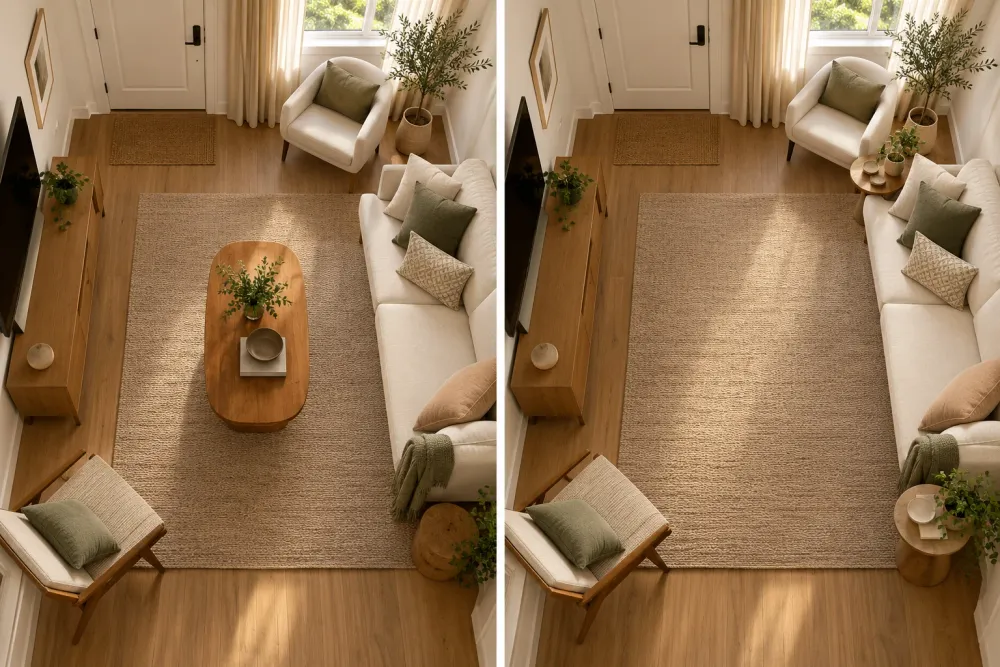
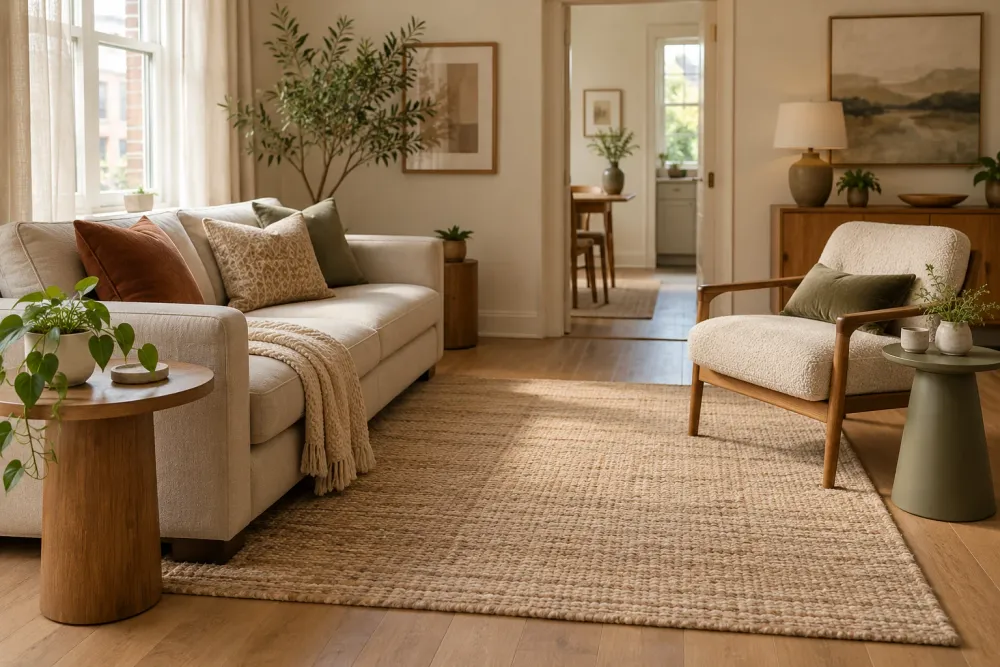
Two small side tables give a sofa and nearby chair separate landing spots while keeping the center open. They need not match exactly: a shared color, material, or simple silhouette can connect pieces sized for different gaps. Sit in each spot to judge reach, and allow room beside the seats for recliners, cabinets, and movement. Give the larger top to the person who most often reads, works, or has tea, and use a smaller one where a glass is enough. The compromise is less shared space for games or snacks; for occasional gatherings, a portable tray may work on an existing suitable surface.
4. Compact round table
A compact round table retains a shared central surface while softening the visual edges of a seating group. Its rounded outline may be easier to move around than sharp corners, but it does not guarantee adequate walking space. Include any overhanging rim when measuring the diameter, and examine the base: a pedestal can look open, while widely spread legs may occupy unexpected floor space. Compare the height with your sofa seat and reach from your usual position; a low top may make a mug or book harder to retrieve. Round tops can hold less than rectangular ones of similar width, so consider the items you actually need nearby.
5. Stable ottoman with tray
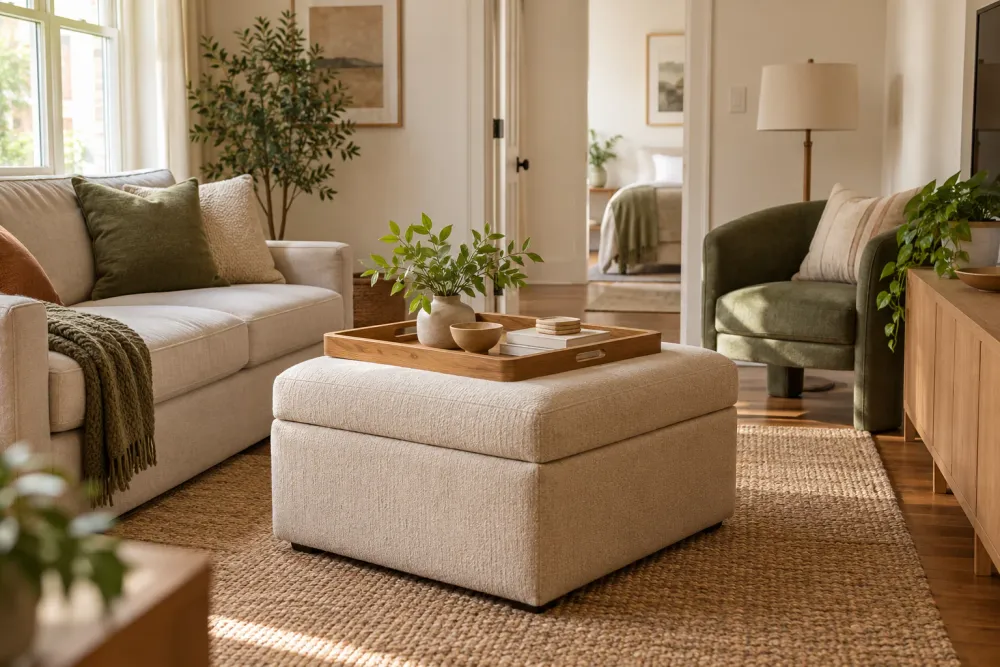
An ottoman combines a footrest with an occasional surface, and a storage model can hold blankets or other dry supplies. Choose a stable ottoman and a broad tray that sits flat without rocking or projecting precariously; a firm, level top generally works better than deep tufting or very soft upholstery. Place drinks conservatively and remove the tray before using the ottoman as a footrest, since the arrangement is not spill-proof. Check that a storage lid can open without blocking a route, and expect to clear the tray to reach inside. Never improvise an operating surface for a heat appliance; follow its instructions for a safe, open surface.
6. Compatible sofa-arm tray
A sofa-arm tray puts a remote, small book, or drink close at hand without adding a floor footprint, which helps where a separate table would obstruct movement. Fit is essential: compare the arm’s width, shape, and softness with the manufacturer’s guidance, because a rigid tray for a flat arm may tilt on a rounded one. Check that clips or grippers will not strain seams or mark upholstery, follow the weight limit, and make sure the tray does not interfere with reclining. Its surface is small and unsuitable for shared use; if the fit is unstable, choose a freestanding surface rather than forcing it.
7. No central table
Leaving the center empty can open a walking route, create space for stretching or play, and make a chair easier to reposition. Plan landing spots before removing the table: a compatible arm tray, stable side surface, or shelf within reach can serve each frequently used seat. A basket at the room’s edge can hold blankets or reading material if it does not block a door or cabinet. For guests, identify a temporary surface that can be brought in and stored without narrowing the route. The arrangement is less useful if cups end up on the floor or everyday objects have nowhere to go.
Your first refresh
Temporarily remove your current coffee table, if you have one, and notice what you miss. List the objects needing landing spots and the seats used most. Measure relevant gaps and routes, then mark one or two candidate footprints with paper or tape. Test reaching, walking, and opening storage. Choose the smallest arrangement that handles your routine, rather than every imaginable occasion. Give remotes, reading material, and blankets homes afterward too.
Questions before you start
What can replace a coffee table if I eat on the sofa?
Try a stable C-table or appropriately sized side table that brings a meal within comfortable reach. Check the tabletop height, stability, and manufacturer load rating; for a C-table, also check clearance beneath the sofa. A soft ottoman or poorly fitting arm tray is less dependable.
Are nesting tables better than two separate side tables?
Nesting tables suit changing needs because one can tuck beneath the other and come out for guests. Separate side tables may be better when two seats need surfaces every day. Compare both arrangements with floor templates, including where separated nesting pieces will go.
Can an ottoman hold drinks safely?
A stable ottoman with a firm, level top and a broad, securely sitting tray can provide an occasional surface, but it is not spill-proof. Avoid trays that rock on soft or deeply tufted upholstery, keep drinks away from edges, and remove the tray before putting your feet up.
How do I make a table-free layout useful for guests?
Give each occupied seat a reachable, stable surface for a drink or small plate. Test the arrangement with seats in use, checking that nobody must lean across a walking route. A second small side table may serve guests better than a central piece that crowds the room.
Keep planning your space
For help arranging seats around an open center, explore our narrow living room layout ideas. Pair a side table with a comfortable chair using the small reading nook guide, or find seasonal inspiration in Christmas decor for small apartments. Each guide offers another perspective on making limited space work for everyday living.