7 Renter-Friendly Curtain Setups for Small Apartments
Seven renter-friendly curtain setups for small apartments, with measuring guidance, hardware tradeoffs, and practical privacy options.
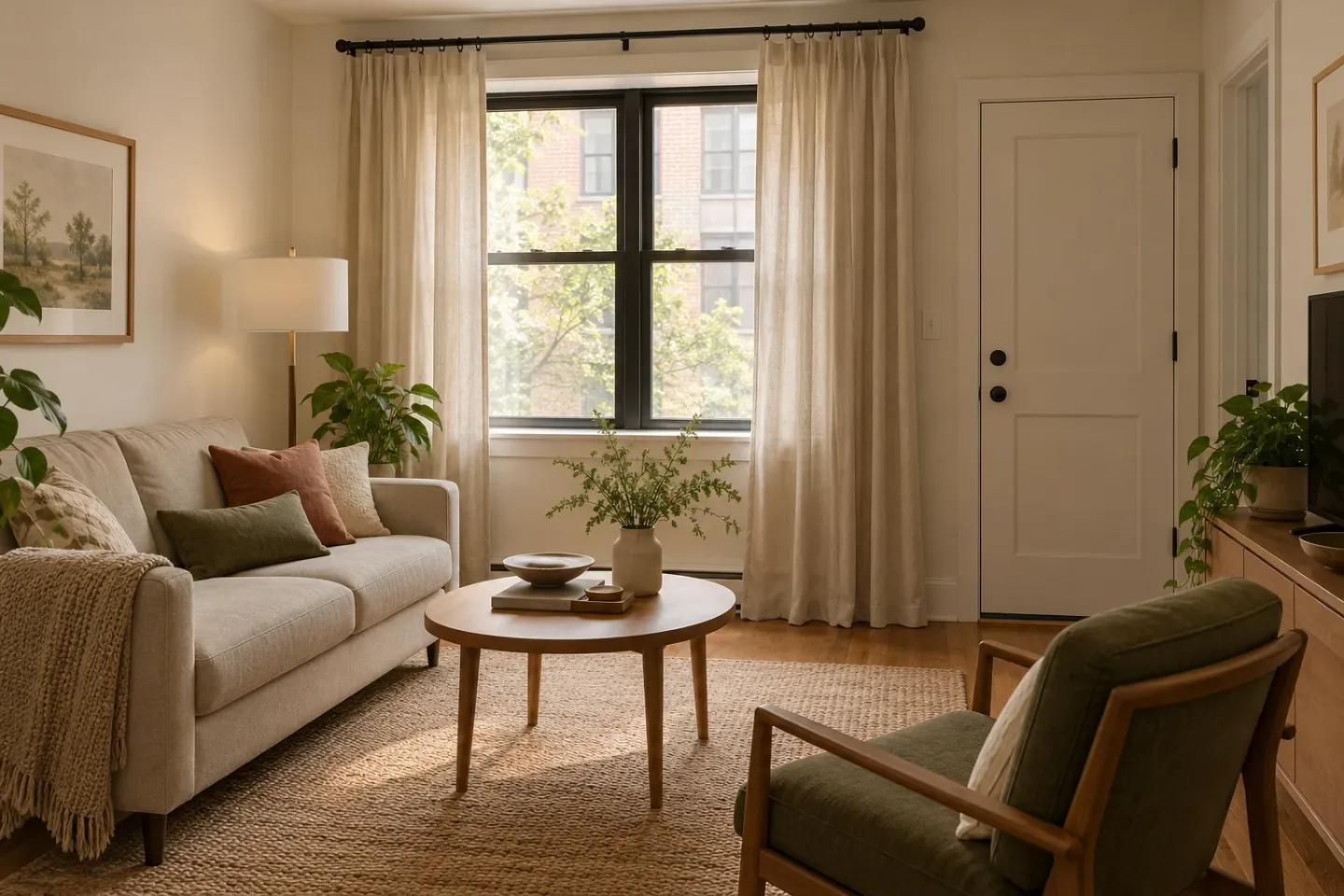
Curtains can soften a small apartment and add privacy without a permanent makeover, but the best setup depends on the window, surrounding surfaces, existing hardware, and nearby furniture or heaters. Check your lease and inspect what is already installed before choosing a method. These seven options range from reusing a rod to avoiding window mounting altogether. Images show illustrative concepts.
Before you rearrange: a practical checklist
Practical measurement checklist
- Photograph existing hardware and note damage or looseness.
- Measure the opening, recess at rod height, usable depth, and any rod’s length and diameter.
- Measure from the actual hanging point to the intended hem, accounting for clips or rings.
- Check blind and handle projection and the window’s opening path.
- Note furniture, doors, exits, heaters, and vents; follow manufacturer clearance instructions.
- Visualize positions and footprints with finish-safe markers or paper, then test routes and doors.
- Check lease terms, surface compatibility, total load, installation instructions, and restoration obligations.
Compare the options
| Setup | Best fit | Main tradeoff | Check |
|---|---|---|---|
| Existing rod | Sound installed hardware | Fixed position and capacity | Brackets, diameter, rating |
| Tension rod | Suitable recess, light fabric | Gaps or slipping | Surfaces, dimensions, operation |
| Freestanding screen | No acceptable mount | Uses floor space | Stability, exits, heater clearance |
| Permitted brackets | Approved drilling | Installation and repair | Written permission, fixings, load |
| No-drill mount | Compatible frame or surface | Possible finish damage | Product requirements, rating, removal |
| Sheer plus blind | Blind supplies privacy | Sheer alone reveals silhouettes | Projection, blind operation |
| Short panel | Obstacle below window | Reduced coverage | Drop, privacy, heater instructions |
1. Reuse an existing rod for renter-friendly curtains
An existing rod is often the simplest option if it is secure and your lease permits changing the curtains. Check that brackets do not wobble, the rod is seated properly, and any supplied weight rating covers the rod and fabric; ask the landlord about loose hardware rather than tightening questionable fixings yourself. Measure the usable rod length and diameter, and make sure rings, clips, tabs, or pockets fit. Measure the drop from the actual hanging point, since clips position fabric differently from a rod pocket. Two light panels are easy to separate, while one can suit an obstructed side; save original fittings for restoration.
2. Choose a suitable tension rod
A tension rod can fit a recessed window with solid, clean opposing surfaces that meet the manufacturer’s instructions, but shallow recesses, uneven surfaces, fragile trim, or handles may make it unstable or obstruct operation. Check your lease and product guidance because pressure can mark finishes. Measure the inside width at rod height and the recess depth, then choose a rod whose adjustment range and rated capacity accommodate the opening, curtain, and rings. Follow installation instructions rather than overtightening, and use a paper template to check window, latch, and blind movement. Lightweight fabric is practical, though side gaps can compromise privacy and light blocking.

3. Try a freestanding screen alternative
A freestanding folding screen adds privacy without attaching anything to the window, making it useful where mounting is prohibited or the frame cannot support a rod. Unlike curtains, it occupies floor space, leaves side gaps, and may need moving to open the window. Check its open width, folded depth, and stated footprint; outline the space with paper or low-tack tape only if the flooring manufacturer permits it. Keep routes, doors, and exits clear, observe heater clearance and screen placement instructions, and choose a stable self-supporting design that children or pets cannot easily knock over. Translucent screens admit more light; opaque ones offer more visual privacy.
4. Install permitted brackets
Conventional brackets can offer more flexibility in curtain weight and positioning than an inset tension rod, but installation and eventual repair require more planning. Obtain written lease or landlord permission and restoration requirements before buying, and confirm who will install the hardware and which surfaces may be drilled. Ask the landlord or a qualified installer about suitable fixings if the wall construction is uncertain. Measure available wall space, height, and projection to clear handles and blinds, allowing room for gathered fabric. Match the rod, brackets, and fixings to the wall and total load, following manufacturer ratings and guidance on additional supports.
5. Select a compatible no-drill mount
No-drill mounts may grip a frame or use adhesive, and each has specific compatibility requirements; removable does not necessarily mean damage-free. Check your lease and the manufacturer’s instructions for suitable materials, preparation, temperature limits, load rating, waiting period, and removal method. Measure the frame profile or flat area, and confirm that the rod clears handles and blinds without interfering with window operation. Include the rod, fabric, rings, and accessories in the total load, and avoid peeling paint or other excluded surfaces. Choose lighter fabric when necessary; if compatibility is uncertain, ask the manufacturer or use a freestanding alternative.

6. Layer a sheer with an existing blind
A sheer can soften a window and filter daylight while an existing, functioning blind supplies adjustable privacy. Use existing or approved hardware outside the blind’s operating path, and measure its projection, including handles and controls, before positioning the rod. Make sure the blind can raise, lower, tilt, or open without snagging; keep cords and chains accessible, follow the manufacturer’s child-safety instructions, and never tie them to the curtain or rod. A gently gathered sheer keeps the look airy without covering much glass. It is not a dependable nighttime privacy screen, so address gaps in the blind rather than expecting the sheer to conceal them.

7. Use a short-panel option
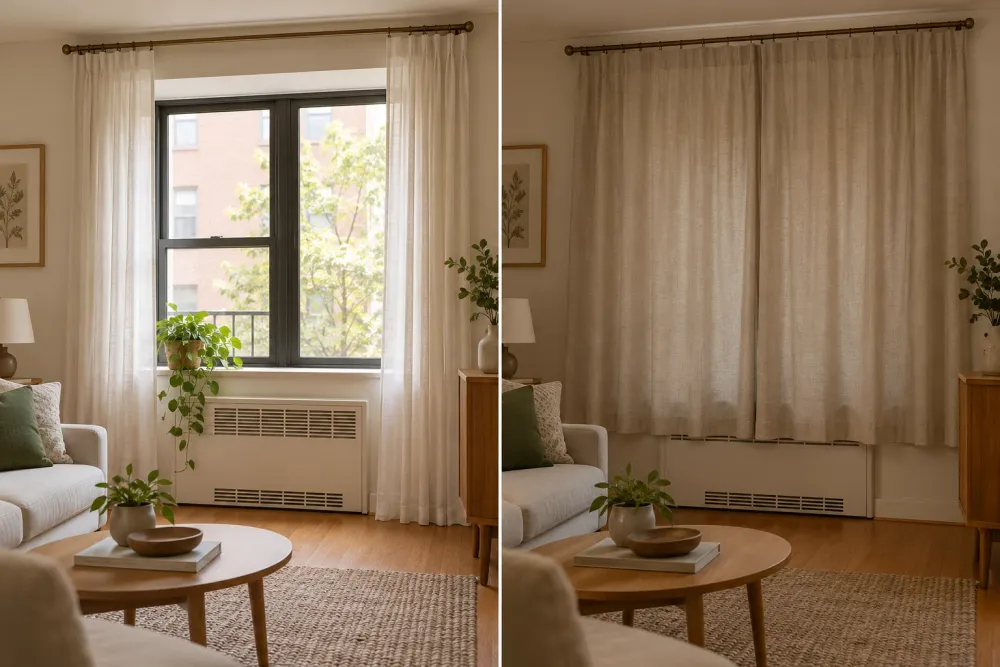
A short panel can work above a desk, bed, radiator, or other obstacle where long fabric would bunch or interfere with the room. A sill-length curtain is one option; a café-style panel screens the lower window while leaving the upper glass open to daylight, but provides neither full-window privacy nor darkness. Measure from the actual hanging point to the intended hem, accounting for clips or rings, and visualize the length with paper or spare fabric. Follow heater and vent manufacturer clearance instructions, choosing another arrangement if necessary. Check usable rod width and curtain-maker fullness guidance, and use a lease-permitted mounting method.
Your first refresh
Note when you need privacy and daylight, then use the checklist to measure the window, hardware, and obstacles. Visualize the proposed setup before comparing options. Check your lease and relevant product instructions, and select fabric after confirming the hanging method, load, and drop. Once installed, operate the window and blind to check for snags. Assess nighttime privacy from outside where practical, and save original fittings and removal instructions for moving day.
Questions before you start
Can I hang curtains without drilling into my apartment walls?
Possibly. A sound existing rod, a suitable tension rod, or a compatible no-drill mount may avoid new holes; a freestanding screen avoids window mounting altogether. Check your lease and product instructions first, since pressure and adhesive can still mark or damage finishes.
Will a sheer curtain give me privacy at night?
Not reliably. When interior lights are on, people outside may see silhouettes or more through a sheer curtain. Pair it with an existing blind that provides the privacy you need, and check the view from outside at night where practical.
What curtain length works above a radiator or heater?
There is no single safe length for every room or appliance. Measure from the actual hanging point, locate the heater and vents, and follow the manufacturer’s clearance and operating instructions. If fabric cannot stay outside the required space, choose another treatment or placement.
How do I choose between a tension rod and a no-drill mount?
Start with the window: a tension rod needs suitable opposing surfaces and enough recess depth, while a no-drill mount needs the exact frame profile or surface its manufacturer specifies. Compare load ratings, finish risks, window operation, and lease requirements before deciding.
Keep planning your space
For a coordinated room, explore cozy small living room ideas alongside your window treatment. For a bedroom, cozy bedroom lighting can help you plan the evening atmosphere, while renter-friendly wall decor offers more ways to personalize permitted surfaces. Consider how each choice works with your privacy needs and existing furnishings.