How to Choose a Rug for a Small Living Room: 7 Layout Checks
Choose a small living room rug with seven practical checks for furniture, doors, walking routes and a paper footprint test.
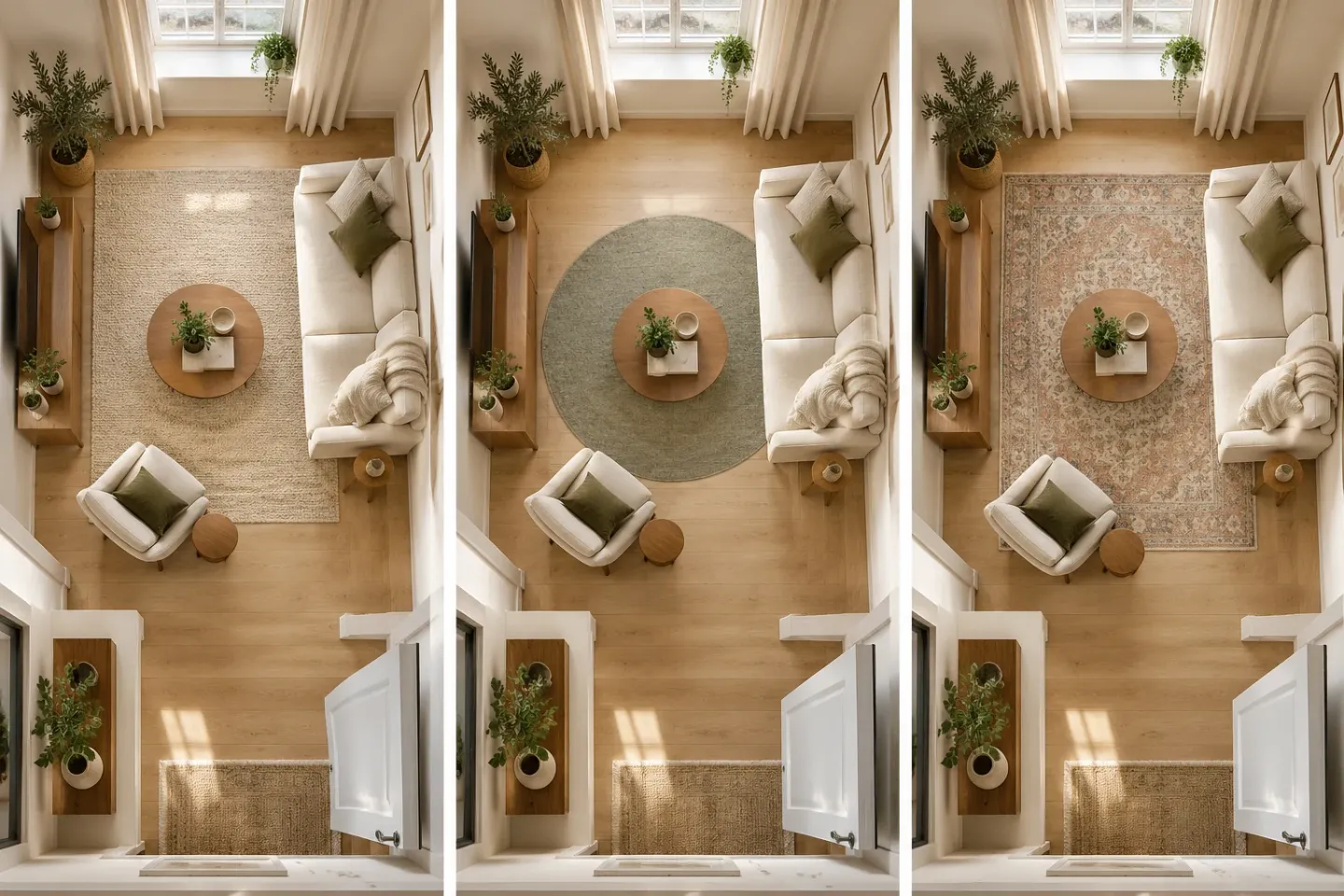
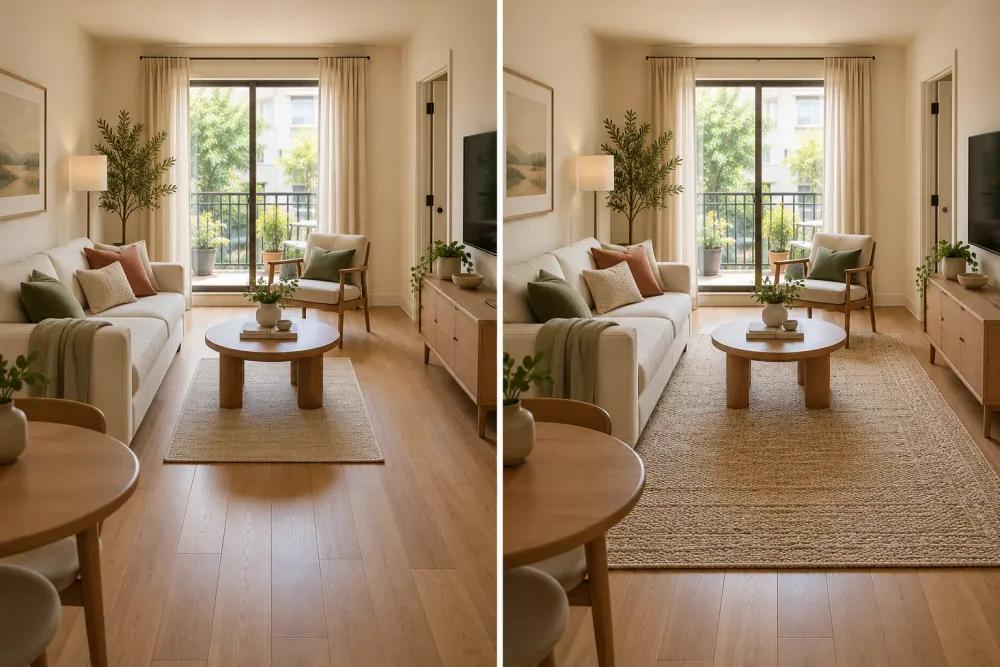
A rug can make a compact living room feel like a deliberate seating area, but floor dimensions alone do not determine the right size. A rug that catches a door, makes a chair rock or interrupts a route will be frustrating to use. Start with your furniture, then test possible placements before choosing color or texture; the images illustrate decorating concepts.
Before you rearrange: a practical checklist
- Sketch the room, fixed features and furniture in normal use.
- Measure the seating zone, furniture footprints and sofa leg spacing.
- Note chair and nesting-table movement.
- Check door swings and minimum floor gaps.
- Measure and walk the narrowest everyday routes.
- Compare rug dimensions, fringe and pad thickness with the sketch; check product and flooring instructions.
- Test a paper footprint with furniture, doors and routes.
Compare the options
| Placement | Useful when | Tradeoff to check |
|---|---|---|
| Sofa front legs on rug | Connecting the sofa to the seating zone | Check leg spacing and stability on the rug’s thickness. |
| Sofa fully off rug | The room is shallow | Avoid a footprint that looks disconnected from the seats. |
| Chair front legs on rug | The chair anchors the conversation area | Allow for its angle and movement; keep legs off the binding. |
| Chair fully off rug | It moves often or a larger rug crowds a route | Check stability and visual separation. |
| Low-profile rug | Door clearance is limited or a route crosses it | Check actual rug-plus-pad thickness and traction. |
1. Measure the small living room rug seating zone
Begin with the furniture you use, not just the walls: record the sofa’s width, depth and front-edge position, along with the locations of chairs and tables. Include the open floor between pieces, since it is part of the zone the rug may connect, and sketch the arrangement from above. Measure the room and note fixed features such as radiators, hearths, built-ins and projecting trim, which can reduce the usable rectangle. Position movable furniture where it normally sits, then decide whether the rug should anchor the group or define a smaller central area. Its edges should look intentional rather than dictated solely by the nearest wall.
2. Account for doors
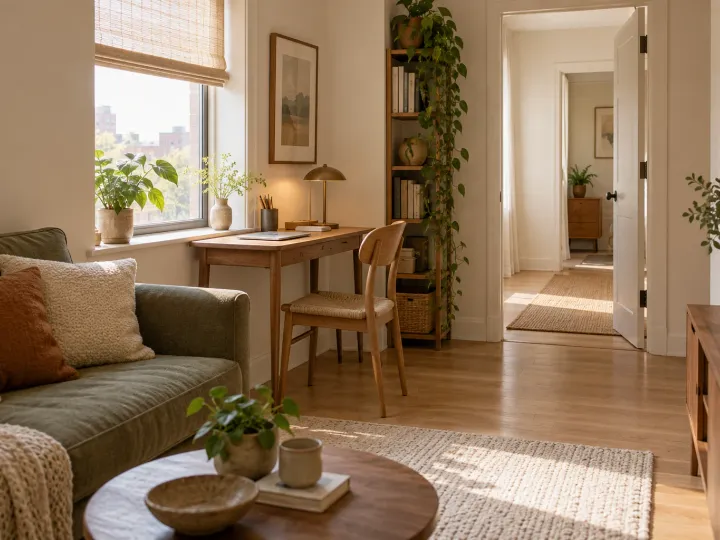
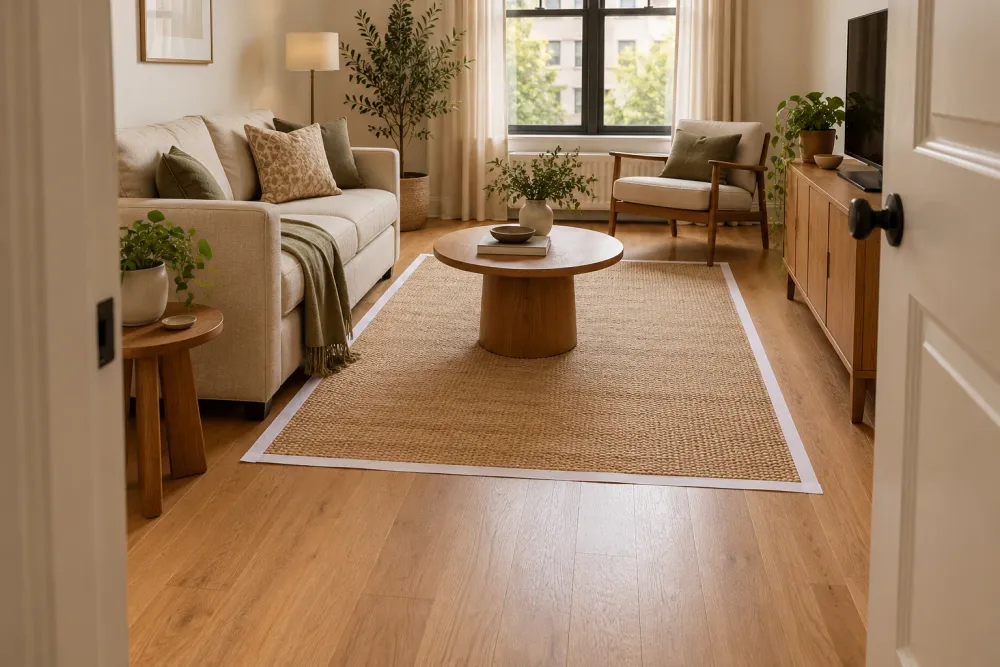
Open every door that could cross the rug, including entry, balcony and closet doors, and mark each swing and standing area on your sketch. Measure the door-to-floor gap along the full swing, because an uneven floor can make the clearance vary. Compare the smallest gap with the combined thickness of the rug and pad, allowing for its construction and how it sits; thick pile or a curled corner may catch even if a flat sample fits. Try a lower-profile combination, shifted placement or smaller footprint rather than relying on the door to flatten the rug. Keep entrances and exits usable, and check lease requirements before considering any door alteration.
3. Compare front-leg position
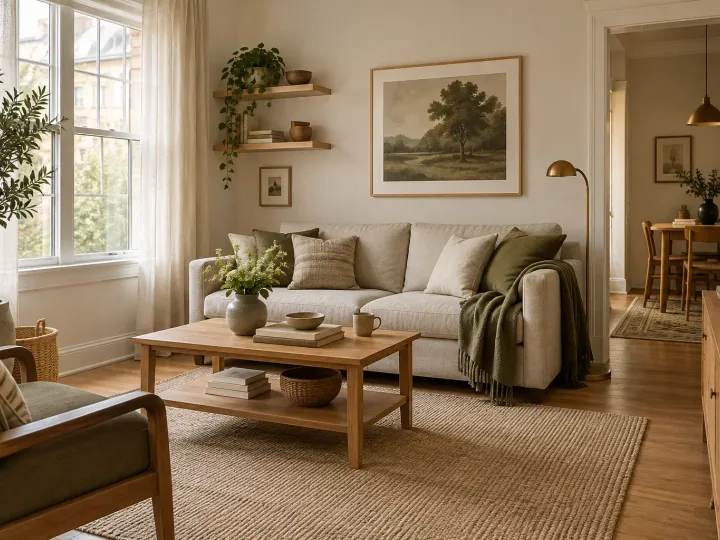
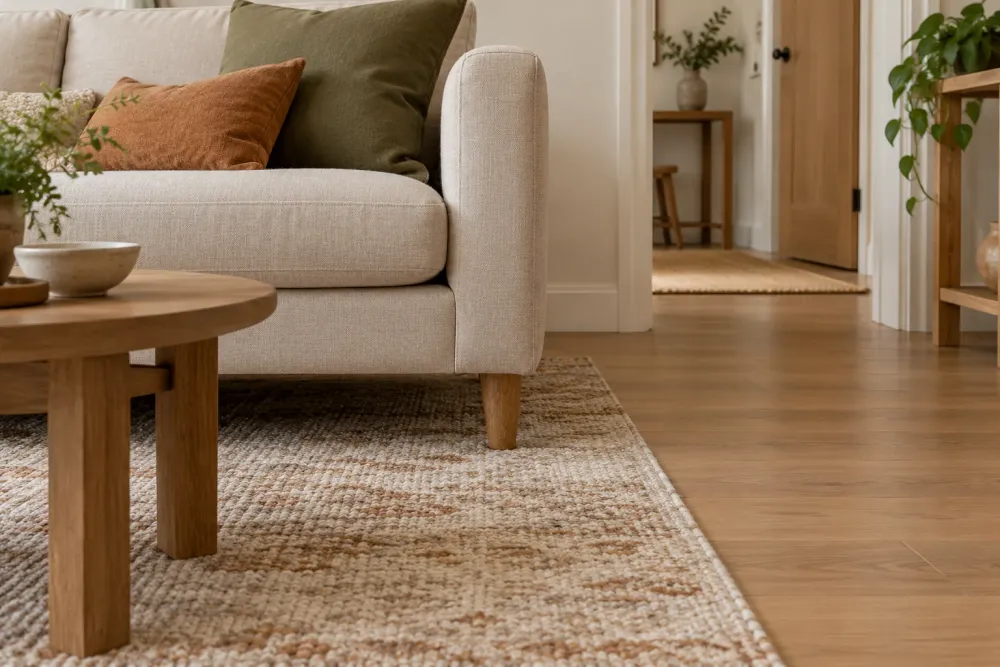
Use the sofa as the first visual anchor and compare two arrangements: both front legs on the rug, with the back legs on the floor, or all four legs off it. Front legs on generally connect the sofa more strongly to the seating area; a rug entirely in front can suit a shallow room but should not look like an isolated island under the table. Compare the proposed rug’s actual dimensions with the sofa’s overall width and the distance between its outer legs. Account for fringe or decorative edges, and keep legs securely on the usable surface, not the binding. Test comfort and stability because a thick rug can tilt the sofa.
4. Include chairs
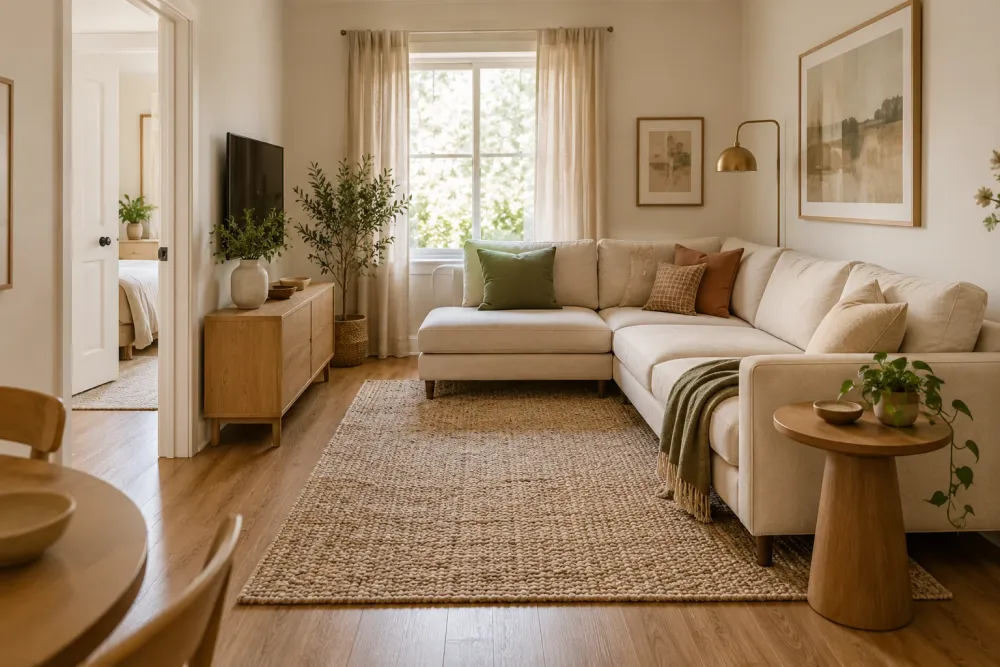
A chair can change the seating zone, particularly when angled or arranged in an L with the sofa. Measure its width and depth, identify where its legs land in normal use, and trace its movement if it is pulled out; one leg on a rug edge can cause rocking or catching. Compare a footprint that accommodates both front legs with one that keeps the chair completely off the rug. The first can unify the group but may require a larger rug; the second exposes more floor and may work better in a narrow room. Test the actual angle, and include an ottoman or pouf if it regularly serves as a seat.
5. Check table stability
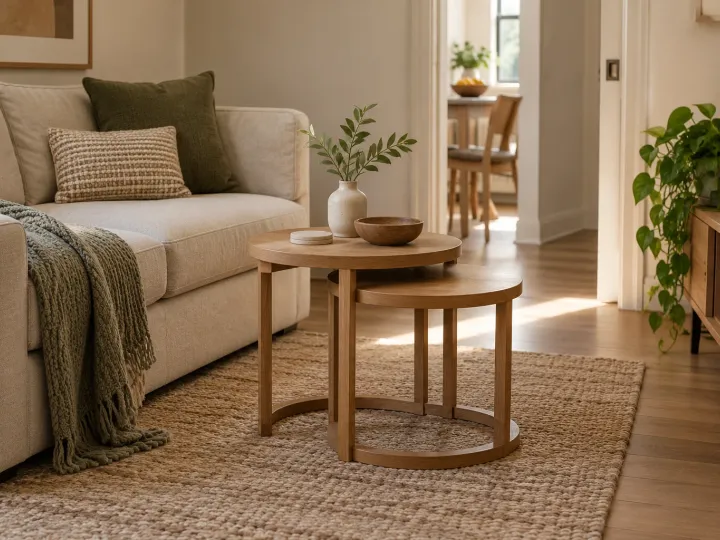
Measure the coffee table’s complete footprint, including legs that splay beyond the top, and check that every contact point can sit securely on the same surface. A table straddling a thick rug edge may wobble, while a pedestal needs level rug beneath its entire contact area; test nesting tables both tucked away and pulled out. A round table can soften a tight arrangement, but people still need room to pass and reach their drinks. Consider a smaller table if it makes the layout work without placing every furniture piece on the rug. Keep side tables fully on or off, and route lamp cables without trip hazards, following manufacturer instructions.
6. Preserve routes
Trace everyday paths between the entry, sofa, balcony and adjoining rooms, measuring their narrowest points with furniture in its normal position. Walk the routes carrying what you usually bring through; workable clearance varies with mobility aids, pets, door swings and turning space. Notice where rug edges cross a path, especially at a doorway or turn, and try shifting furniture, choosing a flatter rug or comparing a narrower footprint if the route feels crowded. A suitable nonslip pad may help, but check rug and pad compatibility with the flooring and follow care instructions. Check the lease and manufacturer’s guidance before using adhesives, preserve exit access and observe required clearances for heaters and fixed equipment.
7. Test the floor outline
Before ordering, join flat sheets of paper into a full-size outline of the proposed rug, align it with your sketch and mark its corners and dimensions. If holding paper with tape, first check flooring guidance and your lease; test permitted tape inconspicuously and remove it as directed. Return furniture to normal positions, then open doors, sit in each seat, move chairs and walk usual routes while checking leg and table placement. Photograph the outline from the doorway and a seated position, and repeat with a second size if needed. Paper tests placement, not pile height or traction, so examine a material sample and pad separately where possible.
Your first refresh
In one session, measure the room, sketch existing furniture and shortlist two footprints. In another, lay out each paper shape, open doors, sit and walk your normal routes, photographing both from the same viewpoints. Choose the footprint that works most comfortably, then compare color and texture within that size. Before ordering, verify listed dimensions, return conditions, flooring compatibility and a suitable pad. Keep the marked sketch to help arrange the finished rug.
Questions before you start
Should a small living room rug be wider than the sofa?
Compare the rug with both the sofa’s overall width and the distance between its outer legs. Visible rug beyond the sofa can look balanced, but workable proportions depend on walls, doors and routes. If the front legs sit on the rug, keep both securely inside its edge.
Can I use a rug that sits only under the coffee table?
Yes, if that footprint suits the room, but judge it against the whole seating zone. A very small rug can look disconnected from the sofa and chairs; a slightly larger one may define the center without reaching every leg. Keep the entire table base stable.
What if my door catches on the rug?
Measure the smallest gap beneath the door along its swing and compare it with the rug and pad together. Try a lower-profile combination or move the rug outside the swing. Do not count on the rug flattening, and check your lease before considering a door alteration.
How do I choose between two rug sizes?
Make a paper outline of each size with the furniture in the same arrangement. Compare leg placement, chair movement, door swing and narrow walking routes, and photograph both from the same viewpoints. Favor the size that works comfortably in daily use over one that merely looks dramatic.
Keep planning your space
For more ways to arrange furniture around your rug, explore cozy small living room ideas and these narrow living room layout ideas. If the rug will anchor a quieter corner rather than the main seating group, see how to create a small reading nook that suits the rest of your room.